
From Fear to Love: Why Do We Worship Deities?
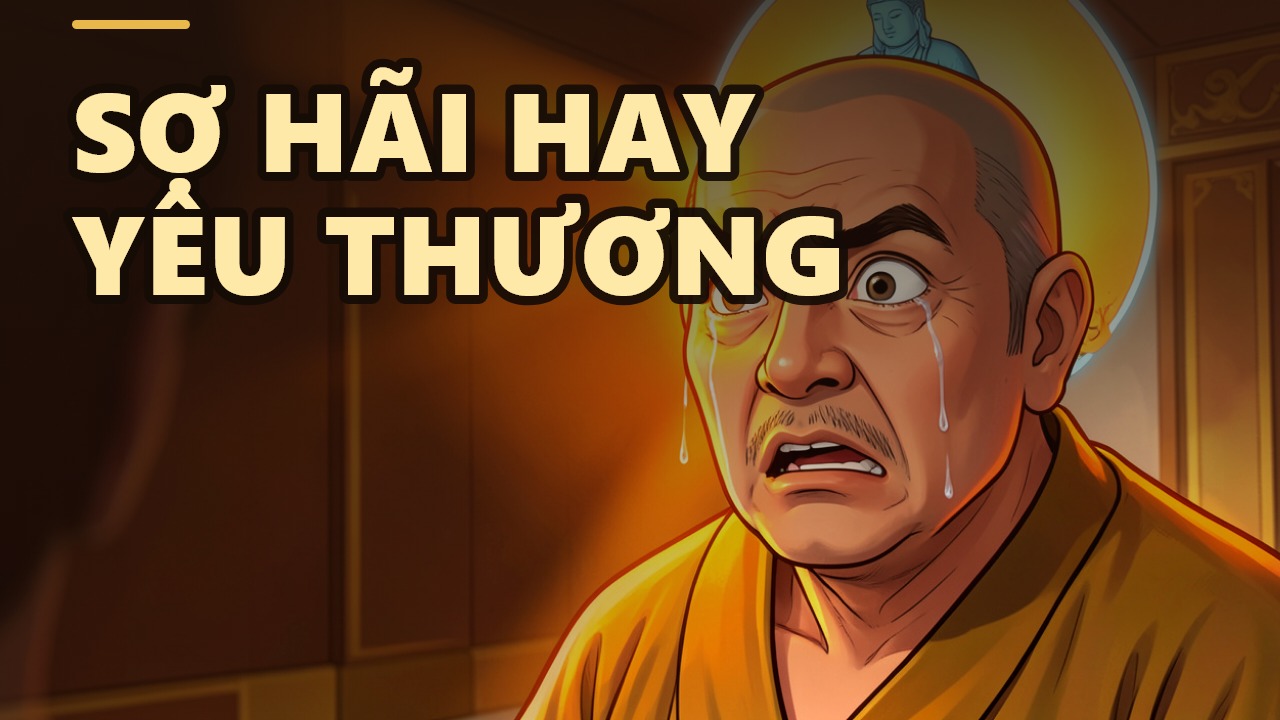
**Summary:** Venerable Thích Chân Quang analyzes the psychology of worshipping deities: its roots in feelings of powerlessness, the three mental states of fear, admiration, and being touched, and how practice and cultivation transform us, helping us transcend fear to live according to moral principles.
Have you ever truly listened to yourself while kneeling before a Buddha statue? What do you pray for? What do you worship? And why do you worship it? In a warm sharing session, Venerable Thích Chân Quang dissected the psychology behind worshipping deities, taking us from the deepest layers of belief to the miraculous transformation within the practitioner's heart.
**Why Do Humans Have Beliefs? Two Deep Causes.**
According to sociologists, beliefs arise because humans cannot explain natural disasters and luck. We believe an invisible force is at play. From a spiritual perspective, metaphysical phenomena like ghosts and the return of the deceased are also real. Venerable Chân Quang explains:
Generally, the reasons religion or beliefs appear are twofold. One reason, according to sociologists and science, has a materialistic nature, and another reason has a spiritual element, a idealistic nature. Both are correct.
Whether materialistic or idealistic, the common point is that humans recognize their own limitations. Accidents and luck that are not of our making lead us to believe in another force. The story of the bus driver the Venerable mentioned, who was "protected by the Buddha," is an example: he thought the Buddha saved him, but in truth, he was driving recklessly, not in control of his vehicle. He attributed that luck to a deity. Thus, belief was formed.
**Three Psychologies of Worshipping Deities: Fear, Admiration, and Being Touched.**
Deities are envisioned as far superior to humans. We worship them because of three attributes: supernatural power, transcendent wisdom, and vast morality. These three attributes create three psychological states: fear before power, admiration for wisdom, and being touched by morality. The Venerable emphasizes:
This is the psychology behind worshipping deities... First is fear of power, second is admiration for that wisdom, and third is being moved by that morality.
It is often misunderstood that we worship because we want to be granted favors. But in reality, we fear deities as we fear a powerful force. We fear the state because of justice, we fear organized crime because it oppresses, and we fear deities because of their immeasurable power. However, deities also possess wisdom and virtue, so we revere them. As the Venerable says: "We hear and fear their awe-inspiring power, yet we are also moved by their loving-kindness."
**From Fear to Love: When the Practitioner Transforms.**
With deep practice, fear vanishes. The practitioner no longer fears deities; they simply live according to moral principles. The Venerable says:
When we practice to a certain degree, the fear disappears... We simply live by moral principles. If we speak of fear, the only thing we fear is the moral law itself. But using the word 'fear' isn't quite right either; it's more that we compel ourselves to follow the moral law. And this self-compulsion to follow the moral law is so elevated that it surpasses the fear of death.
From there, our relationships with deities change. Fear is gone, replaced only by love and reverence, humility, and courage. This is the result of a transformed consciousness.
**Prayers Reveal the Level of Practice.**
Initially, humans worship deities for gain. The Venerable tells of people kneeling before the Buddha to pray for lottery wins, for those who dislike them to disappear, or to make someone love them. But after ten years of practice, the prayers change completely:
We pray for the world to have peace, for all beings to know love for one another. We pray for our minds to always be humble, compassionate, and to practice until we attain non-self.
The shift from selfishness to altruism is a sign of advanced practice. As the Venerable says, if you could hear a person's prayer, you would know how far along their path of practice they are.
**Buddhism and the Historical Saint: The Path to Liberation.**
What is special in Buddhism is that the most revered one, the Buddha, is a historical person. The Venerable explains:
Any person, not just the Buddha, if they achieve the state of absolute non-self, becomes a supreme saint.
This opens a path for all of us. Anyone can become a saint by attaining non-self. Therefore, do not only worship a saint out there; seek the saint within your own heart.
From the Venerable's sharings, we see that worshipping deities is not inherently wrong, but it should be placed in its proper context. Do not let your worship be merely fear and a request for favors. Let it become a motivation for us to love, to be humble, and to transcend ourselves. Only when the mind's fear dissolves do we truly draw close to the Buddha.
AI-assisted translation from the Vietnamese original.
Read in Vietnamese →