
Why Must We Practice? Are You a "Stray Child" or the Buddha's "Beloved Child"?
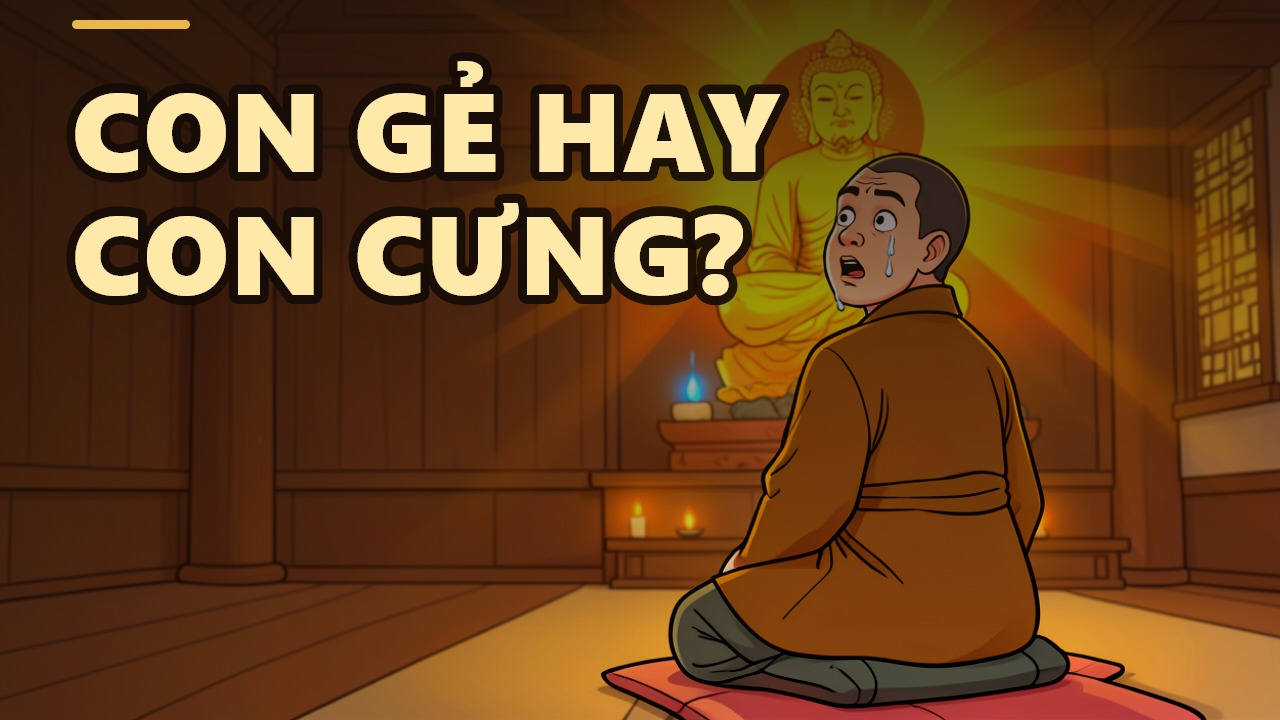
Have you ever asked yourself, “Why must I practice?” Some say they live kindly, without stealing or killing, so why go to the temple? But ask yourself, is there anyone among us who is completely free of mistakes? In a warm dharma talk at Phat Ngoc Xa Loi Pagoda, Venerable Thich Chan Quang shared a profound perspective on the journey from not knowing the path to becoming the Buddha’s beloved child.
### The Great Turning Point: From Ignorance to Awareness
Venerable Chan Quang began with a familiar question: “From being someone who does not know the path to the day we do know it, that is a very great transformation in our lives, isn’t it?” Before this, we lived in ignorance, not knowing what was sinful, what brought blessings, or how cause and effect (karmic law) works. Life revolved around greed, hatred and delusion, chasing food, clothing, fame, and profit, thinking these were joys when they were actually suffering (dukkha).
When we encounter the Buddha's teachings (Dharma), we awaken to a new horizon, a new path, and a new life. The person remains the same, but now we understand sin and merit, cause and effect, and the existence of heavens and hells. At that moment, life turns in another direction, toward goodness and enlightenment.
### Taking Refuge in the Three Jewels: From "Stray Child" to "Biological Child"
After learning the path, the next step is to find a teacher and a temple to take refuge in the Three Jewels. Venerable Chan Quang emphasized, “When we perform the ceremony of taking refuge in the Three Jewels, at that moment we officially become disciples of the Buddha.” From here, we are protected by the Buddha, a miraculous shelter. However, not everyone who takes refuge is the same. He categorized them into three types of children:
The stray child takes refuge but does not stay connected to the community, does not practice regularly, and wanders aimlessly. The biological child enters the community to practice with discipline and stability. The eldest child leaves home to practice fully, becoming the first disciple of the Tathagata.
So, do you want to be a stray child or a biological child? The opportunity lies before you: come to the community, bond with your spiritual siblings, and practice diligently.
### Protected by the Buddha: The Priceless Gift for a Buddhist
When we take refuge, the Buddha protects us from falling into hell realms, animal realms, or hungry ghost realms. He explained, “Although we know the path, it does not mean we have stopped making mistakes... But when we kneel before the Buddha and take refuge in the Three Jewels, we are protected by Him.” Even if we still experience karmic results, we will return as humans to continue practicing, rather than falling into animal forms. This is crucial because being an animal loses the capacity for high-level understanding of the Dharma, making recovery difficult.
“The Buddha protects us from errors so we do not pay karmic debts in animal realms or hell realms. Why? Because if we fall into animal form, we no longer possess the higher cognitive ability to understand moral truths.”
Additionally, the Buddha blesses us with many opportunities to create merit. We recognize the suffering of others and generate compassion to help and comfort them. As a result, our blessings from merit increase, ensuring that future lives are always more glorious than this one.
### Practicing Means Correcting: Admitting Our Flaws is the First Virtue
Venerable Chan Quang taught that the Chinese character for “practice” means “to correct.” To correct is to make something complete again. Therefore, practicing means we are correcting ourselves, which requires admitting that we are flawed. He compared this to a mobile phone: if it is broken, you fix it; if you want a better one, you need money, which represents merit. If you lack merit in this life, you must patiently repair your humble device. Those who do not see their flaws feel no need to practice, yet everyone has faults.
“This is the first virtue—knowing that you are flawed. It is not easy to realize this.”
We are often skilled at seeing others' mistakes but struggle to see our own. Only when we sincerely enter practice, chanting sutras, and sitting in meditation do we discover how many errors remain. He shared his own story: “As a young man, I was gentle and exemplary, avoiding alcohol and gambling... but only when I practiced did I discover I had too many faults.” This is a sign of a soul growing up.
### Becoming the Buddha's Beloved Child: Just One Thought
At the end, he asked, “Do you believe you are still flawed?” If you do, you instantly become the Buddha’s beloved child. Conversely, if you think you are perfect, you remain a stray child, unable to progress.
“Believe that you are still very, very flawed. Do you believe it now? If you can believe it, then at this very moment, we immediately become the beloved children of the Buddha.”
Therefore, let us humbly acknowledge that we are not yet good enough and have many shortcomings, then sincerely correct ourselves each day. Only then are we worthy of being the beloved children of the Tathagata.
On the spiritual journey, the first step is not achieving something, but recognizing our deficiencies. This self-awareness of being “flawed” leads to miraculous transformations. Begin with a sincere smile and a vow: “Today, I will correct one small thing in my mind/heart.”
AI-assisted translation from the Vietnamese original.
Read in Vietnamese →