
Living in This World, No One Has the Right to Be Poor
A dharma talk by Thầy Thích Chân Quang on the ten levels of wealth and poverty, and the meaning of helping one another make a living — a sustainable form of charity that brings blessings from merit to oneself and to society.
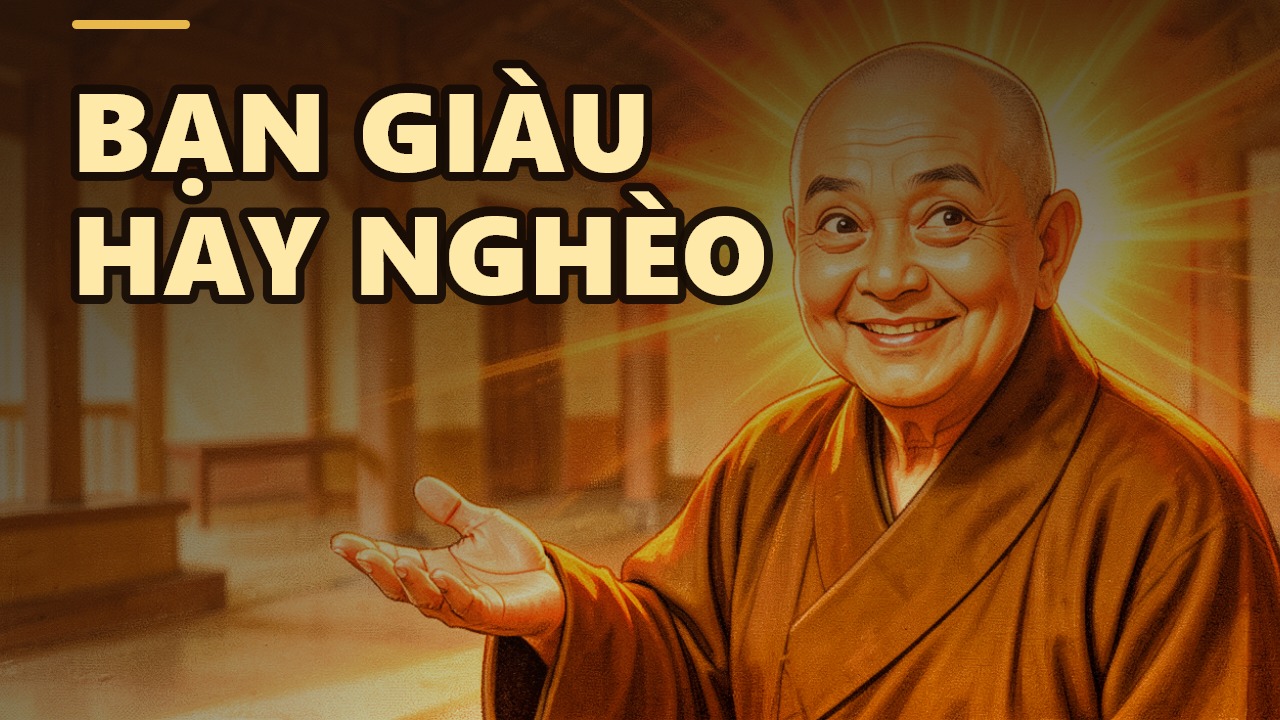
Do you see yourself as rich or poor? Do not rush to answer based on the numbers in your bank account or the size of your house. If we look through the eyes of the Buddha's teachings (Dharma), wealth and poverty do not lie there.
A Different Way of Defining Rich and Poor
In his dharma talk on Helping One Another Make a Living, given on the third day of the Lunar New Year, Thầy Thích Chân Quang offered a definition that is remarkably concise and profound:
"Anyone who is able to help others is a rich person. Anyone who must receive help from others is a poor person."
This definition changes the way we look at life. Even if your possessions are modest, as long as you can still give away a bowl of rice, a piece of advice, or a job opportunity, you are richer than many people worth hundreds of billions who never open their hearts.
Ten Levels from Poor to Rich
Thầy divides people into ten levels, beginning with the poorest — those on the verge of starvation — up to the wealthiest — those who create international charitable organizations. Here is a brief summary:
Level one: No food to eat, on the verge of starvation.
Level two: Sometimes hungry, sometimes full, in tattered clothes, begging for a living.
Level three: Has food but lacks nutrition, wears second-hand clothes, lives in rented rooms.
Level four: Has enough to eat and wear, lives in simple housing, but has little education.
Level five: Has food, clothing, housing, and education, but cannot yet help others.
Level six: Can help others without affecting one's own family.
Level seven: Can support others over the long term.
Level eight: Runs a business and employs many workers.
Level nine: Makes large investments that impact the national economy.
Level ten: Has large investments and international charitable organizations.
Thầy said with a smile that no one in the hall raised their hand for levels one through seven, so we are all at levels eight, nine, and ten — meaning we are truly wealthy people. But no matter which level we are at, what matters is that we keep moving forward, able to help more and more people.
The Poor Must Become Rich, and the Rich Must Help the Poor
Thầy emphasizes a surprising idea: no one in this world is permitted to be poor. If we remain a burden on society, we drag society down with us. Therefore, the poor should strive to become well-off — not out of greed, but out of duty to the community.
"Living in society, no one has the right to be poor."
The wealthy also carry a great responsibility. They must find every way to help the poor rise up and raise the general standard of living. Thầy warns that the collapse of economies often comes from the rich not sincerely helping the poor. When the gap between rich and poor grows too wide, society falls into crisis and decline.
Running a Business Is the Greatest Form of Charity
One particularly interesting point Thầy shares: opening a business and creating jobs for many people is itself "great charity."
"If opening a business were not considered a good deed, then the very act itself is already a good deed."
This is because a business creates livelihoods for hundreds or thousands of employees, secures the lives of their families, and contributes to the nation's economic growth. A successful entrepreneur is an invisible philanthropist who never needs to boast. That is why society honors entrepreneurs — they shoulder great responsibility for the community.
Wealthy Buddhists Help the Buddha's Teachings (Dharma) Flourish
There is a common misunderstanding that practicing the Dharma means giving up money and living in poverty. Thầy points out that monastics do not hold money in order to keep their minds pure, while lay Buddhists are entitled to accumulate wealth. In fact, the wealthier Buddhists become, the more the Buddha's teachings (Dharma) can spread.
"When Buddhists are rich, the temple prospers. When Buddhists are well-off, the temple is average. When Buddhists are average, the temple goes a little hungry. When Buddhists are hungry, the temple yawns. When Buddhists yawn, the temple dies."
Thầy also tells the story of his own life: from someone without a single patch of land to stick a needle into, he suddenly received thirty hectares of land. When his heart stirred, he stood in the middle of the valley and made a vow: "This land belongs to the Buddha, not to me." In this way, his mind returned to peace. We can do the same — we may be wealthy, but we should not cling. Let us see our possessions as a means to help others, not as our own private property.
Dear Buddhist friends, if today you have food to eat, clothes to wear, a home to live in, and a stable job, you already belong to the middle group of society. Do not stop there. Strive to rise higher so that you can help others. For when you help the poor overcome hardship, you are not only enriching them — you are also accumulating blessings from merit for many lifetimes. Living in this world, no one has the right to be poor — remember this as a reminder of the duty and the happiness of each of us.
AI-assisted translation from the Vietnamese original.
Read in Vietnamese →