
Speaking As If Silent, Silent As If Speaking: The Secret to Balancing Self-Cultivation and Teaching
A dharma talk by Venerable Thích Chân Quang on the art of harmonizing self-cultivation and teaching the Dharma: when speaking the Dharma, the self does not arise; even in silence, one moves the hearts of others.
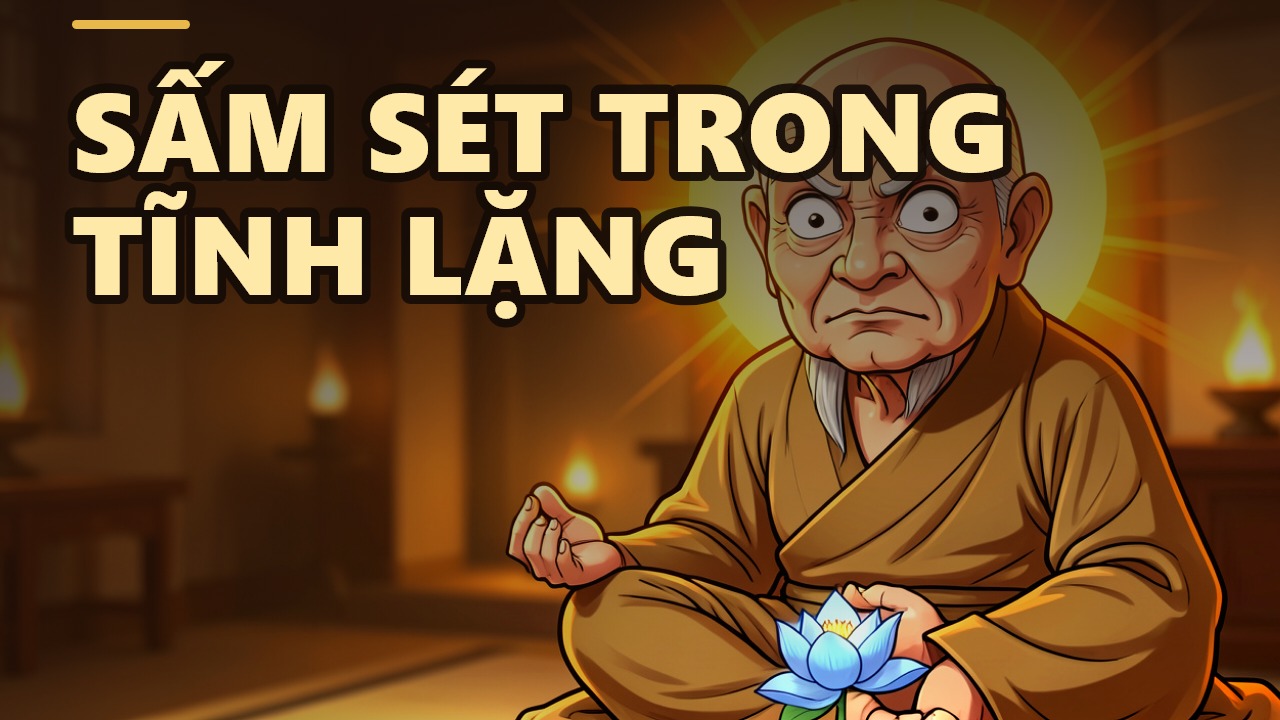
Have you ever felt confused when hearing that a practitioner must be silent, speak little, and remain humble, yet at the same time must teach the Dharma and guide sentient beings, which requires speaking often, being colorful and engaging, and meeting with people? If you choose only one side, you are like a bird with a single wing, unable to fly. So how can we cultivate for ourselves while also helping others cross over? This is the story that Venerable Thích Chân Quang shared in his dharma talk "Wisdom for Cultivation, Wisdom for Teaching," which we now invite you to listen to.
The Wings of a Bird
Venerable Thích Chân Quang begins with this observation: for self-cultivation, one needs reverence, silence, humility, and speaking little about oneself. But for teaching the Dharma, one must speak, must present, must share. These two paths run in opposite directions and seem to contradict each other. And yet, like the wings of a bird that lie on opposite sides, it is precisely because of both that the bird can soar across the sky. A disciple of the Buddha must skillfully harmonize these two extremes to achieve the perfect awakened life.
"A disciple of the Buddha must know how to harmonize these two opposite things in order to realize the perfect awakened life of self-awakening and awakening others. If we lean to one side, we are like a bird with only one wing."
But how can we remain silent for cultivation while also speaking to share? The Venerable offers a subtle way: "Speak as if silent, be silent as if speaking." This is the art of a practitioner: when teaching the Dharma, we leave no trace of ego, never exalting ourselves, only praising the Buddha's teachings (Dharma) and the noble ones. When we are silent, we still carry a power like thunder, moving those before us through our very stillness and compassion.
Speaking As If Silent, Silent As If Speaking
The Venerable tells of an old abbot whose disciple lamented over losing a gold tree. The abbot said only one sentence: "Before we had that gold tree, you and I lived just fine, my child." The words struck like a blade into consciousness, awakening the disciple. That is "silent as if speaking" — silent on the surface, but within, a thunderclap of spiritual power. Conversely, "speaking as if silent" means that after we present the Dharma, listeners see no trace of us at all — only the Dharma and the example of the Buddhas.
"When we speak as if silent, and are silent as if speaking, we have resolved this. Speaking as if silent, silent as if speaking. Silent as if speaking. In the old days, the Zen masters often used the phrase 'a face like thunder.' Face means silence, thunder means the storm. It means such a master is silent, yet like thunder resounding across the whole sky."
To achieve this, every word we speak must carry humility, and every silence must be filled with compassion. Then we no longer worry about the contradiction between cultivating and speaking, because whether speaking or silent, all is one flowing stream of enlightenment.
Avoiding Conditions to Cultivate, Engaging Conditions to Liberate
The Venerable points out yet another contradiction: to cultivate ourselves, we must avoid conditions, minimize contact, sometimes even entering retreat to cut off all complications. But to teach the Dharma, we must engage, must meet sentient beings. If we only retreat, we may exhaust our blessings from merit and remain in debt to the world; if we engage too much, afflictions (kleshas) and karmic obstacles will arise.
"When not in contact, our heart still loves sentient beings. And when in contact, we must still guard ourselves as if alone in a deep forest."
This is the true mettle of a practitioner: living alone yet with a heart wide open to all; merging into the crowd of sentient beings yet letting no one reach deep into our private life. We greet one another, speak of the Dharma, and then stop. Do not ask about private matters, do not step deep into another's life. In this way, we both create the conditions to help beings cross over and preserve purity in our mind/heart.
Simplicity for Ourselves, Splendor for Sentient Beings
Here is another contradiction: in self-cultivation, we need only three robes and one bowl, simple rice and vegetables, and meditative concentration in a leaf hut. But to teach the Dharma, we need grand and beautiful temples, lively festivals, music, flowers, and lights. Some may wonder: "Why does practice need a big temple?" But the Venerable affirms: "This is teaching the Dharma. And if a temple does not understand this, it is dead — it has failed its duty as a temple."
"A leaf hut, a bamboo shelter, a stove, a hearth, a few sticks of firewood, a little rice, vegetables to get through the day — that is already happiness. But what about teaching sentient beings? On the contrary, we must have bright electric lights, a courtyard for sitting, tables and chairs, water to drink, singers to perform."
A practitioner must live simply to achieve realization for themselves, while also knowing how to adorn and create joy for the community so they may come to the Buddha's teachings (Dharma). These are two sides of one body: austere within, radiant in outward conduct, yet both are for the benefit of sentient beings.
Learning to Harmonize
So let us, the children of the Buddha in this modern age, place ourselves on the path of practice and of spreading the Dharma. Do not fear contradiction, for it is precisely the opportunity to train our compassion and wisdom. Let us practice "speaking as if silent, silent as if speaking," "alone as if among the community, among the community as if alone." Let us live simply but not closed off; let us be rich and vibrant but not attached.
Like the wings of a bird — one wing silence, one wing the spoken Dharma — beating together, we soar into the sky of liberation. And every step we take, every deed we do, every word we speak becomes our way of repaying the Buddha's kindness: awakening ourselves, and awakening others.
AI-assisted translation from the Vietnamese original.
Read in Vietnamese →