
Looking Up, Looking Down: Life Lessons from Everyday Living
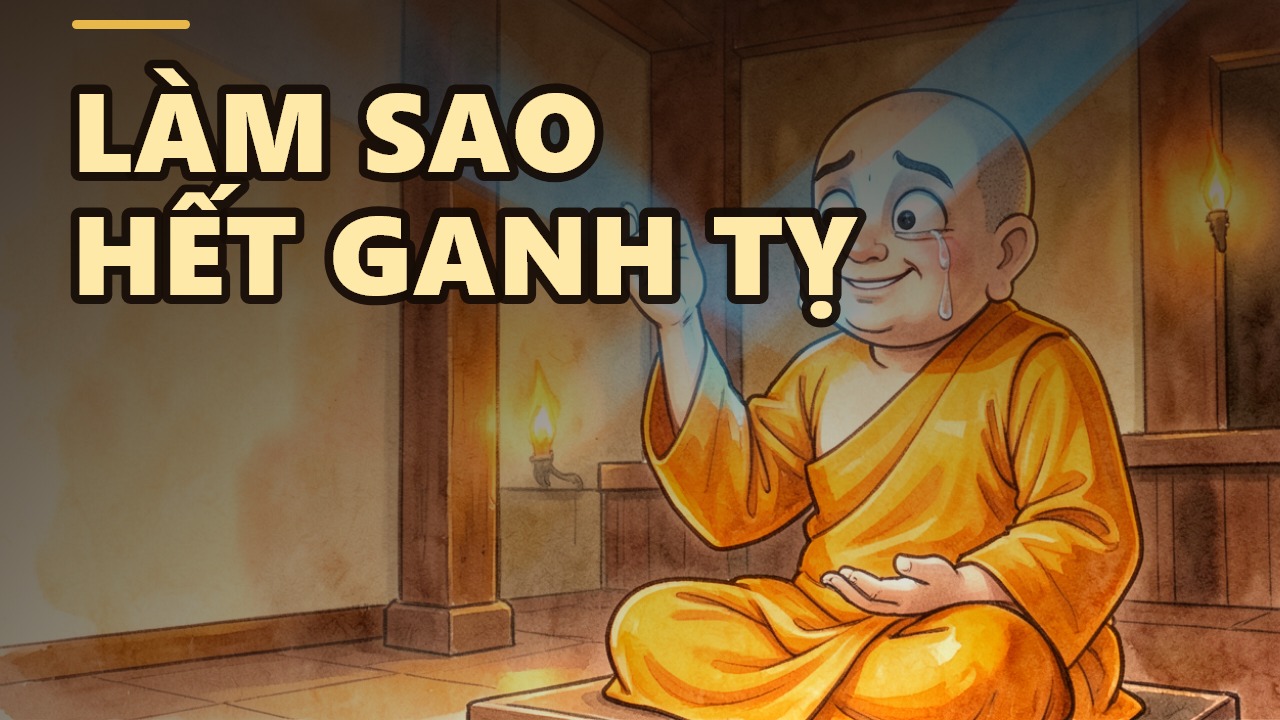
In this dharma talk, Venerable Thích Chân Quang explores the Vietnamese saying "looking up, no one is above us; looking down, no one is below us," guiding us to transform envy and contempt into respect and support, so that we may live with love and joy throughout the year.
Have you ever wondered why, during the Lunar New Year, our grandparents taught us that "in the first three days of Tết, we must not quarrel or scold one another"? And what does the saying "looking up, no one is above us; looking down, no one is below us" really mean? Many of us have surely heard these words, but do we truly understand the depth of wisdom hidden within them?
In a teaching given at the start of spring at Phật Quang Temple, Venerable Thích Chân Quang explored this saying as a New Year gift — a lesson in love and joy. Let us listen together.
Tết — the Season of Love and Joy
The teacher begins by recalling the meaning of Tết: from the joy of the season and the harvest, our ancestors wove in lessons of virtue. He says:
"In ancient times, people took advantage of the season when the harvest brought joy and made everyone live joyfully. Why did they do this? Because throughout the year, as we struggle through life, we must toil, fight, and strive, and greed, hatred and delusion arise along with it all year long. So people no longer have the space to live joyfully, no chance to forget their duty to love one another."
That is why Tết is the occasion to revisit our most precious lesson: the lesson of love and joy. Whoever can live in that spirit throughout the whole year is truly a person of virtue.
Looking Up, Looking Down: Two Attitudes to Avoid
The saying "looking up, no one is above us; looking down, no one is below us" is often used to comfort us in difficult times. But if we stop there, we can fall into the habit of comparison. The teacher warns:
"When we look up and see others better than us, our heart feels resentful and envious — we cannot bear anyone being better than us. Or when we look down and see others worse off than us, we look down on them. That is a very unwholesome state of mind."
In truth, envy and contempt deplete our blessings from merit and cause our talents to decline. Instead, we should transform these into joy for those who excel, and support for those who struggle.
Those Better Than Us, We Respect; Those Less Fortunate, We Love
The teacher teaches very concretely:
"Those better than us, we respect. Those less capable than us, we love and we support. That is virtue. Do not adopt the attitude where those better than us make us envious, or make us flatter them, while those less capable than us we trample upon and drive away."
This is the heart of a bodhisattva. When we see someone more talented and sincerely respect them, our own talents rise, life after life. When we see someone less capable and feel compassion, offering support, our blessings from merit grow. Becoming a genius is not difficult — we only need to keep this heart across many lifetimes.
Looking Up to the Saints, Looking Down to All Beings
Applied more broadly, when we look up to the saints, we give rise to reverence and a desire to learn. When we look down upon beings still lost in delusion, we take up the responsibility to help them. The teacher emphasizes:
"Looking up to the saints, we revere and learn from them. Looking down upon beings still lost in delusion, we vow to shoulder the responsibility of bringing the teachings to them. This heart is extremely important. Those who give rise to this heart carry the heart of a saint."
This is the great vow of a child of the Buddha. Spreading the teachings and sharing the words of the masters is also planting the seeds of a future dharma teacher. The more joy we feel at hearing others teach, the more blessings from merit we will have to teach in the future.
Lessons from Daily Life
The teacher gives the example of singers and dharma teachers — people easily drawn into comparing themselves with their peers. When we see another singer beloved by the public, we must not let resentment arise. He says:
"Whenever we see another singer beloved by the public, our heart must truly rejoice — only then is it virtue."
In any field, when we see someone better than us, let us rejoice for them. When we see someone less capable, let us help them. That is how we nurture the bodhisattva heart, so that our talents and merit grow day by day.
Conclusion: Giving the Gift of a Peaceful Heart
Spring is the season of life and of love. Let us offer one another a Tết that holds not only green bánh chưng, but also hearts of joy and virtue. Look up to learn; look down with compassion. Then Tết will no longer be just a few days, but an entire year of peace and happiness.
AI-assisted translation from the Vietnamese original.
Read in Vietnamese →