
Leg Pain in Meditation: Karma Being Repaid, But Why Do You Still Want to Give Up?
A teaching by Venerable Thích Chân Quang helps us recognize pain, sensations, and emotions in meditation, understanding why a practitioner can 'feel pain without discomfort'.
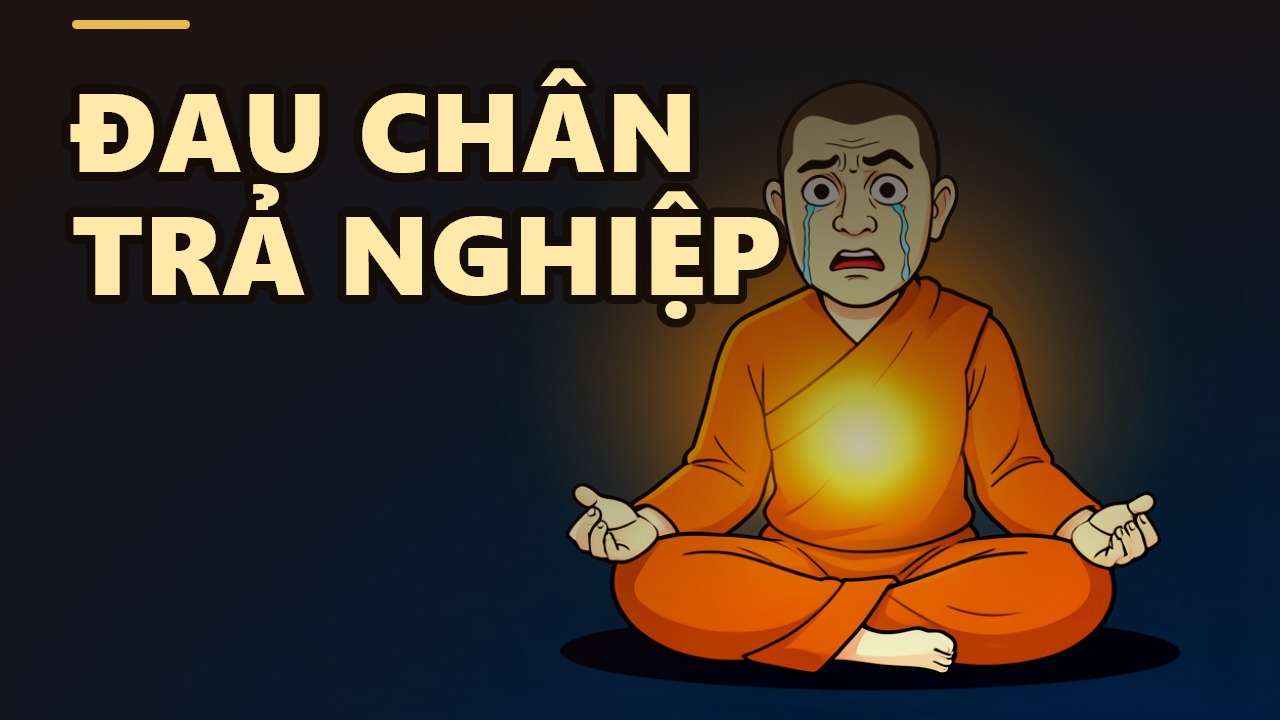
Have you ever sat in meditation until your legs hurt so much that you just wanted to... give it all up? A feeling that is both frustrating and discouraging: "My life is already happy, so why am I here enduring this pain?" If so, you are a normal person. But Venerable Thích Chân Quang sees within that pain a debt being gradually repaid, and a chain of karmic conditions unfolding step by step. Let's take a closer look.
The leg pain: A karmic debt being repaid
Venerable Chân Quang once said: "When we sit in meditation, people often experience leg pain, and this pain is a manifestation of our karma." The pain is not a punishment, but an opportunity for karma to be repaid. The more pain, the more karma is diminished. If we continue to sit until the pain and wandering thoughts cease, then when we are old, when we are sick, and when we die, we will depart in peace.
If we keep sitting until the pain lessens and wandering thoughts quiet down, it means our karma is becoming lighter. This guarantees one thing... when we are old, weak, and die, we will die in peace, free from illness and suffering.
The Venerable affirmed: "The Master only guarantees one thing: a peaceful death. If you follow the path the Master teaches." So why hesitate to persevere?
What are emotions? They are actions of the mind.
Have you ever wondered: "What are emotions?" Even the poet Xuân Diệu could not define them. Emotions are like gravity, like black holes in the universe—we know they exist but cannot grasp them. Yet, the Buddha taught very clearly: emotions are actions of the mind, and therefore they belong to the aggregate of mental formations.
Emotions are an action of the mind. Loving emotions or hateful emotions are actions of the mind. Therefore, they belong to the aggregate of mental formations.
Understanding this, we begin to see that we are no longer swept away by sudden feelings of like and dislike. Emotions can be observed and cultivated.
Sensation and emotion: A single hair split by the Buddha
The Buddha was extremely subtle in separating sensation (feeling) and emotion (craving). Sensation is pleasure or pain; emotion is love or hate. The wondrous thing is: we can pause before emotion arises. Venerable Chân Quang explains:
From praise, we give rise to a feeling—that is, a sensation. This sensation is pleasure. From this pleasure, we then give rise to an emotion of liking... we immediately like the person who spoke the praise.
In meditation, when the legs hurt, that is contact. If the mind is clear, the pain appears but does not give rise to discomfort. Thus, "pain without discomfort"—a state that a practitioner can achieve.
Pain without discomfort. The sensation is subdued, is controlled.
If we let the mind get swept away, we will hate sitting meditation and pull our legs away—that is clinging, creating new karma. But if we observe, we see the pain is just an event, and we do not paint extra suffering onto our next lives.
Praise and the mouth of criticism
Applied in daily life: The Venerable reminds us to praise others, because kind words cost nothing but build goodwill. Conversely, criticism creates bad karma.
Whoever constantly criticizes and belittles others, causing them frustration and discomfort, also creates karma, making it easy for them to encounter obstacles in the future, constantly being met with hostility and dislike.
The Venerable compared the critical mouth to "a hammer" as the Buddha said: a person born with a hammer in their mouth, swinging it everywhere they go. Choose a smile and words of praise instead.
Sitting in meditation is not just about sitting until the pain ends. It is about observing to clearly see each sensation and each emotion as it passes. When you recognize that leg pain is merely a contact, you will no longer paint extra suffering onto your life. Persevere, and you will have a peaceful death—the most auspicious day that no one can buy.
AI-assisted translation from the Vietnamese original.
Read in Vietnamese →