
Be Careful with What You Like: The Greatest Enemy of Your Life
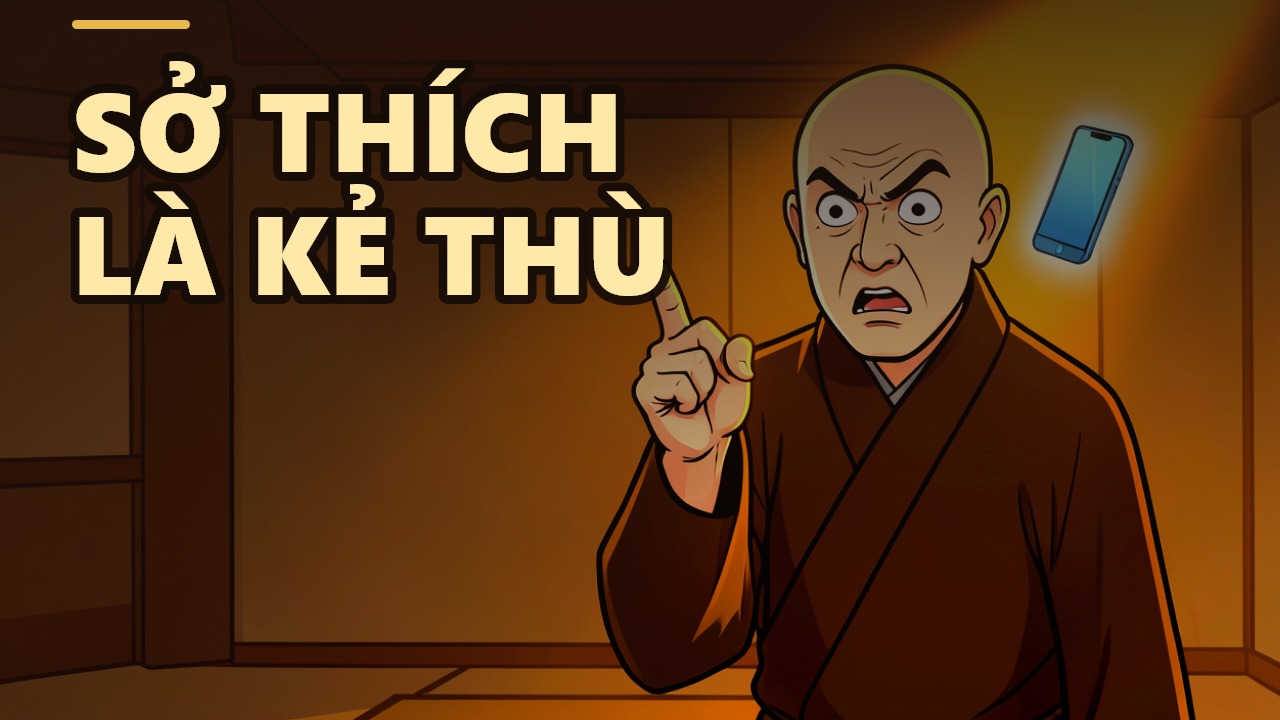
Have you ever felt an intense urge to do something, only to regret it later? In his New Year’s lecture titled “Be Careful with What You Like,” Venerable Thich Chan Quang offers a profound and highly practical reminder. He says, “In life, we like many things. Some things we like are right, some are wrong. Some likes are driven by our past karma. And some come from our intuition.” So how can we discern which likes are right and which are wrong?
**The Truth about Our Daily Likes**
He presents a thought-provoking statistic: “Of ten things we like, nine are wrong.” This means most of what we are drawn to leads us into error. He tells the story of a Buddhist laywoman who, upon meeting her current husband, had an intuition that he was the one for her—and indeed, their marriage guided them toward the Buddha's teachings. Yet others may be attracted to someone solely for their dazzling appearance, only to see their life fall apart. There are young people who want to become doctors because it seems prestigious, but who ultimately find happiness in engineering. Even seemingly harmless pleasures like meeting friends, playing video games, or holiday travel carry unforeseen dangers.
“Once you like something, not even the heavens can stop you. Don’t even mention your parents. Your greatest caution must be directed at your own desires. Your greatest enemy is what you like.”
He emphasizes that we must exercise mindfulness before all our wants, because it is the feeling of liking itself that leads us down the path of mistaken decisions.
**The Four Factors That Shape Your Preferences**
He explains that our preferences do not arise in a vacuum; they are influenced by four factors:
Wisdom: The wiser a person, the more refined their tastes; the less wise often like trivial matters. Morality: A moral person likes doing good, likes helping others; one lacking morality may like harming others. Past Karma: Debts of gratitude or obligation from past lives cause us to like certain people in this life. He shares a story of a girl who was covered with a cloak when she died by the roadside; in this life, she fell in love upon meeting that person again. However, only the one who performed the proper burial had sufficient conditions to form a marital bond. Social Psychology: Seeing everyone around us liking something, we may like it too without understanding why.
Thus, our preferences are not the absolute truth of who we are, but a synthesis of many intangible factors.
**The Greatest Enemy Is What You Like**
He offers a surprising definition: “The greatest enemy of your life is yourself. And what is this ‘self’? It is what you like.” When we like something, it commands us. It pulls us along, pushing us into hasty actions. He advises: “The true practitioner is someone who examines their own likes and restrains them, not allowing their preferences to lead them astray.”
“Only when you no longer like anything will you see what needs to be done and do it. Action then comes from necessity, not from desire.”
**Meditative Concentration Helps You Master Your Preferences**
So how can we control our cravings? He guides us: “Strive diligently to practice meditative concentration, for it brings equanimity toward all things in life. Meditative concentration helps us manage our desires, and most importantly, it helps us reach a state where we no longer crave anything.” When the mind is calm and stable, we see more clearly, illuminated only by wisdom that decides what should or should not be done.
**Advice for Living in Peace and Happiness**
Reflect on yourself each time a desire or preference arises. Ask yourself: “Why do I like this? What benefit does it bring to me and to others?” As we reduce our craving, we find it easier to live by reason and morality. Venerable Chan Quang shares: “I do not need the feeling of happiness; I need a mind that is pure and serene. I seek the happiness of inner purity, of living without fault.” This is the goal every follower of the Buddha should aspire to.
In the new spring and the new year, let us pray for a calm and settled mind, with enough clarity to recognize what is a right desire and what is a wrong one. Let us practice letting go of useless cravings, to live a life of nobility and purpose. May you always find peace within the true Dharma.
AI-assisted translation from the Vietnamese original.
Read in Vietnamese →