
Meditative Attainment or Saintly Realization? Do Not Lose Your Way on the Meditation Cushion
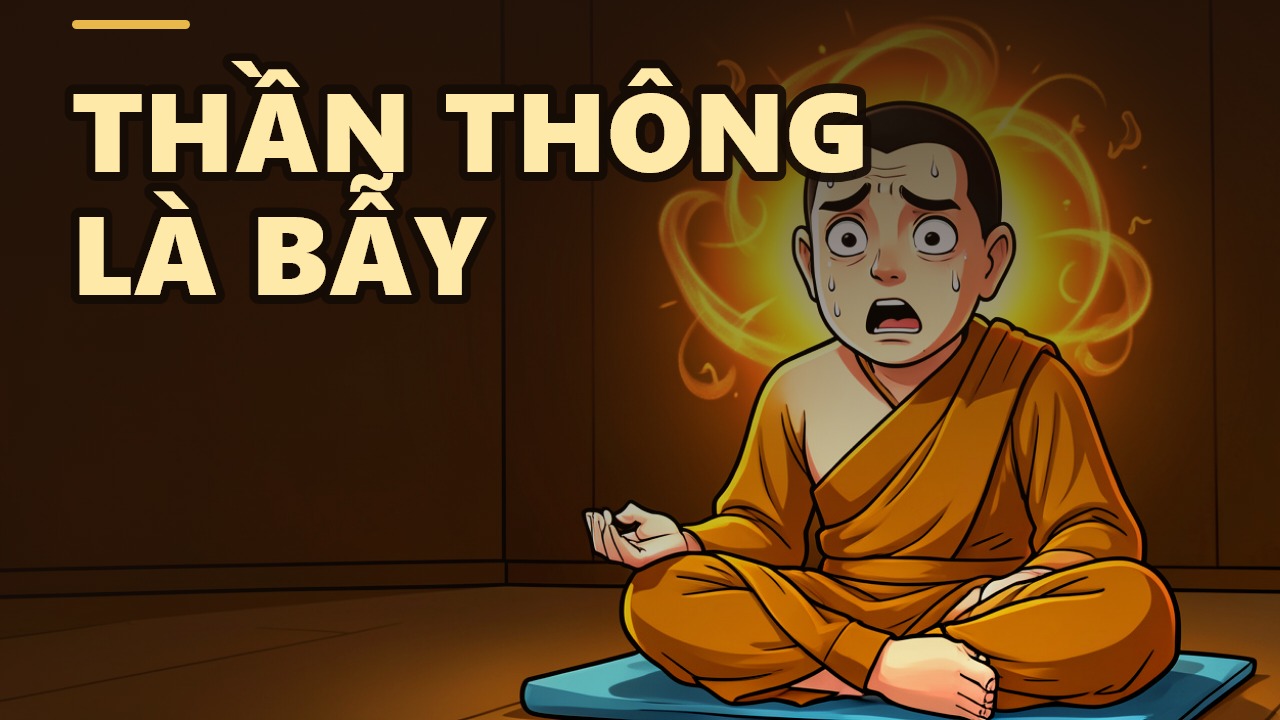
Venerable Thich Chan Quang’s teaching helps us clearly distinguish between two paths of meditation practice: meditative attainment, which involves reaching specific states and supernatural powers; and saintly realization, which means overcoming all obstacles to achieve liberation. Let wisdom guide your way, and do not cling to illusions.
There was once a disciple who followed his teacher in meditation practice but later left to join another lineage, claiming that enlightenment could be achieved in just six months. Ten years passed, yet he had attained nothing. However, the bond between teacher and student was lost forever. This story is not rare among practitioners. So, what is the true purpose of meditation? Is it for meditative attainment—gaining special states or psychic powers—or for saintly realization? Today, listen closely as Venerable Thich Chan Quang explains this profound difference.
## Meditative Concentration Is the Core of Buddhism
The Master teaches that meditative concentration is the core of Buddhism. Yet, because few could practice it and no one taught it properly, this tradition was nearly lost. People resorted to chanting sutras and reciting the Buddha’s name merely to pass the time. The world is now beginning to return to meditation. If Vietnam does not embrace this practice, we will fall behind. We are currently reviving meditative concentration on the homeland of Patriarch Tran Nhan Tong. The Master emphasizes:
“Sitting motionless in silence, going deep into inner clarity. It sounds simple, but because no one could do it, no one taught it. Because no one practiced and no one taught, the lineage was broken.”
Today, those sitting in this meditation hall are upholding the honor of Vietnamese Buddhism before the world. They are people of wisdom who refuse to accept their ordinary human condition.
## Five Obstacles in Meditation Practice
Meditation is not simply sitting still. The Master teaches that practitioners must gradually pass through five obstacles.
The first obstacle is the body. Sitting for long periods causes pain, numbness, and discomfort.
The second obstacle is discursive thought. The mind constantly wanders, agitated and unsettled.
The third obstacle is hallucination. One may feel bliss, see lights, or even perceive internal organs. These are not achievements; they are hindrances.
The fourth obstacle is psychic power. Knowing others’ minds or seeing past and future lives. Many stop here, becoming arrogant and establishing new sects.
The fifth obstacle is ego. Only by transcending the self can one touch the realm of saints.
The Master warns:
“What is this feeling of bliss or the light you see? These are hallucinations that must be overcome, not treasures to be proudly held and enjoyed.”
Many mistake these experiences for results. They boast about them or use them to attract followers, unaware that they are trapped at the third obstacle.
## How Does Meditative Attainment Differ from Saintly Realization?
The Master explains that those who view hallucinations and psychic powers as results are practicing for meditative attainment. But the Buddha taught us to practice for saintly realization. These two paths are far apart.
“Practice meditation for saintly realization, not for meditative attainment.”
Meditative attainment involves achieving spiritual states, possessing psychic powers, and experiencing bliss. However, this is merely enjoying blessings from merit. When the merit is exhausted, these experiences fade. The Master recounts a monk who possessed psychic powers for three years, only to lose them completely and return to normalcy. Another entered deep absorption for six days, but eventually emerged. In contrast, saintly realization means overcoming all five obstacles, letting go of the ego, and attaining the fruit of Arhatship or full enlightenment. The Buddha achieved this, and He showed us the path.
## Only Those with Wisdom Can Truly Practice Meditation
From a worldly perspective, consider two farmers. One sends his child to school to escape the hardship of working the fields under rain and sun. The other says, “This life is good enough.” The Master states:
“Only those with wisdom are dissatisfied with their current condition. Only those with wisdom recognize how lowly their present state truly is.”
Meditators are similar. They know they are ordinary beings suffering in samsara, and they yearn to rise above. This is why they persist in sitting month after month. Those who say “this is fine,” regardless of wealth or education, lack true wisdom.
Remember the Master’s final words: “Practice meditation for saintly realization, not for meditative attainment.” If you are swept away by lights, bliss, or psychic powers, you are stuck at an obstacle. Be diligent and persistent. Let go of the ego, and place your heart on the path of liberation. Each person sitting here is a seed of Vietnamese Buddhist meditation. Do not let the world surpass us. Instead, let our meditation illuminate the world.
AI-assisted translation from the Vietnamese original.
Read in Vietnamese →