
Instincts: The Invisible Force Controlling You and the Path to Sainthood
To understand instincts correctly is to realize that a saint is not merely someone who performs good deeds, but one who has eradicated the root instincts deep within the soul.
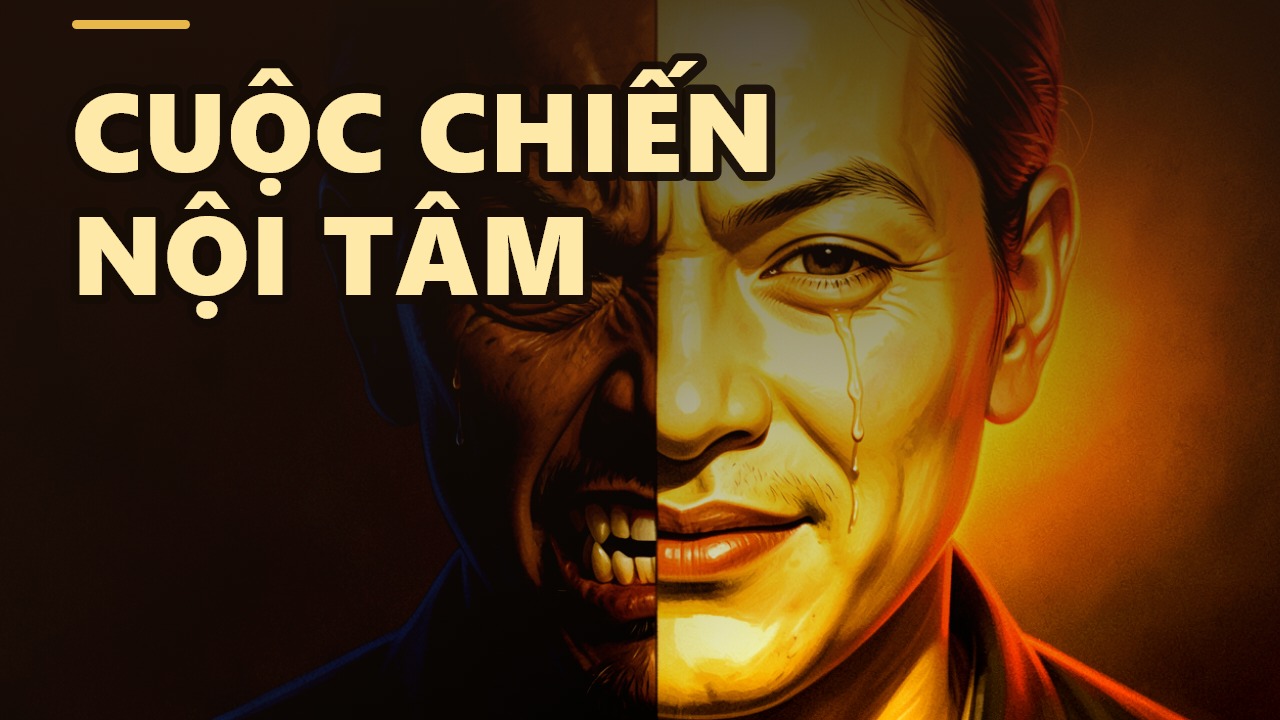
When Hunger Opens Dark Doors
We often think of instinct as something simple: eat when hungry, drink when thirsty. But have you ever wondered why an ordinary person might commit a sin for just a piece of food? Venerable Thich Chan Quang describes prisoners confined in conditions of severe hunger. They oppress, fight over, and even kill each other for a single morsel. What seems like a small instinct can shatter all moral principles when pushed into harsh circumstances.
"That instinct is fierce. It disregards everything—morality, ethics, law, honor—abandoning it all to satisfy the commands of the inner instinct."
Desire: The Power of an Invisible Current
Instinct is not limited to hunger. The teacher explains the difference between men and women through chromosomes, creating an invisible bio-electricity that draws us together. Yet this same force can become a demon, driving people to cruel actions. He tells stories of elderly men, seventy or eighty years old, harming children. While hard to comprehend, he notes that the instinct of desire remains intact within them. They differ from us only in whether they exercise restraint.
"The value we call being a respectable person does not mean that person has no bad qualities; it simply means they have suppressed those bad qualities."
He adds that even preschool children begin to naturally pair up and like one another. We should not underestimate this, because if such instincts are not guided, they lead to unpredictable distortions.
Instincts Are Both Beneficial and Harmful
The teacher analyzes various types of instincts. Some help protect life, such as the fear of heights or falling. Others protect the species, preventing incest. There is also the mother’s instinctive love for her child. Interestingly, a mother’s love is instinct, while a father’s love is considered ethical. Why? Because nature intended that if both parents loved their child with overwhelming intensity, the child would be spoiled.
"A mother’s love for her child is not ethics; a father’s love for his child is ethics."
However, humans always find ways to bypass these natural laws. If a mother loves too much, the child becomes spoiled; if a father loves too little, he may seek affection elsewhere. This is how humans distort nature. From this distortion arise many tragedies in life.
A Saint Is One Who Eradicates Instinct
This is the key insight of the teaching. Do not hastily call someone a saint just because they do good deeds. If a wealthy man gives away all his money, we praise him as a saint, but this may not be true. We do not know if he has eradicated his instincts. The teacher offers a more precise definition, rooted in psychology and Buddhist philosophy.
"A saint is one who has eradicated instinct."
This definition is not easy to grasp, as we must first clearly understand what instinct is. However, it serves as a foundation for seeing sainthood not through outward appearances, but through profound internal transformation.
Three Instincts to Eradicate for Stream Entry
To become a stream-enterer, the first stage of sainthood, one must eradicate three instincts known as fetters: self-view, which is selfishness; doubt, which is confusion about right and wrong; and attachment to rites and rituals, which is rigid adherence to rules. This sounds simple, but overcoming selfishness alone is a great achievement. What about overcoming doubt? The teacher says that one who eliminates doubt can see right and wrong with absolute clarity.
"Once they perceive right and wrong with such precision, they become confident and steadfast. No amount of money, fame, or threats can change their perspective."
Such a person is no longer swayed by public opinion or tempted by worldly desires. They view all things with the wisdom of a saint. This is why we should humbly seek to learn from them.
Begin by Seeing Your Own Instincts Clearly
This teaching is not mere theory. It invites us to look inward. Every one of us has instincts. Do not fear them, for they are natural. Instead, learn to restrain them through practice. Each step in cultivation weakens instinct and strengthens wisdom. Start today by identifying the invisible urges within yourself. Only when we understand them can we transcend them. Then, the path to sainthood will no longer seem distant.
AI-assisted translation from the Vietnamese original.
Read in Vietnamese →