
What Makes Monastic Life So Different? Transcending Family Partiality
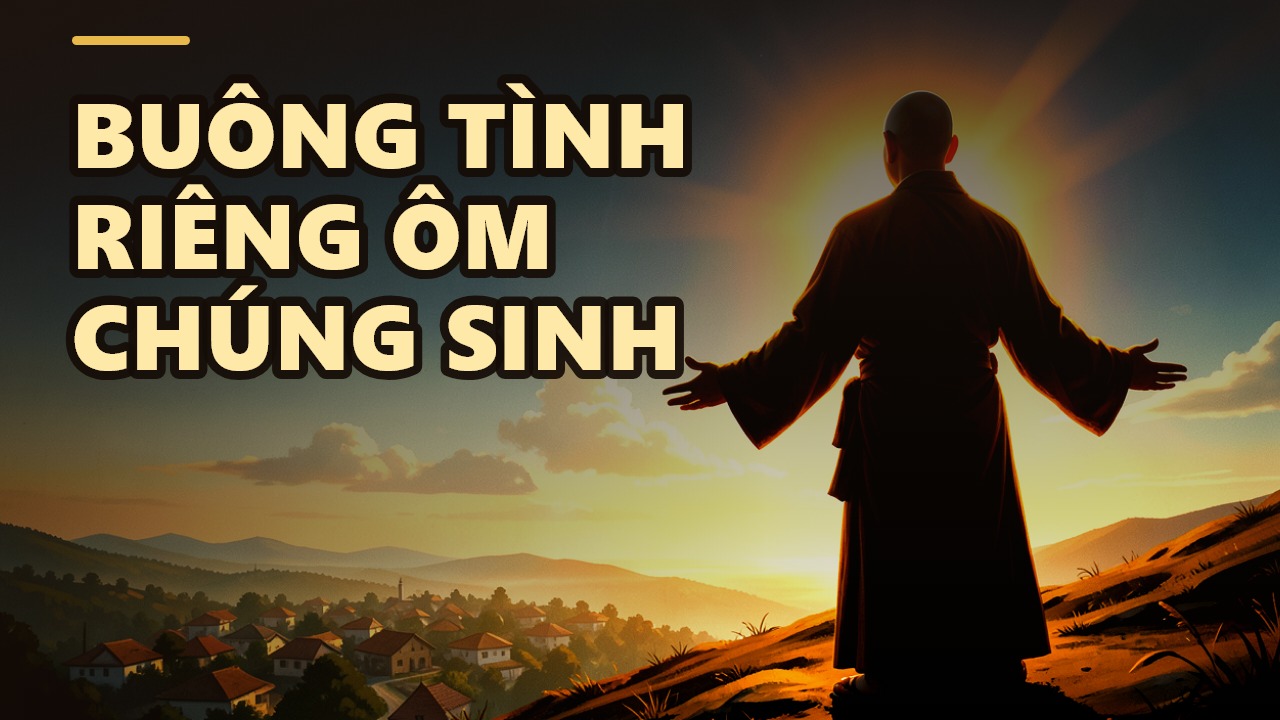
Have you ever wondered why monastics — those who leave home and renounce all comforts — are so deeply respected? What creates the distinction between a monastic and a layperson? The answer lies in a single word: "Mind."
The Three Jewels: Buddha, Dharma, Sangha
Buddhism has three jewels: the Buddha, the Dharma, and the Sangha. The Buddha is the enlightened one who founded this path. The Dharma is His teachings. And the Sangha consists of those who have renounced the world to live fully in accordance with the Dharma. It is through the Sangha that the sublime teachings of the Buddha are preserved. Master Thích Chân Quang emphasizes:
"Who is the Sangha? It is one of the three jewels of Buddhism: the Buddha, the Dharma, the Sangha."
"Without the Sangha, how could we understand these transcendent teachings? We chant sutras without understanding and need someone to explain. That is the very role of the monastics."
Renunciation – More Than Just Shaving One's Head
However, "going forth" is not simply about entering a temple, wearing monastic robes, and shaving one's head. Ultimately, the term "going forth" speaks to its root: leaving behind family. The Master explains:
"The difference between a monastic and a layperson is the partiality towards family."
A true monastic no longer harbors partiality towards their own family. Because when partiality remains, the heart remains confined within a small home. Only by letting go of personal affection can the mind expand vast and boundless.
Why Must One Abandon Partiality?
The Buddha taught that the highest attainment — the state of Arhat — is reserved only for those who have completely purified their partiality towards family. This is a mandatory standard. The Master shares:
"The attainment of Arhatship is the supreme fruit, the highest holy fruit in Buddhism, available only to one who has completely emptied their heart of family partiality."
Imagine: in a battle, an enemy could threaten us by endangering our family. This is the deadly weakness of every person. A monastic renounces that weakness to become fearless, serving only the Dharma and all sentient beings.
Monastics – "Nuggets of Gold" to be Protected
The Master uses an analogy: if we have a pile of one hundred *lượng* of gold, we treasure it and must protect it from being robbed or substituted with fool's gold. Monastics are the same; they are our "nuggets of gold":
"Monastics are also like that. The monastics are our nuggets of gold."
So how should we protect the Sangha? First, we must not let anyone take them away — do not let young women approach handsome young monks, do not let them return to lay life. Second, we must not let "fool's gold" — that is, those with false practice who lack true cultivation — replace the true practitioners. We must guard and protect the Triple Gem, so we always have a refuge.
Practicing in Daily Life
It is not only monastics who need to learn to abandon partiality. Each of us can begin to live with greater inclusivity, seeing everyone as our own family. Our loving hearts will then expand:
"Our loving heart expands across heaven and earth to embrace all sentient beings, no longer showing partiality to any single person."
Let us cherish true monastics, and also practice living without partiality ourselves. Only then are we worthy of being children of the Buddha, whether monastic or lay.
AI-assisted translation from the Vietnamese original.
Read in Vietnamese →