
Why Do Buddhists Visit the Temple? – A Lesson for Every Monastic
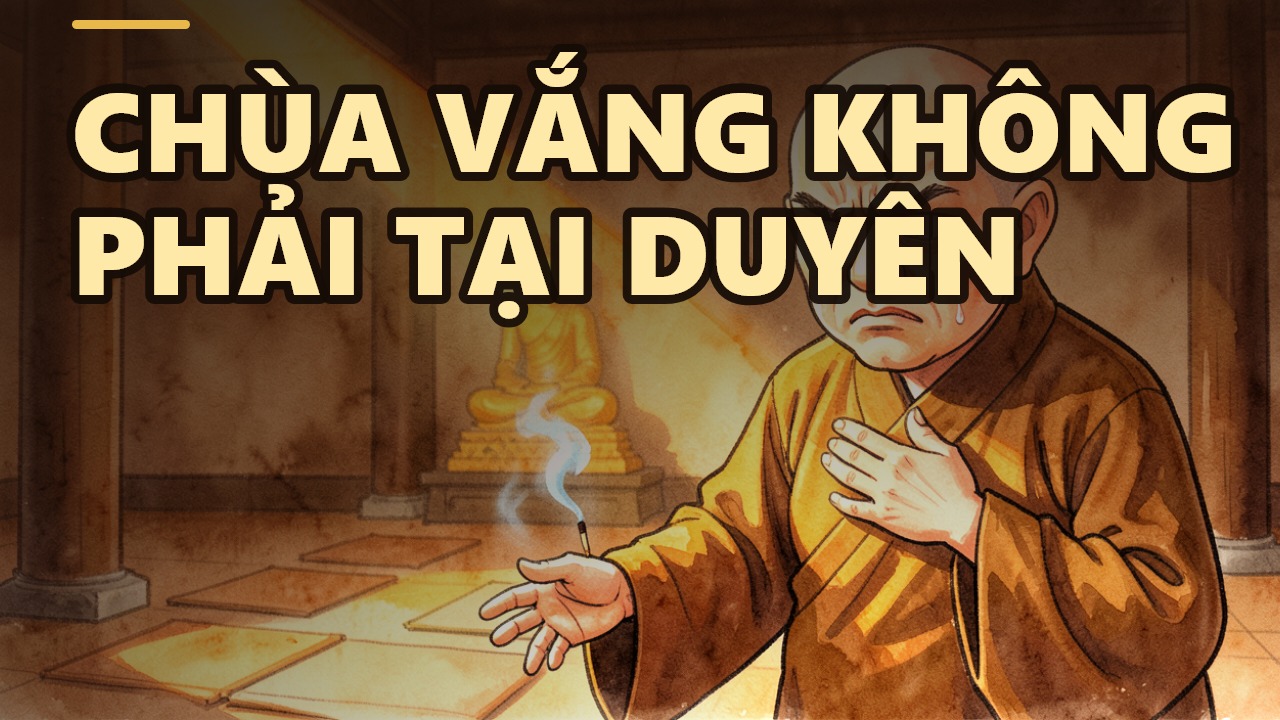
Have you ever wondered why some people rise early to chant sutras at the temple, while others hesitate at the gate? This seemingly simple question holds a profound lesson for those who study the virtues of monastics. In a sharing session at a retreat, Venerable Thích Chân Quang devoted considerable time to discussing the topic “Why do Buddhists visit the temple?”—and more importantly, how to make the temple truly a spiritual destination for everyone.
**Two Categories of People, One Responsibility**
He mentioned two categories of Buddhists: those with wholesome roots from many past lives who naturally feel drawn to the temple, and those without such a connection, who may be indifferent or have never stepped through the door. The crucial point is that we must not neglect the latter. Instead of saying “that person has little connection,” a monastic must ask themselves, “Have I been enthusiastic enough to create a wholesome connection for them?”
“For those who do not yet have a connection, we must create that connection for them, plant wholesome seeds, and never leave them uncared for.”
This is a powerful reminder: the responsibility of the Sangha extends beyond caring for loyal Buddhists. They must also strive to bring the Buddha's teachings to strangers, like a hand reaching out to those drowning in darkness.
**The Temple Must Be an Appealing Destination – If It Is Empty, Look Within**
We may have heard the saying, “An empty temple is because the abbot has little merit.” But Venerable Thích Chân Quang offered a different perspective: an empty temple is because it lacks appeal. He stated plainly not to blame karmic conditions, but to examine what the temple is missing.
“Do not blame it on fate, on having few connections in the past. Forget the past; talk about the present. It is because our temple lacks appeal.”
What makes a temple appealing? It is when people arrive and feel joyful, find benefit, and gain faith and hope. He emphasized that a temple must meet various spiritual and ethical needs—from prayers for peace and ceremonies for the deceased, to listening to Dharma talks, learning skills, and even artistic activities. Perhaps every temple needs to become such a “rich environment.”
**Many Reasons, One Response**
Each person comes to the temple for a personal reason. Some have lost a parent and come to pray for the deceased; some are ill and seek health; some bring their children to learn ethics; some are drawn by superstitious interests like fortune-telling or geomancy; others love Buddhist philosophy. The Venerable did not distinguish between good or bad reasons. He simply said: whatever people need, the temple should provide.
“If they need prayers for peace, offer that. If they need prayers for the deceased, offer that. If they need fortune-telling, allow it. If they need ethical teaching, teach it. If they need moral education, provide it. If they want to learn devotional music or other skills, facilitate it. Whatever Dharma talk is needed, do it. Just do not do the opposite.”
This reveals the flexibility and compassion of those guiding the community. We cannot confine practice within too rigid a framework but must be attentive to the capacity of every being.
**A Safe Destination for Children and Families**
One of the greatest assets the Venerable highlighted was the ethical discipline of the monastics. Many parents bring their children to the temple because they see it as a “safe destination”—a place where their children are protected from harm and negative societal influences. This demands that monastics live exemplary lives, strictly uphold their precepts, and especially maintain propriety in their relationships with female Buddhists.
“The monastics must be like immovable mountains of rock for beings to lean on. They must be like great trees that do not break or fall, for birds to come and perch.”
When monastics are firm in their ethical conduct, the temple truly becomes a place where people can place their complete trust. And that trust will be passed down from generation to generation.
**A Teacher’s Spiritual Strength: Unswayed by Gold and Glory**
He also warned that monastics must not let themselves be shaken by fame, profit, wealth, or status. When a wealthy person visits, if one feels overwhelmed or overly respectful, it means one has not transcended worldly ways. A monastic with genuine spiritual strength views money and status as passing wind, and maintains a calm, dignified demeanor.
It is through diligent practice that the inner world of a monastic expands and becomes less vulnerable. Only then can their prayers and dedications be effective. As the Venerable taught: in ceremonies for the deceased, the departed should be seen smiling, no longer weeping.
**Conclusion: The Temple as a Community of Love**
Every temple should be a haven where people find safety, faith, and happiness. Venerable Thích Chân Quang said that only by achieving this can we repay the Buddha’s kindness. Building a temple requires immense offerings from devotees, but if the temple fails to attract and benefit sentient beings, that is a great waste.
Therefore, let us together—every monastic and every Buddhist—transform our temple into a destination that is “appealing, safe, and beneficial.” From there, every step towards the temple is a step towards compassion, towards the Buddha’s land.
AI-assisted translation from the Vietnamese original.
Read in Vietnamese →