
Why Are Some People Always Optimistic While Others Are Always Anxious?
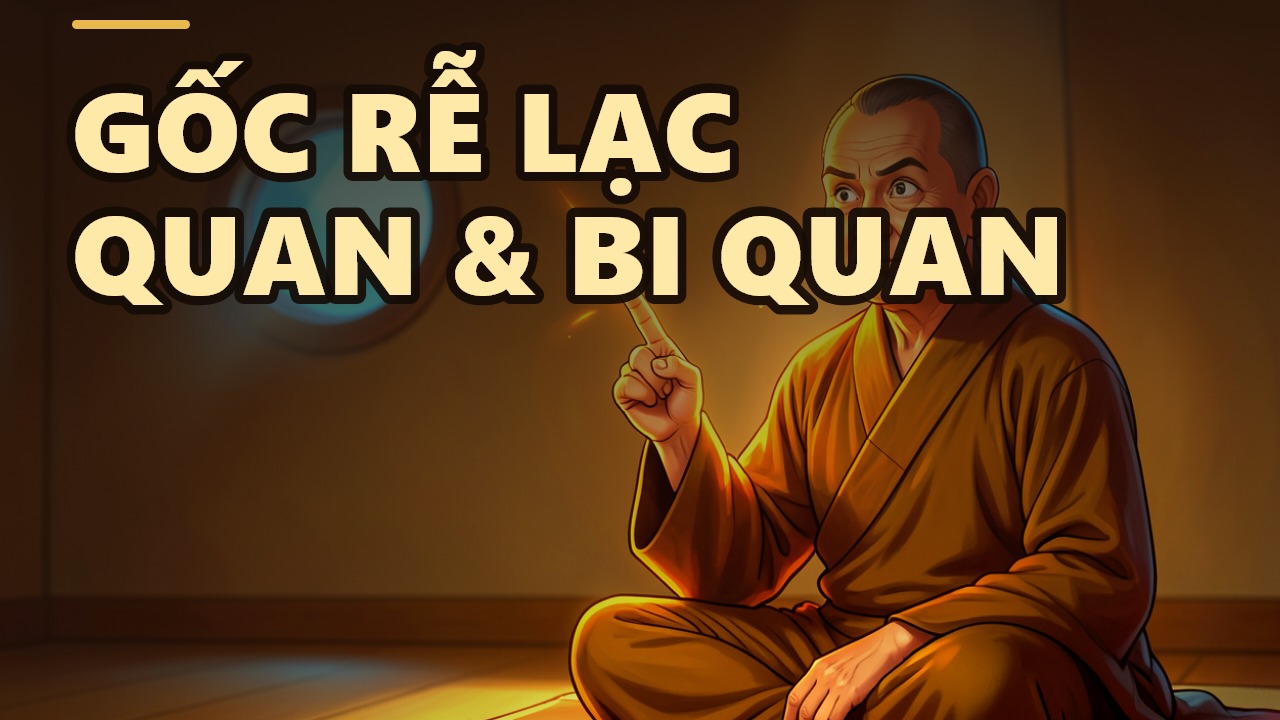
This article explores the connection between optimistic and pessimistic psychology and each person’s past good and bad karma. Only by living virtuously can we truly find joy and trust in life.
Early in the morning, when you open your eyes to a new day, have you ever wondered why some people wake up with a smile while others begin their day with vague worries? In his dharma talk on optimistic and pessimistic psychology, Venerable Thich Chan Quang pointed out that it is not external circumstances that determine how we view the world, but rather our inner mind/heart.
## Optimism and Pessimism: Two Perspectives, Two Worlds
Optimism is seeing the world through joyful eyes, while pessimism is seeing it through sad eyes. Venerable Chan Quang offered very everyday examples. When someone smiles at you, do you think they care for you or are about to borrow money from you? When someone stands at your gate, do you think they are visiting or coming to collect a debt? All these reactions reflect our own state of mind and perspective.
"If we think this person surely cares for us and has affection for us because they smiled, then we are optimistic. But if we think they smiled because they are about to borrow money, then we are pessimistic."
In just one moment of seeing each other, our psychology leads to two completely different interpretations. This shows that life is not entirely what happens outside, but rather what we feel about it.
## The Roots of Pessimism: Past Mistakes and Guilt
Venerable Chan Quang asked: Why are some people pessimistic? Pessimists often have "causes" rooted in their lives and actions. A debtor fears that a knock at the door means collectors have arrived. Someone who stole last night panics when they see the police. A wife with a secret pales when someone congratulates her on having a daughter.
"For example, there is a reason why an optimistic person reacts differently. If a police officer comes to knock on your door and you happily open it without worry, you might think he brings good news. Meanwhile, others see the police and immediately assume something related to a crime or case is happening."
Obsessions from the past keep returning, causing us to view everything through dark lenses. Therefore, pessimism is not an incurable disease; it is the fear of a soul carrying a heavy burden.
## Optimism Is the Sweet Fruit of a Pure Mind
The Buddha taught that happiness is not about having much money, but about not doing wrong. When we do nothing wrong, we possess a strange confidence. Venerable Chan Quang shared the story of a chief accountant in a major economic case. While the entire leadership was arrested, only she was invited by the police to work respectfully. This was because she was a Buddhist vegetarian who lived with discipline and had no ill-gotten gains.
"The Buddha defined happiness as not doing anything wrong. Keeping the precepts and avoiding wrongdoing brings happiness. There is no fear, no need for pessimism. Whatever comes, we can remain optimistic because we have done nothing wrong."
When body and mind are pure, optimistic energy naturally radiates. We do not need to force ourselves to be happy; happiness is the result of an authentic life.
## Lessons from the Garden: Balancing Openness and Caution
Two people look at the same beautiful garden. The optimist wants to remove the fence so everyone can enjoy it, viewing it as a gift to the world. The pessimist wants to build a higher wall to prevent theft. Venerable Chan Quang noted that optimism helps us live joyfully and harmoniously, but can lead to negligence. Pessimism helps us be careful, but makes the heart heavy. So, which attitude should we choose?
"Optimism means we simply hope for something good. Life may have unpleasant things, but let us wait until they arrive before worrying. As long as bad things have not come, let us stay happy and hopeful."
A wise person is not one who constantly calculates gains and losses, but one who opens their heart to life while maintaining mindfulness.
## Loyalty and Happiness: The Peak of Ethics
In life, we need loyalty to trustworthy people, to our country, and to our ideals. But some ask: "Is loyalty worth it if the other person might not be good?" Venerable Chan Quang affirmed that this question is a trap because it calculates based on self-interest. An optimist believes that after careful consideration, one can entrust themselves fully. If we always compare and calculate, we will never know the happiness of loyalty.
"When we have someone to whom we can be absolutely loyal, that is a great happiness. If you keep calculating, trying to be clever, and refuse to be loyal to anyone, you will live suspended forever, lacking spiritual strength."
Hero Le Ma Luong once said: "Human happiness is standing on the battlefield fighting the enemy." In that moment, loyalty to the country surges, and that is the greatest happiness.
Dear friend, optimism or pessimism is not a fixed color, but an internal map. Look within yourself. If you are frequently anxious, live more truthfully, keep the precepts, and do good deeds. If you are already peaceful, nurture that peace by living with compassion and loyalty to what is good. Life is like a garden; let your steps be light and your heart wide open like sunlight.
AI-assisted translation from the Vietnamese original.
Read in Vietnamese →