
Why a Right First Step Can Turn Wrong on the Path of Practice
A dharma talk by Venerable Thích Chân Quang helps us recognize the subtle traps between right and wrong in practice, from venerating the Buddha, making prayers, and believing in cause and effect (karmic law), to our responsibility toward all sentient beings.
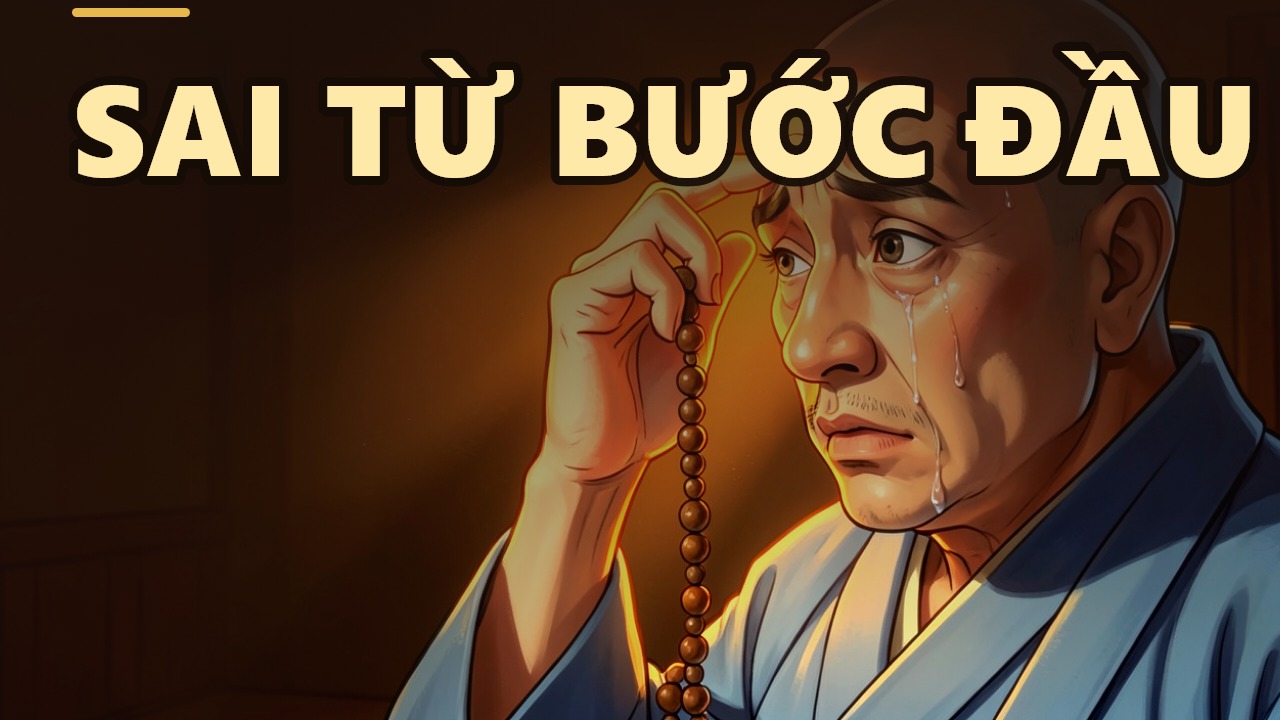
Some people diligently venerate the Buddha, pray, and believe in cause and effect (karmic law), yet in their final years they encounter much unease. Why is that? Today, Venerable Thích Chân Quang helps us realize that some things may seem right, but without wakefulness, we can go wrong from the very next steps.
Venerating the Buddha: A Solid First Step, But Not Enough
When entering the path, the first quality of heart and mind we need is reverence for the Buddha. This is a solid foundation that helps us restrain our base desires. But the teacher warns:
"Without a sage to revere, our instinctive negative thoughts will keep arising on their own."
Venerating the Buddha is right, but being right at the first step does not guarantee we will always be right. Because within our prayers, we may unknowingly send along very subtle forms of greed, hatred and delusion.
Lofty Prayers: Beautiful, Yet Still Possibly Wrong
Once we know the path, our prayers become loftier: praying to advance diligently, attain noble fruits, and save all sentient beings. It sounds wonderful! But the teacher points out:
"Praying that I may advance diligently — but what about all the others? Praying that I may attain noble fruits — but what about all the others? ... It goes wrong precisely in the part that seems good."
Because the ego is still quietly being exalted. The vows of the patriarchs are truly complete: "We dedicate this merit to all disciples and sentient beings, may all perfectly attain Buddhahood." We need to learn from that vast, selfless heart.
Understanding Cause and Effect Wrongly: From Right View to Wrong View
Believing in cause and effect (karmic law) is right; it is the first step of right view. But if we reason wrongly, we can become selfish. For example:
Seeing a loved one do wrong yet not admonishing them, out of fear of "cause and effect (karmic law)."
Grabbing money recklessly because a fortune teller said we will end our days begging.
Not caring about a misled neighbor because "it is their family's business."
The teacher emphasizes:
"Living in this world, we always bear responsibility for one another, even toward the most unfamiliar strangers in our lives."
Whether it is a neighbor or a stranger passing by on the street, we still have responsibility. It is precisely this heart that plants the seed of sagehood for the future. If we close ourselves off in irresponsibility, we shut the door on all merit.
Right Effort: A Long Stage That Requires Resolve
In the Noble Eightfold Path, right effort differs from diligence. Diligence is broad — being industrious in doing all good things. Right effort is narrower, focusing only on meditative concentration. The teacher warns that this is a very difficult stage:
"Right effort is a very long stage — let me report to you all, thirty lifetimes is possible. That means we may go through the stage of right effort, diligently practicing meditative concentration, with no results at all for thirty lifetimes."
Do not imagine that practice is easy. The deeper our understanding, the more patient and humble we must be. Never think we already know enough. Only an Arhat is called one with nothing more to learn; as for us, we must keep learning forever.
Keep Learning Forever and Live Responsibly
What is fascinating is that right and wrong lie very close together. One right step does not guarantee we will always be right. Therefore, on the path of practice, every vow, every reasoning about cause and effect (karmic law), and every action needs wakefulness. Remember the teacher's instruction: always be responsible toward all sentient beings. That is planting the seed of sagehood for ourselves.
AI-assisted translation from the Vietnamese original.
Read in Vietnamese →