
Self-Proclaiming Sainthood: The Gravest Offense for Practitioners – Lessons on Speech and Precepts
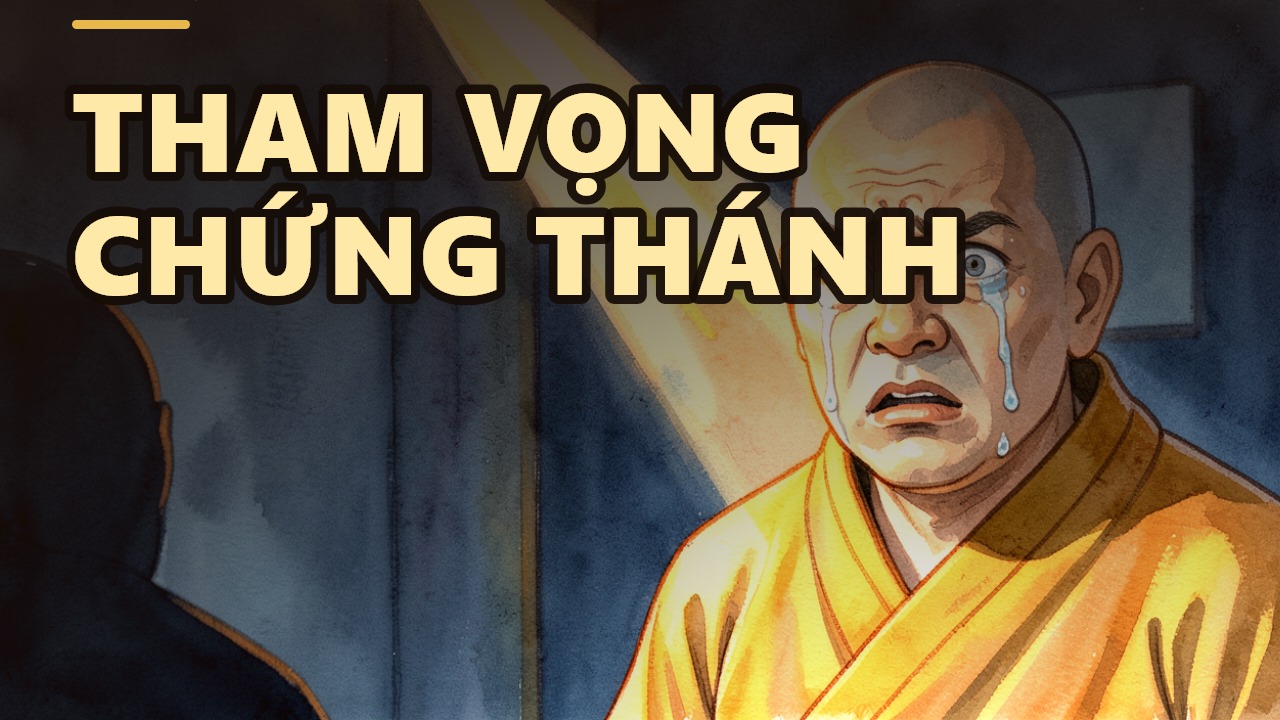
In a dharma talk on precepts, Venerable Thich Chan Quang recounts the story of a Japanese cult leader who boldly claimed to have attained full enlightenment. Using the guise of sainthood, he deceived his followers, accumulating wealth and power, which ultimately led him to commit unimaginable crimes. This story compels us to ask ourselves what causes a practitioner to fall into such grave error. Where is the boundary between truthful speech and sinful words?
## The Grave Precept: When Words Exceed Truth
Within the Buddha’s precepts, the most serious offense for a monastic is falsely claiming to have attained saintly realization when one has not actually achieved it. This is a parajika offense, meaning that upon committing it, one can no longer remain within the Sangha. Venerable Thich Chan Quang explains this severity clearly.
He notes that those who commit such an offense are expelled from the community because the position of a saint is incredibly high. People seek this state through their entire lives, sacrificing themselves over many lifetimes. Yet, lacking such merit, some individuals lie about their attainment simply because they crave admiration and respect from others.
This phenomenon occurs in various new religious movements. Individuals with no special spiritual achievements hastily declare themselves enlightened, then manipulate followers into doing wrong. Why do they dare to do this? It stems from ambition and a desire for reverence, causing them to forget the true Dharma.
## Why Are Practitioners Prone to Ambition?
A question arises: why can ordained people be dominated by ambition? Venerable Chan Quang points out the deep-rooted cause. He explains that if one’s mind at the time of ordination is not aligned with the spirit of the true Dharma, problems arise. Some practice with the goal of gaining something, seeking respect, fame, profit, or status, rather than practicing self-liberation and helping others as the Buddha taught.
When ideals are unstable, practitioners may view being worshipped by others as their primary objective. They engage in spiritual practice not for liberation, but for praise. For this reason, the Buddha teaches us to always return to the path of non-self (anatta).
## The Aspects of Existence and Emptiness: The Danger of Bias
The purpose of Buddhism can be presented through two aspects: non-self (anatta) and existence, which includes essence, supernatural powers, and wisdom. If emphasis is placed solely on the aspect of existence, practitioners easily develop ambition. Venerable Chan Quang warns against this imbalance.
He states that if a teacher instructs disciples to focus only on these worldly attainments, subtle ambitions will arise. This is a danger we must recognize. Therefore, the Buddha often emphasized the aspect of non-self (anatta) and the cessation of ignorance to prevent such ambition. While this may sound negative, it is a method to protect practitioners from significant errors.
The Buddha frequently spoke of liberation and the aspect of emptiness, particularly non-self (anatta). Although this might seem dull or negative, its brilliance lies in avoiding the trap of ambition.
## Four Types of Lies: Which Words Bring Blessings?
Beyond the sin of falsely claiming sainthood, there are other forms of lying. Venerable Chan Quang analyzes four qualities of speech. First, speaking truth that increases wholesome dharmas is the most valuable form of speech. Second, speaking truth that decreases wholesome dharmas should be avoided, as it may discourage others. Third, lying that temporarily increases wholesome dharmas may offer short-term benefits but lacks durability. Fourth, lying that decreases wholesome dharmas is the gravest offense.
He clarifies that lying to hide one’s own faults or slander others stems from a bad heart. Conversely, lying to take blame oneself or to save others comes from a good heart and is not immediately judged as a crime. However, only truthful speech that increases wholesome dharmas remains eternally beneficial. We should choose to speak truths that help listeners grow in virtue, ensuring both blessings and lasting value.
## Learning to Speak Truthful and Valuable Words
In daily life, we must remember that not every truth needs to be spoken. If a fact does not help others grow morally, it is better kept silent. Conversely, true stories about spiritual practice, compassion, or filial piety deeply resonate with listeners.
Venerable Thich Chan Quang shares his personal experience. In his teachings, he cites only real people and events that he knows to be true. He refuses to tell ancient tales whose authenticity cannot be verified. This offers a profound lesson for everyone: speak truthful words that are useful, avoid lying, and refrain from boasting. Practitioners especially must remain mindful never to claim enlightenment before truly attaining it.
Precepts are not meant to bind us but to protect our souls. Speech is the door of the mind; if careless, it can lead us into abysses. Let us practice speaking truthful, beneficial words and live according to the path of non-self (anatta), so that every sentence becomes a seed of goodness for the world.
AI-assisted translation from the Vietnamese original.
Read in Vietnamese →