
Practice Is Hard – But Not Practicing Is Even Harder
Understanding why practice is difficult, the challenges along the path, and the four conditions for progress, helping us stay steadfast and diligent on the journey out of samsara (cycle of rebirth).
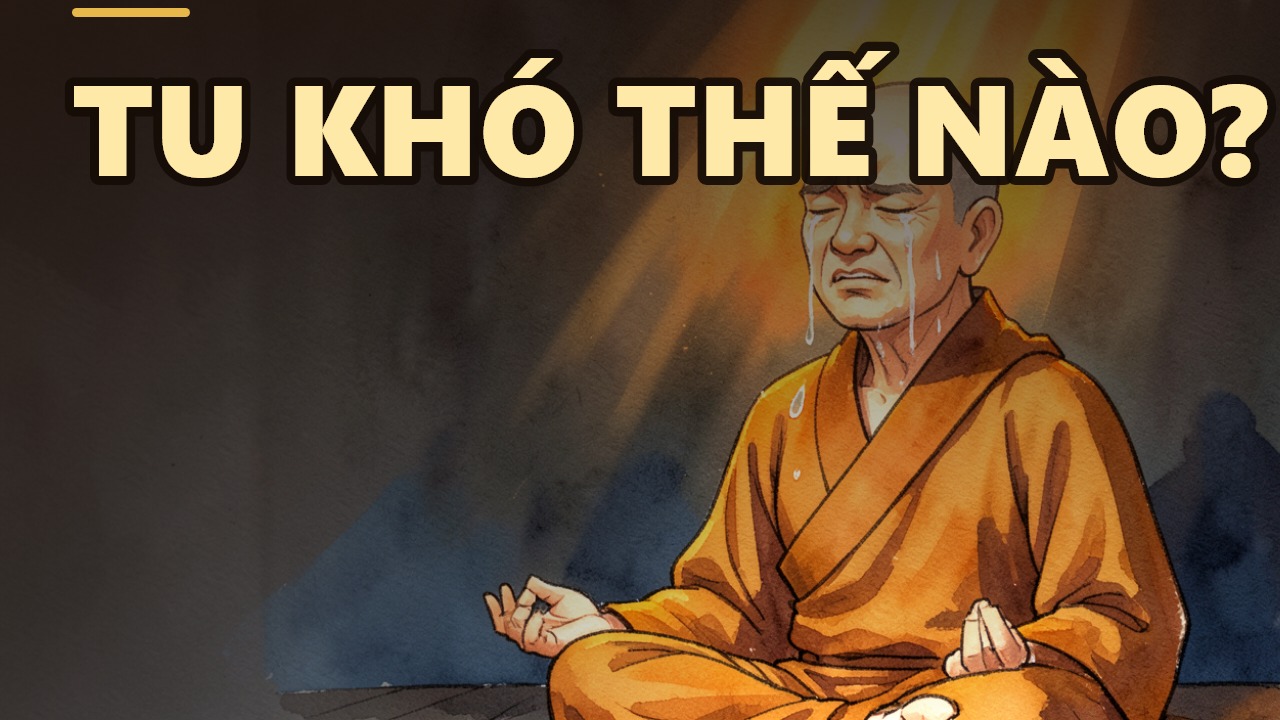
Someone once asked: Is practice easy or hard? Seeing those who have left home, shaved their heads, entered the temple, eaten vegetarian food, and kept the precepts, we might think practice is easy. But once we step onto the path ourselves, we come to understand: practice is truly very hard. So why must we still practice? And how can we practice correctly?
Why is practice difficult?
Practice means transforming from an ordinary being into a noble one. Going from an ordinary person full of greed, hatred and delusion to attaining purity, wisdom and liberation is not an easy journey. Thay Thich Chan Quang emphasized:
"To transform from an ordinary being like us into a lofty noble one requires tremendous effort, sustained dedication over a very long time, great diligence and hardship, and most importantly, practicing in accordance with the true Dharma. If we practice wrongly, then even over countless lifetimes we will only become demons."
Practice is hard on many levels: from small daily matters to the deepest challenges within our own hearts. When someone says practice is easy, it is only to encourage us, but the reality is far from simple.
External challenges and temptations
Even in the most ordinary matters, we must struggle with ourselves. For example, standing before money that someone has dropped, do we take it or find its owner and return it? Taking it is easy; returning it is hard. Thay told a story:
"We see that just standing before a sum of money, we must battle with ourselves—take it or find the owner and return it. That alone shows whether something is easy or hard."
Practice also faces greater temptations, such as being invited to leave a poor teacher to follow a wealthy one, or standing before opportunities to buy a luxury car or build a grand temple. At such moments, we must know what is right and what is wrong, and hold firm to our resolve. Thay warned:
"When we justify ourselves to accept such things, we become a traitor. That is easier than facing death itself."
Adversity: testing instinct and ego
When others insult us, falsely accuse us, or demean us, can we remain calm? Or do we become sorrowful, defensive, and resentful? This is when instinct and ego rise up. Thay taught:
"When we practice seriously and sincerely, people rise up and hurl all kinds of insults at us, falsely accuse us of all sorts of things... at that moment, can we remain serene? Can we stay calm? Can we be patient and endure enough to get through it? That is not easy."
Overcoming such adversity requires spiritual strength. That is a power that every practitioner must gradually accumulate.
The hardest thing: praising ourselves
On the path, once we have overcome temptations and adversity, our mind easily gives rise to self-praise and complacency. This is more dangerous than any external enemy. Thay reminded us:
"When others criticize us, we don't mind; when others praise us, we don't mind. But when we quietly praise ourselves, we are finished. Self-praise kills our life of practice, and no one can remind us of it."
This is a hidden battle that no one sees—only we ourselves know. If we are not aware of it, if we do not practice repentance, we will lose all our spiritual strength.
Four conditions for progress in practice
To make progress, we need four important conditions. Thay shared them very concretely:
"First is practicing the true Dharma. Second is diligence and perseverance. Third is having enough time. Fourth is having enough merit. Only with all four conditions can we make progress in our practice."
If we practice for a long time without progressing, we must examine ourselves: First, is the method we practice in accordance with the true Dharma? Second, are we diligent and persevering? Third, have we practiced long enough? Fourth, have we created enough merit in the past? In particular, a sign of correct practice is that the more we practice, the more we see non-self (anatta), the more greed, hatred and delusion diminish, and the stronger our inner strength becomes.
Respecting those who have left home
Those who have left home dare to give up their families, shave their heads, keep the precepts, and live a pure life. They have gone far beyond us. Therefore, lay practitioners who understand the Dharma must know how to respect them. Thay said:
"When a lay practitioner respects those who have left home, that person truly has virtue."
When we see a monastic with some small fault, we should be compassionate, because they are still on the path, their practice not yet complete. Since our own practice is already difficult, we should not rush to judge others.
Do not give up halfway
Practice is truly hard, but not practicing brings even more suffering (dukkha). Without practice, we will sink in samsara (cycle of rebirth)—becoming dogs, pigs, hungry ghosts, falling into hell. Practice is hard, but it is the hard path that leads to liberation. Thay encouraged:
"Without practice, we perish. Without practice, we sink forever. Therefore we must practice. And practice is hard."
Let us choose the path of practice, however difficult, because it is the only path that leads us to peace and liberation. Let us hold firm to our faith, be diligent each day, and remember: the more we practice, the more we realize non-self (anatta), and the closer we come to the shore of enlightenment.
AI-assisted translation from the Vietnamese original.
Read in Vietnamese →