
Honoring the Three Jewels Properly: The Buddha is Absolute, the Sangha Requires Discernment
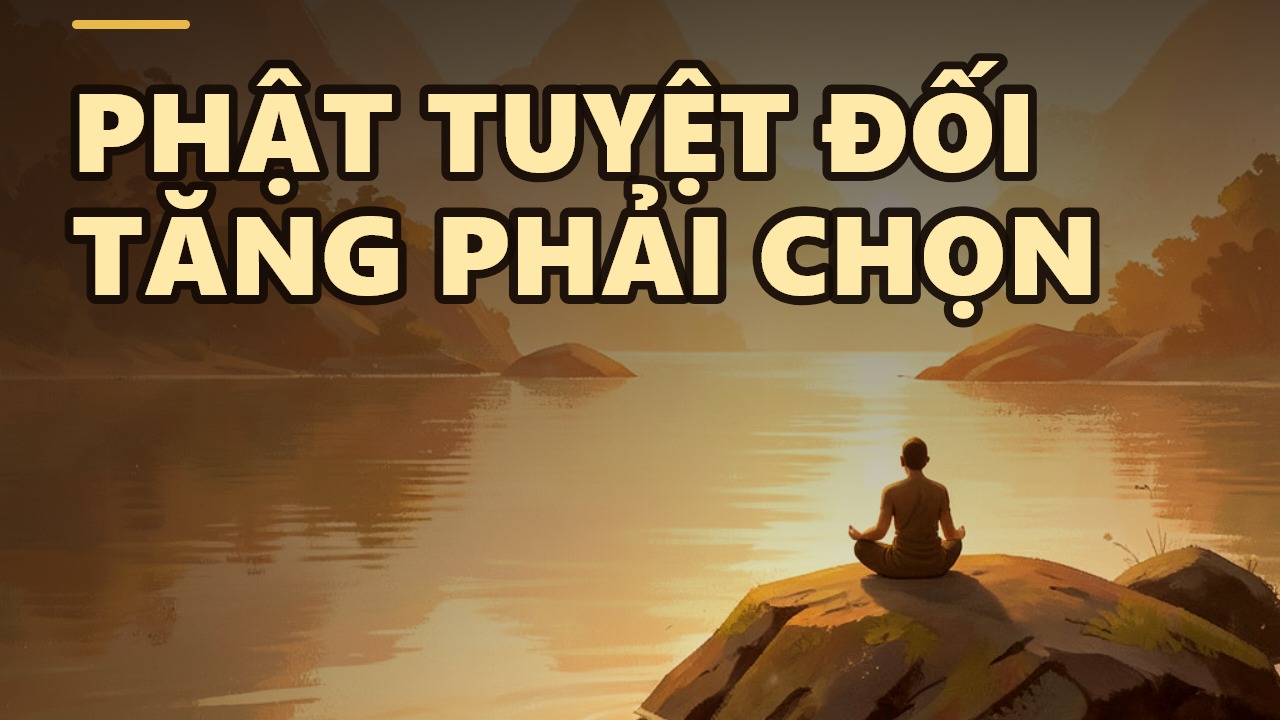
In spiritual life, many people visit temples to bow to the Buddha, listen to sutras, and kneel before teachers. Yet few ask themselves why the Buddha is absolute, while his teachings are not entirely complete, and why monks require careful selection when we offer respect. Today, let us listen to Venerable Thich Chan Quang’s dharma talk on "The Buddha, the Dharma, and the Sangha" to better understand the three jewels in which we take refuge.
### The Buddha: Absolute in Every Aspect
When we speak of the Buddha, we immediately think of a being who has attained full enlightenment. He knows the entire universe and loves all sentient beings. However, our minds often imagine that his heart is vast, covering all creatures. Venerable Chan Quang reminds us that those who truly realize this do not think in such terms. A Zen master once compared it thus: "I thought a drop of water fell into a great lake, but in reality, the whole great lake fell into the drop." The concepts of large and small have dissolved.
The Buddha is the one who has achieved absolute realization. His compassion is absolute, and his wisdom is absolute.
Yet this absoluteness does not mean he grants every wish we make. If we received everything we asked for, we would become spoiled and lose the desire to practice. He loves us, but he is also strict. He wants us to walk the path ourselves, transforming our karma through effort and merit.
If birth were immediate upon request, all sentient beings would be ruined, and no one would continue to practice.
Venerable Chan Quang also spoke of the Buddha’s absolute beauty in every gesture. Even when sleeping alone, with no one watching, he did not waste a single movement.
The Buddha slept alone in a private room, with not even a finger placed unnecessarily. He was always beautiful. His beauty was absolute throughout his entire body.
### The Dharma: The Buddha’s Teachings Are Less Than Absolute
The Buddha is absolute, but his words are not fully comprehensive. Why? Because he did not speak everything he knew. Once, the Buddha said:
"The things I know are like leaves in the forest; the things I teach are only like a handful of leaves in my palm."
Therefore, even if we study all the sutras, we cannot fully touch the depth of his mind. Furthermore, language is an obstacle. Vietnamese people speaking to each other do not always fully understand one another’s hearts, let alone words spoken two thousand years ago. Moreover, interpreters may misunderstand. Venerable Chan Quang recounted how a teacher reciting sutras might explain "breathing in, I know I am breathing in" incorrectly. The Buddha taught us to observe the body breathing naturally, without trying to control it. We might think we are meditating correctly, but in reality, we are just forcing our breath according to habit.
### The Sangha: Lower than the Dharma, Yet Still a Jewel
If the Dharma is not absolute, then the Sangha is even more relative. It is a harsh but true fact: the Sangha is always lower than the Dharma. The Buddha’s teachings are beautifully pure: no greed, no hatred, no delusion, loving all beings. But have any monastics achieved this completely? Not yet. Therefore, monks and nuns are still on the path of practice.
The Sangha is always inferior to the Dharma because the Buddha’s teachings are extremely beautiful. Have the venerable masters and sisters fulfilled all these teachings? No.
So, should we respect every person who wears robes? The teacher advises against rushing.
Regarding the Sangha, we must be cautious. We choose carefully where to place our reverence.
Our deep respect is something incredibly precious and cannot be given indiscriminately. We remain polite to everyone, but profound veneration is reserved for those who live close to the teachings.
### Rely on the Dharma, Not the Person: Choosing Whom to Honor and Support
There is a saying in Buddhism: "Rely on the Dharma, not on the person." This means we depend on the truth, not on individuals. People can change; they may be good or bad, practicing or abandoning their vows. But the Dharma remains stable. Therefore, when a teacher speaks well, we admire them, but do not place absolute trust in the person. Instead, frequently bow before the Buddha and pray to understand his intent correctly, so you can live rightly, speak rightly, and act rightly. As the teacher says, those who pray in this way will possess clarity in life.
We simply need to have absolute faith in the Buddha and pray often.
### Dividing the Sangha: A Sin as Heavy as Killing Parents
The Three Jewels form a harmonious unity. The Buddha was very strict regarding those who break this solidarity. Anyone who intentionally causes division within the Sangha commits one of the five grave offenses, a sin heavier than killing one’s parents. Therefore, as Buddhists, we must avoid causing discord and must love and respect all genuine monastics.
Whoever divides the Sangha falls into the Avici Hell. The Buddha called this one of the five grave offenses. This sin equals the crime of killing one’s father or mother.
### Self-Cultivation: The Duty of Lay Practitioners
Lay Buddhists play an important role. Whether ordained or lay, everyone must strive. For lay followers, try to practice according to the Dharma, understand the Buddha’s intent, and know how to select virtuous practitioners to support through offerings. Do not become discouraged by a few imperfect monastics. Instead, maintain compassion and choose wisely whom to honor. If we all do this, the Jewel of the Sangha will rise higher, drawing closer to the Dharma, and the teachings will illuminate the world.
May this dharma talk give us a clearer view of the Three Jewels. Let your absolute faith rest in the Buddha, let wisdom understand the Dharma, and let compassion and mindfulness guide you in choosing fellow practitioners and true teachers to follow. This is the right path so that we do not forget ourselves and do not betray the Buddha’s kindness.
AI-assisted translation from the Vietnamese original.
Read in Vietnamese →