
Loving Rightly, Hating Rightly: Lessons from Emotion, Reason, and Willfulness
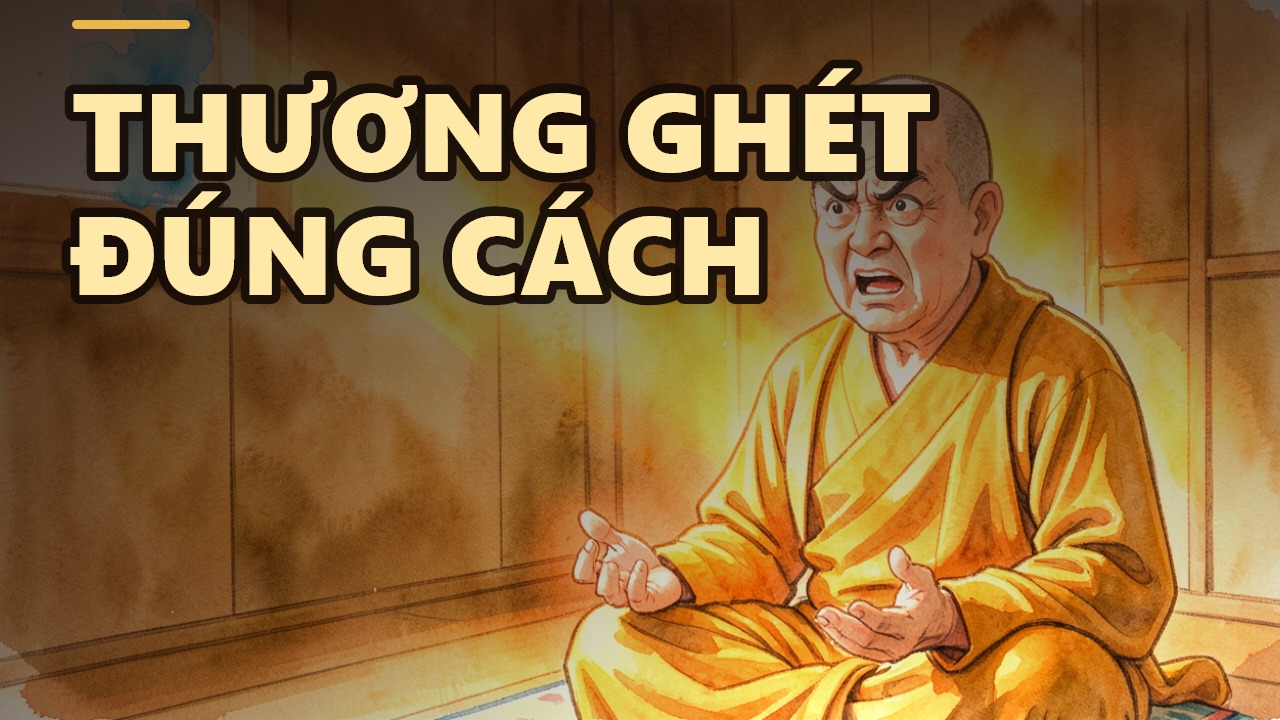
Venerable Thich Chan Quang’s teaching helps us identify the three types of feelings that govern our lives. Through this understanding, we learn to love correctly and avoid the suffering caused by blind emotion and willfulness.
Have you ever asked yourself why you love one person and dislike another? Why do certain life decisions lead in one direction rather than another? The answer lies within the streams of emotion and feelings of love and hate that silently influence every thought, word, and action. In a special dharma talk for the Vu Lan season, Venerable Thich Chan Quang clarified that our entire lives are guided by feelings, but not all feelings are alike. Some are blind, some are imposing, and only one type leads us closer to truth. Let us explore what that is.
## Our Lives Are Governed by Love and Hate
Even in the smallest matters, have you noticed that every decision stems from emotion? Today, you might go to the temple for the Vu Lan ceremony because you cherish the path, enjoy the mountain scenery, or miss your teacher. Conversely, you might avoid a nearby temple simply because you dislike its abbot. Even listening to the Dharma, which seems purely rational, is affected by feeling. When hearing a profound teaching, your heart rejoices; when hearing a dull one, you feel bored. Feelings permeate every corner of daily life.
"All of our lives, every thought, word, and deed, are governed by love and hate. These feelings dominate our existence without pause."
Without mindfulness, we are swept away by these emotions unaware. How can we escape? Venerable Chan Quang reminds us that anyone who transcends attachment and aversion achieves liberation. But first, we must practice "loving rightly and hating rightly."
## Blind Emotion: Unexamined Affection
Blind emotion is a type of feeling that requires no reflection, ignores consequences, and disregards right and wrong. It is a "blind" love that many fall into, especially between parents and children. The saying "the child is spoiled by the mother, the grandchild by the grandmother" illustrates this clearly. A mother loves her child boundlessly, yet out of love, she indulges and protects them. If the father scolds the child, the mother feels pity and defends them, regardless of whether the discipline was justified. This unconditional defense nurtures bad habits, causing the child to become increasingly wayward.
"Blind emotion means a type of love that does not require consideration. It does not account for consequences, reasonableness, or correctness."
Consider another example: a father who threatens investigators to protect his criminal son. He fails to realize that his actions encourage his son’s recklessness, leading to greater crimes. This is emotional love, a love that harms the very person it claims to cherish.
## Willfulness: Imposing One’s Desires on Others
If blind emotion is unexamined love, then willfulness is imposing one’s desires without regard for others. Many parents, driven by personal pride, force their children to excel academically and attend endless extra classes, ignoring the child’s talents or interests. They want their children to succeed to compensate for their own past shortcomings. This inadvertently steals the child’s youth and creates heavy pressure.
"Willfulness is imposing one’s wishes on a child, demanding obedience without caring about the child’s well-being, temperament, talents, or what is reasonable."
Historically, Qin Shi Huang’s construction of the Great Wall exemplifies willfulness. He forced millions of laborers into brutal work, indifferent to their deaths, solely to protect his throne. Countless bones were buried beneath the wall, and cries of anguish filled the sky. This was a cruel imposition devoid of wisdom.
## Reason: Considerate Love That Empathizes with Others
What does loving with reason look like? It involves viewing issues objectively, placing oneself in another’s situation, and weighing the consequences. A rational parent recognizes their child’s true capabilities. Instead of imposing expectations, they guide the child toward a suitable career. Such a parent does not demand their child become a doctor if the child’s aptitude suits vocational training. Instead, they teach the child to perform their work well, to live with integrity, and to maintain a clear conscience.
"Reason means a parent assesses their child’s level of intelligence and talents, then helps choose an appropriate profession and school."
Rational love applies beyond the family. When encountering someone disabled and destitute, feeling compassion is correct. However, if you weep uncontrollably and give away all your assets, neglecting your own family responsibilities, that is blind emotion. A Buddhist disciple should offer help within reasonable limits, understanding that the other person is experiencing karma. More importantly, they need to hear the Dharma, practice repentance, and recite the Buddha’s name. This is truly helpful support.
## The Feeling of Wisdom: Loving Truth and Moral Principles
Among all feelings, only one leads us toward enlightenment: the feeling awakened by truth and moral principles. When we hear a profound Dharma talk, our hearts move. We cherish the teachings and respect those who convey them. This is the feeling of wisdom, as it directs us toward goodness and authenticity.
"Only when we feel moved by truth and moral principles does that emotion become the feeling of wisdom."
The poet Goethe once said, "Before a great mind, I bow; before a great heart, I kneel." Talent is admirable, but virtue is worthy of reverence. Therefore, we should visit temples not merely to admire a specific teacher—that is blind emotion—but to seek the Dharma and listen to the precious teachings of the Buddha. View the teacher as a humble potato, but treasure the Dharma they share as gold and jade.
## Lessons for Ourselves
Looking back, we see how often we acted on blind emotion or willfulness, lacking clear reason. We loved our children and relatives in our own way, sometimes unintentionally harming them. We imposed our desires on others, causing them pain. Yet, recognizing this is the first step toward transformation. Cultivate a habit: before loving or hating, pause. Observe whether the emotion is reasonable and beneficial for yourself and others. Nurture your connection with truth and moral principles, for this is the only path to genuine happiness.
This Vu Lan season, practice loving with wisdom. Love your parents, your children, and all beings with mindful affection—free from blindness and imposition. This is how we repay our parents’ kindness, honor life, and care for ourselves.
AI-assisted translation from the Vietnamese original.
Read in Vietnamese →