
Mindfulness of the Body: Why the Buddha Only Asks You to 'Know' Your Breath
A dharma talk by Venerable Thích Chân Quang on mindfulness of the body: the Buddha taught simply to know the breath, without imagining or controlling it. Practice flexibly to avoid division.
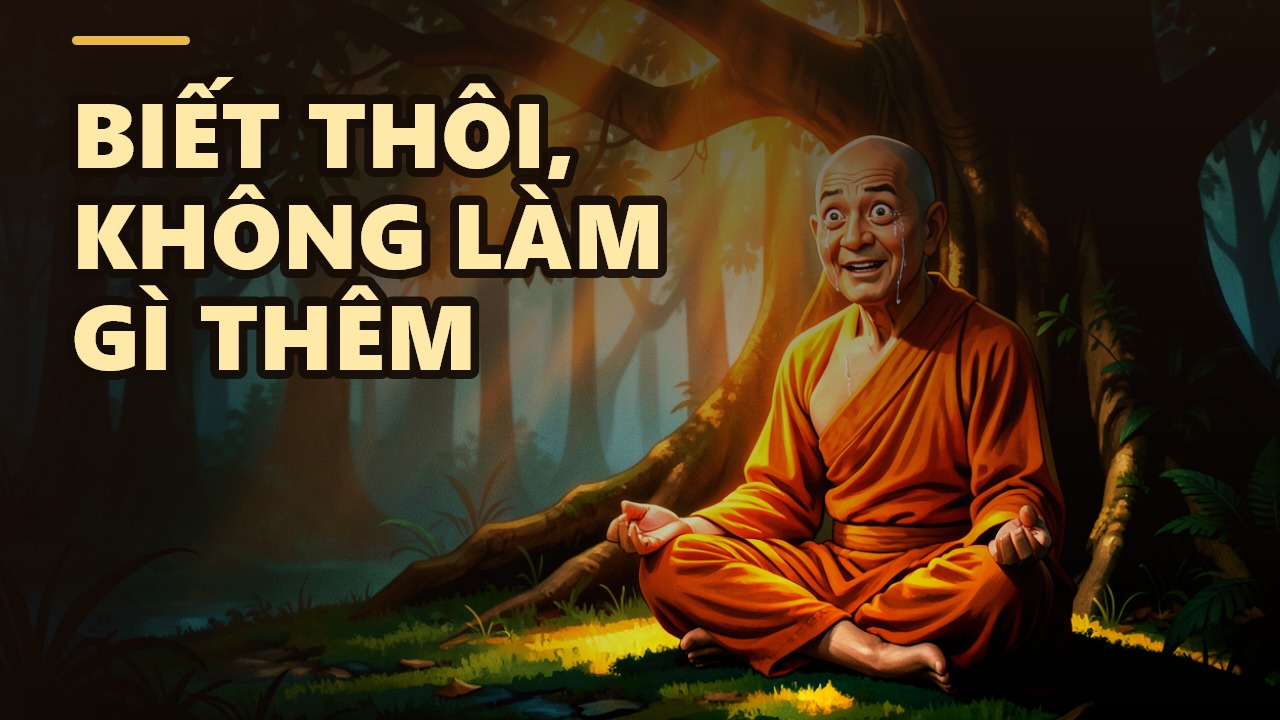
Have you ever sat in meditation and found yourself imagining the breath traveling down into your belly, or unconsciously making it longer or shorter? That is how many people teach the practice. But the Buddha taught something different: simply know. It sounds simple, yet few practice it fully.
The Most Fundamental Method
In the discourse on mindfulness of the body, the Buddha taught a very humble, very fundamental method. Yet according to Venerable Chân Quang, it is precisely these plain-sounding words of the Buddha that are profound, complete, and bring real benefit. The Venerable said:
"These words of the Buddha may sound ordinary and simple, yet they are truly fundamental, truly profound, beneficial, and free of side effects."
The first condition is choosing a quiet place. The Buddha told the monks to go to a forest, the root of a tree, or an empty house. Today, we too need a quiet place to practice, away from the bustle of the city.
Three Kinds of Breath: Imagined, Controlled, and Known
Venerable Chân Quang distinguishes three kinds of breath in the practice. The breath of imagination is when we picture the breath entering the belly or circulating through energy channels. The breath of control is when we deliberately make the breath long or short. The breath of knowing is simply knowing the breath, adding nothing at all.
The Venerable observed: "The Buddha abandoned these first two breaths, leaving only the breath of pure consciousness. This is very high, very precise." Why? Because when the mind is still restless, we must use imagination and control to gather the mind. But once the mind has grown calm, we must let go of imagining and controlling, leaving only pure knowing.
The Practice: Just Know, Add Nothing
The sutra says: "When breathing in long, one knows one is breathing in long. When breathing out long, one knows one is breathing out long." Venerable Chân Quang points out that there is no word "I" in that sentence, because when mindfulness is present, there is no need to generate language. There is only a wordless knowing. The Venerable said:
"When first applying effort, it is true we must use the breath of imagination and of control to gather the mind. But at some point, when the mind has grown calm, we abandon the aggregate of perception and the aggregate of formations, leaving only the aggregate of consciousness. That means no longer controlling the breath—just knowing."
This is very subtle. When we simply know without adding, subtracting, or controlling, we see the breath exactly as it is. That is when our mind becomes gentle and deeply still.
Flexibility in Practice, Avoiding Division
Venerable Chân Quang also spoke of flexibility. When the mind is restless, we can switch to reciting the Buddha's name, contemplating compassion, or looking into causes in our daily life. This keeps us from clinging to one method and from creating division. The Venerable said:
"Do not think that only your own path is right just because you have succeeded on it. There are others who have succeeded by different paths."
In this new millennium, the Buddha's teachings (Dharma) need unity. Each person has different capacities, so methods differ as well. Let us respect and learn from one another.
Finally, the Venerable encouraged teachers and lay Buddhists alike to practice genuinely. Sit down, do nothing else, and simply know the breath. This is a fundamental method, yet it leads to the very depths of gathering the mind. Let us try it—at least during the days of the Lunar New Year, setting aside a little time to listen to our own breath.
AI-assisted translation from the Vietnamese original.
Read in Vietnamese →