
Dedication: When Happiness Arises from Self-Sacrifice
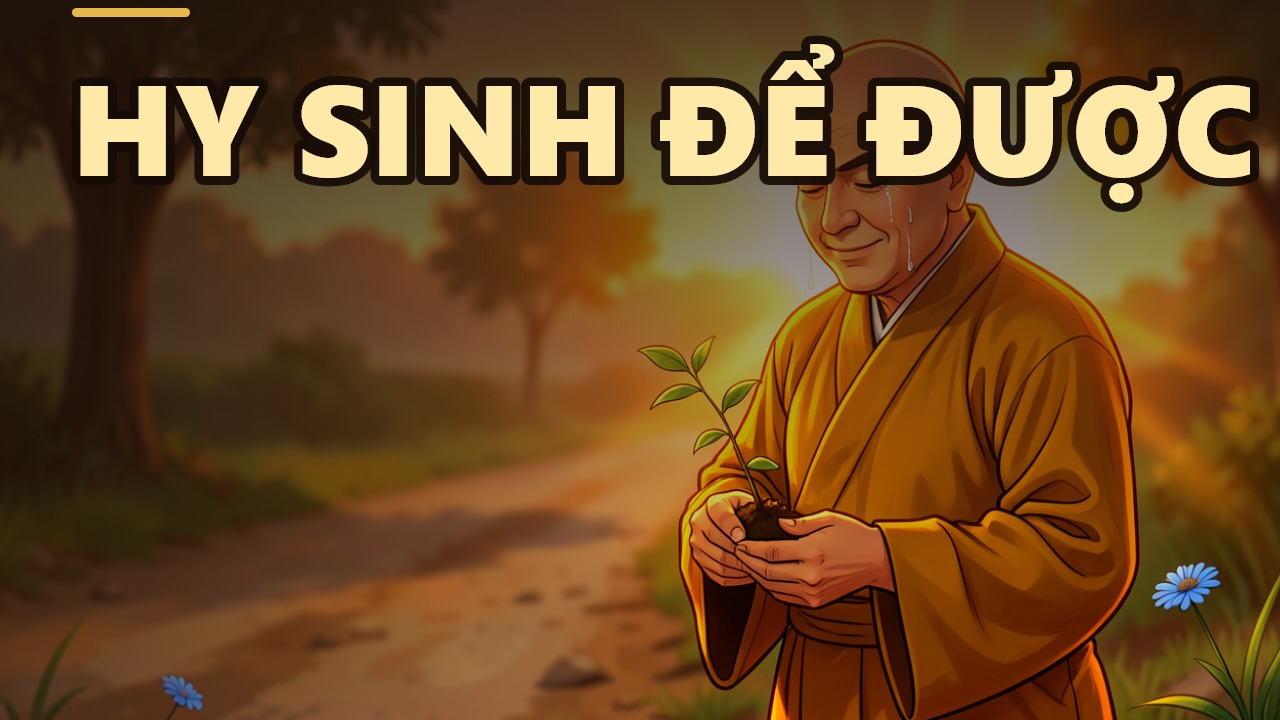
**Summary:** This article explores the meaning of dedication within Buddhism: diligent service for others, the impossibility of being lazy in morality, and how true happiness arises from self-sacrifice. It quotes the profound teachings of Venerable Thích Chân Quang.
Have you ever felt weary from constant work and wondered, "Why must humans toil so?" Yet, if you see someone laboring diligently for others with a smile on their face, are you curious about their secret? The answer lies in a very special quality: Dedication.
What is dedication? How does it differ from diligence and selflessness?
In the dharma talk titled "Moral Psychology," Venerable Thích Chân Quang began by asking: "Dedication" sounds like "diligence" and "a selfless life," but how is it different? He explained that diligence is being energetic and making effort, but without knowing for whom. Dedication, however, is "being diligent for the sake of the world, not for oneself."
Unlike simple selflessness, dedication also carries the image of "a person toiling quietly in a humble position to bring benefit to others." It is both diligent and silently sacrificial, requiring no recognition from anyone.
*Dedication is being diligent for the sake of the world, not for oneself.*
**Morality Cannot Be Lazy**
He affirmed: if living together we are lax in our work, it means we let others do it for us, which is selfish. A person with morality will "roll up their sleeves to work in place of others." Therefore, no one with true morality can be lazy.
*No one with morality is ever lazy.*
As morality grows, people even create more work for themselves:
- Sweeping litter from public streets, even though it is the job of sanitation workers. - Planting trees along roads to provide shade. - Caring for elderly people living alone, without family support. - Educating street children to steer them away from crime.
No one forces these actions, but they feel compelled to do them. This is dedication.
**True Happiness Comes from Sacrifice, Not Indulgence**
He told a story of a young female Buddhist who said to her beloved: "If we live without experiencing happiness, we will lose our blessings. We should only devote our energy to serving and benefiting others." This statement itself shifted perspective: this life is not for enjoyment, but for sacrifice.
*Happiness comes to us when we are able to bring joy and benefit to others; happiness is not a form of indulgence.*
He illustrated this with the song "Tale of the Past, Tale of the Present": a princess possessed all the gold, silver, and jewels yet remained sorrowful; meanwhile, a young man went to the mountains to build a hydroelectric dam, having nothing to enjoy, yet a smile always graced his face.
**The Renunciant is One Who Endures Hardship**
He emphasized: "To become a monastic is to close a past life of worldly leisure and to embark on a path of self-sacrifice and service that is even more arduous." Monastics are symbols of morality, and therefore are never permitted to live in idleness. "A monastic who has nothing to do and spends time playing chess" is a sign of the decline of the Buddha's teachings.
*The renunciant is one who endures tremendous hardship. Monastics are the symbol of morality, and we know morality means diligent dedication.*
And there remains a boundless number of tasks: unifying various schools to find common truths, contributing to bringing harmony to humanity...
**Awakening Dedication Within Us All**
Therefore, each of us, whether monastic or layperson, should look back and see how many hours in a day we have given away? Do not fear hardship. As the Venerable teaches: "Happiness comes to us when we are able to bring joy and benefit to others." Be diligent, be dedicated, and you will discover a life brimming with meaning.
AI-assisted translation from the Vietnamese original.
Read in Vietnamese →