
A Pure Heart: What Dust Is Covering You?
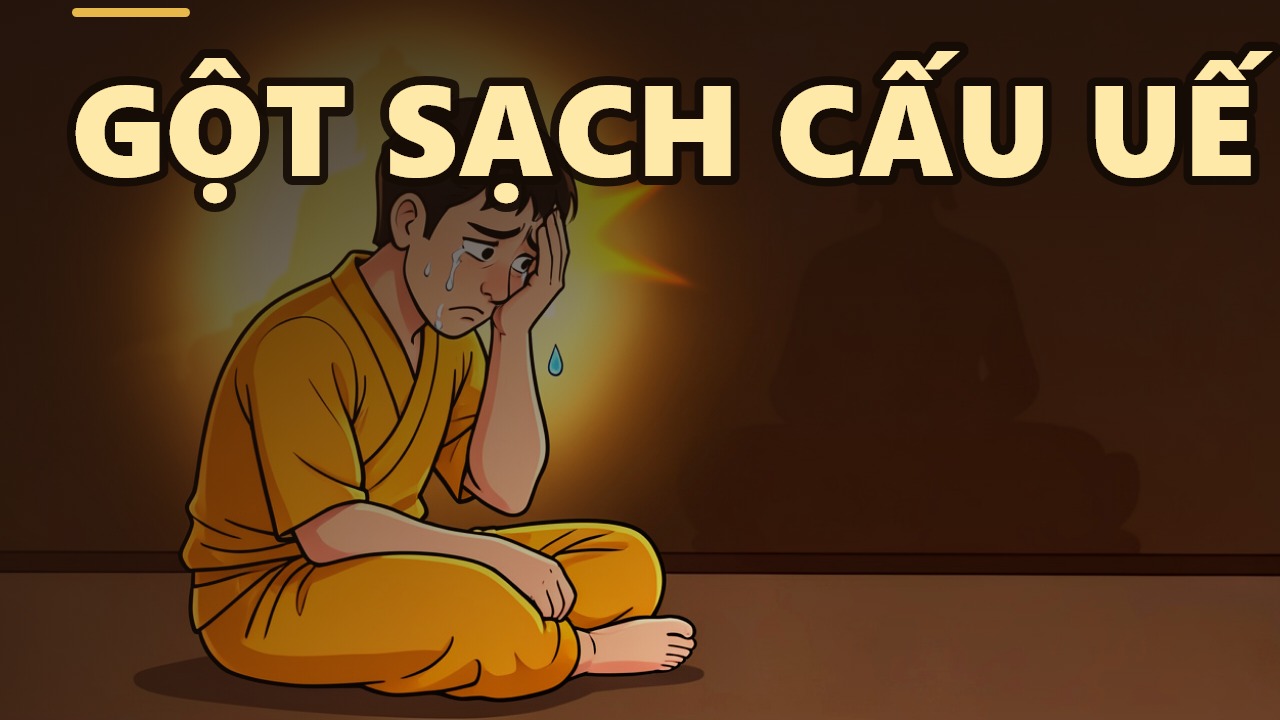
Leaning on worldly affections is unstable. Only the true Dharma is a solid refuge. Learn to wash away inner defilements through moral discipline, generosity, compassion, and the elimination of the self.
There was once a young man in the city of Rajagriha who came from a well-to-do family and had married a wife. His wife had an affair, and the matter came to light. Out of shame, he did not dare go outside and stayed shut in his home for a very long time. When his embarrassment made it impossible to face anyone, he finally came to visit the Buddha. In his sorrow, he poured out his heart, and he received this teaching:
"It is not only in this life that the Tathagata has spoken to you about this matter. In a past life, this very thing happened to you. The Tathagata reminded you then that seeking loyalty in human affections is extremely difficult. In this life, matters of the heart are unstable. They are not a solid place on which we can lean our lives. Understanding this, we are never angry when betrayed in love."
The Buddha added: "There is only one thing we can truly take refuge in, and that is the true Dharma. The true Dharma is the supreme refuge. Worldly affections are not something we can place our trust in."
The Value of Moral Discipline and Responsibility
In a verse, the Buddha taught: "Wrong conduct is the stain of women." This does not mean valuing men over women. Creation brought forth the two genders with different natural roles. A woman's value lies in her moral purity; a man's value lies in his sense of responsibility and his willingness to carry burdens. When a woman fails in her virtue, the family easily falls apart. When a husband lacks responsibility, the family is likewise ruined. But a wife with moral purity is a solid foundation that allows a family to recover from every storm.
"For a family to be stable, the main role belongs to the woman. It is a woman's moral purity that can overcome everything, bringing a man back like a leaf falling to its roots, returning to his true harbor of love."
Generosity: The Brake That Stops Karma's Downward Slide
The sutra teaches: "Greed is the stain of one who does not practice generosity." A greedy person cannot perform acts of giving. If we live without knowing how to give, we are quietly sliding downward: from the human realm into the animal realm, then into the hells and the realm of hungry ghosts. Generosity is the most important brake to stop this steep downward path of karma. Our morality may still be imperfect, our wisdom not yet deep, but if we are first willing to give, we have already laid the foundation of the house of merit.
"Money is like flesh; cutting it away hurts deeply. Even cutting off a small piece is painful, but we must force ourselves to give in order to practice generosity."
One who has mastered giving, who delights in generosity and no longer clenches a fist around what they have, has the "saintly quality" within. That is the mark of a Stream-Enterer: no desire to keep money for oneself, for with every coin one has, one thinks of sharing. If we are not yet accustomed to giving, we must practice little by little. Poverty itself comes from greed in past lives, so in this life we must all the more break through it with a firm resolve to give.
A Cruel Heart: Hell Lies Right Within
"Cruelty is the stain of one's moral conduct." Here, moral conduct means virtue. What is a cruel heart? It is wanting others to suffer, or feeling joy when seeing others suffer. Seeing someone's house burn down, we rejoice. Seeing someone fail an exam or watching a family fall apart, we feel delighted. That is the hellish mind.
"To rejoice at another's suffering is the mark of a cruel heart. The certain result of a cruel heart is hell. In hell, there is absolutely no way of escape!"
Worldly laws are lenient and imperfect, so many wrongdoers escape punishment. But the remainder of their karma will certainly be repaid in hell. Within each of us, a small cruel heart still remains. Let us examine and filter ourselves until we feel deep sorrow at the sight of another's suffering. Only then are we truly disciples of the Buddha.
The Self and the Battle for Non-Self (Anatta)
The Buddha told the story of a monk who devoted himself to caring for the sick and cooking porridge for ailing members of the Sangha, only to be spoken to rudely and with contempt by another monk. The Buddha taught: "Easy it is to live without courtesy, stubborn as a crow; with a mouth that attacks, boasts, and defiles, risking one's very life. Difficult it is to live with courtesy, humility, purity, and clarity."
Why is it easy to live without courtesy? Because the self in each of us always tends to grow larger. When the "I" swells up, our faults naturally pour out. Living humbly, on the other hand, is the result of eliminating the self, which is extremely difficult. A practitioner who goes straight into meditative concentration, contemplating impermanence (anicca) and non-self (anatta), will, upon realizing the fruit, see all good qualities arise in fullness. Non-self is the very core of all that is good.
"The self is the core of all that is evil, and so non-self is the core of all that is good in this world."
In an age that exalts individuality, a culture of flaunting the self throws society into disorder. We need to live in harmony, dissolve into the community, and restrain and govern every word and action. That is the fierce battle of one who understands the Dharma: not allowing the self to turn us into a bad person.
Practicing for a Pure Heart
These three kinds of mind are very close to each of us: lacking moral discipline, greed, and a cruel heart. But above all is ignorance, the root of samsara (cycle of rebirth). A monk is one who never ceases to eliminate these defilements until becoming one who is no longer stained. Each of us today, upon hearing the Dharma, should look into our own heart. If cruelty remains, correct it. If the self remains, practice humility. If we are not yet accustomed to giving, begin to give. Step by step, the dirt within will gradually dissolve, and our heart will become as pure as the light of a full moon. That is the path of return to the safe shore that all the Buddhas have pointed out.
AI-assisted translation from the Vietnamese original.
Read in Vietnamese →