
A Peaceful and Joyful Mind – Three Principles for Living Serenely Amid a Busy Life
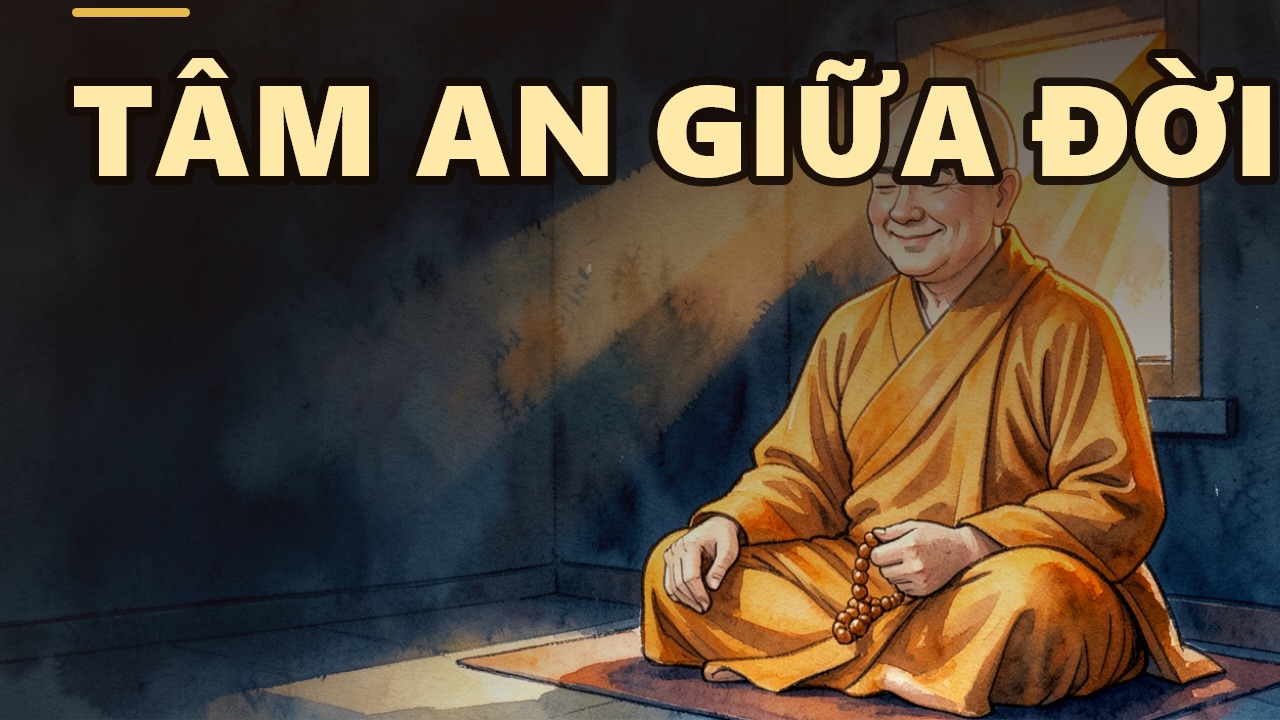
**Summary:** A peaceful and joyful mind is the goal of spiritual practice. To maintain inner peace amid worldly life, one must avoid wrongdoing, live with ideals, and understand the law of cause and effect.
There is a question many of us often ask ourselves: "Why do I have enough money, a house, a car, yet I still feel uneasy?" Or, "Why does someone live so quietly and gently, yet they are truly happy?" If you have ever pondered this, today's Dharma talk by Venerable Thích Chân Quang will offer you a profoundly touching perspective on the peaceful and joyful mind.
**True Happiness is Not Found in Wealth or Fame**
In our youth, we often think that having money means having happiness. But some people appear wealthy on the outside, yet stepping into their family reveals a kind of hell. No one loves each other; there is only tension, blame, and competition. The Venerable Teacher shared:
Truly, money is not joy, not happiness. What matters is how we can bring our mind to a state of peace and joy. That is the real happiness for living.
When our inner mind is at peace and joyful, free from resentment and hatred, helping others and receiving help in return—this is true happiness. Therefore, happiness resides within the mind, not in material things.
**An Uneasy Mind Comes from Making Mistakes**
Imagine you are sitting drinking tea and eating peanuts, and suddenly the police knock on your door. How would your mind feel? If the night before you had gone out stealing, you would tremble. But if you had done nothing wrong, you would remain calm. The Venerable Teacher taught:
Our mind is only at peace when we have done nothing wrong.
However, keeping oneself from wrongdoing is not easy. Circumstances and temptations can push us into a cycle of sin. Therefore, we need the protection of the Buddha. Every day, we should diligently visit the temple, pay respect to the Buddha, and listen to the scriptures to gain the strength to overcome temptations. Thanks to this merit, accidents can be averted and mistakes avoided.
**Having a Path and Ideals Brings Peace of Mind**
Many people live to fifty without knowing what they live for. They are swept along by the currents of life, drifting wherever it takes them, so their mind is uneasy and constantly worried. When we come to the Buddha, we understand we live to practice, to love, and to build our homeland. The Venerable Teacher said:
When we come to the Buddha, to the Three Jewels, we begin to know what we are living for.
With a path and ideals, we remain calm before life's storms. Even in a tempest, our heart stays steady because we see the light ahead.
**Understanding Cause and Effect Brings Serenity Amid Hardship**
When facing accidents or being falsely accused, those who do not understand the Dharma suffer greatly. Those who understand recognize it as the fruition of their own karma and immediately find peace. The Venerable Teacher taught:
Taking responsibility for oneself naturally makes our mind stronger. Blaming others or denying responsibility immediately weakens and unsettles the mind.
When we understand cause and effect, we do not blame heaven or earth. We accept and transform our karma through charitable acts. Over years of giving notebooks and pens to poor students, karmic bonds can be released. Cause and effect is the absolutely fair law of the universe.
**Mindful Concern or Carelessness? Where Lies Peace and Joy?**
Living in the world requires mindful concern; one cannot be irresponsible. But if our concern is solely for material gain and status, it only brings greater anxiety. When our mindful concern is directed toward the righteous Dharma, toward moral principles, and toward helping others, it brings true peace and joy. The Venerable Teacher affirmed:
Our mindful concern within the Dharma and moral principles is completely different.
Let our mindful concern be oriented toward the path of practice, our family, and our community. In this way, even with concerns, the mind remains at peace.
In conclusion, to achieve a peaceful and joyful mind, let us keep ourselves from wrongdoing, live with ideals, understand the law of cause and effect, and learn to be mindfully concerned in the truest sense. Each day, let us take time to kneel before the Buddha to receive his protection and blessings. Know that happiness is found when we kneel before the compassionate and greatly courageous one. May our hearts journey to the infinite, even if countless hardships and trials surround us.
AI-assisted translation from the Vietnamese original.
Read in Vietnamese →