
The Health of Emotions: Do Not Let Love and Hatred Lead You into Debt
**Summary:** Emotional health means knowing how to control love and hatred. A correct understanding of love and hatred helps us create merit, avoid wrongdoing, and live more happily.
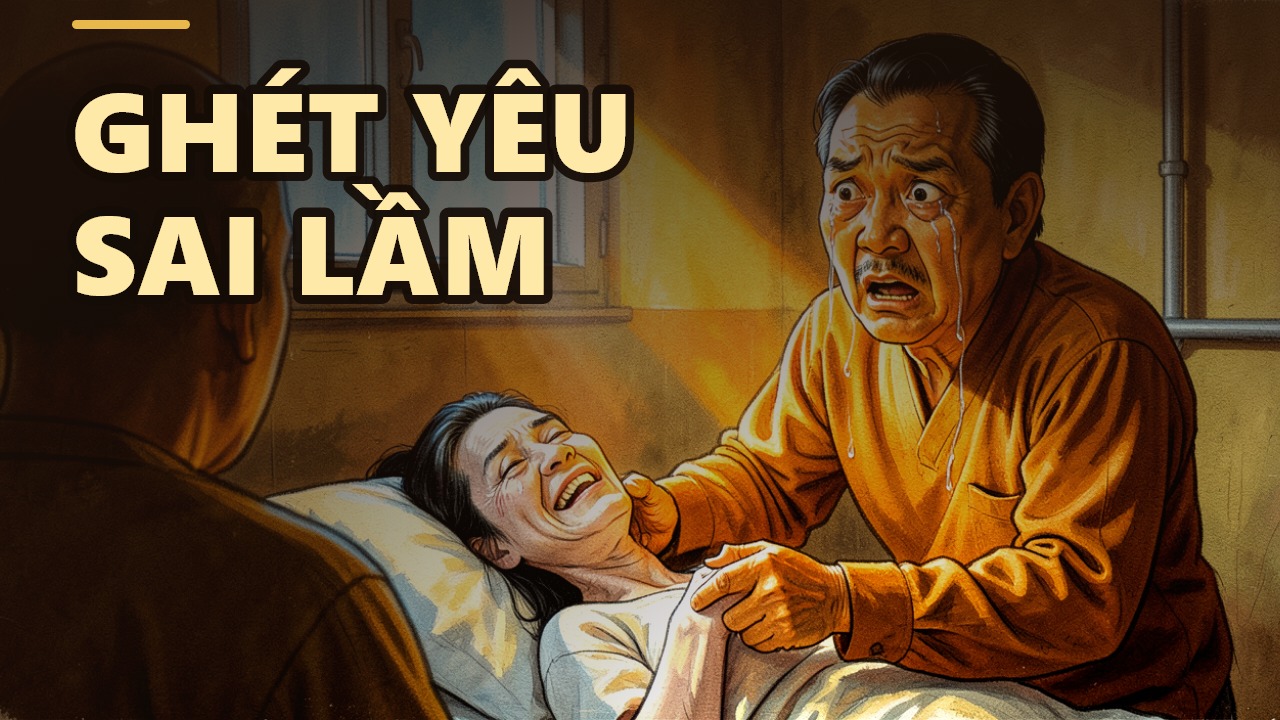
A story in the newspaper once made me think deeply: A wife suffering from cancer was in extreme agony. Her husband, loving her so much, could not bear to see his beloved endure such pain. The couple got into their car, released carbon monoxide, and departed together in an instant. Why did the wife accept death? Because she hated her sickly life. Why did the husband also die? Because he loved her and hated a life without her. This love and this hatred are the very driving forces of life, the source of all actions, of both wrongdoing and merit. But have we ever truly asked ourselves: “Are my emotions right or wrong?”
**Emotions Are the Driving Force of Life**
Venerable Thich Chan Quang once taught: “Emotions are the driving force of this life. Emotions are also the starting point of all wrongdoing and merit.” Without love and hatred, we would have no need to live. Why are we sitting in the temple today? Because we like coming to the temple, like meeting our fellow practitioners. Why do we start a family? Because we happen to fall in love. Why do we keep moving forward? Because we have hope—and hope is also a type of emotion. Every single action is governed by two things: likes and dislikes.
**Are Love and Hatred Right or Wrong?**
Venerable Chan Quang presented a very clear formula: “A wrong emotion of love or hatred leads to a wrong action, and a wrong action leads to wrongdoing. If a right emotion of love or hatred leads to a right action, and that right action leads to merit.”
This sounds simple, yet most of us never stop to examine whether our love and hatred are right or wrong. We simply chase after our emotions, act upon them, and then reap the consequences of wrongdoing or merit without even realizing it.
**Do Not Let Emotions Lead You Astray**
He once said: “Most of us never turn back to examine our emotions of likes and dislikes… we are slaves to our own emotions.” A classic example is the story of a young man who fell in love with a very beautiful girl, but she had a habit of taking off all her clothes in the street when angry. He loved her according to what books, poetry, and songs had taught him, but never once asked: is this love right? The result was that he was left confused and helpless, not knowing how to handle the situation.
Another example: we suddenly dislike our neighbor and speak ill of them without knowing why. That is us becoming slaves to a wrong hatred. We fail to recognize that this hatred may stem from karmic conditions spanning many lifetimes, or from some psychological impression, and that speaking ill of others will create wrongdoing.
**How Can We Love and Hate Correctly?**
The Venerable taught that to love and hate correctly, we must place the benefit of society above our personal preferences. When choosing a career, do not choose one based on personal liking alone; choose a profession that society needs: “That desire, that preference, is the most correct preference. And what will it bring? It will bring merit in the future.”
Regarding romantic love, he also reminded us: “When we love someone, we incur a debt to that person.” Love is not merely a beautiful emotion; it is a debt carried over from many lifetimes. However, once we understand the Dharma, we can transform debt into a positive condition by treating each other with kindness, dignity, and by practicing together. When the conditions end, we need not turn into enemies, because we understand this is the law of cause and effect.
**When Will We Have Enough Strength to Control Love and Hatred?**
Many people think practice is easy, that one only needs to observe one's emotions. But the Venerable offered a caution: “When you have to go to the temple, it may take five years or more of practice.”
Only through years of diligent practice—chanting sutras, sitting in meditative concentration, and deeply contemplating the Buddha's teachings—will we gain enough strength so that when love or hatred arises, we are not swept away by it but can turn back and evaluate it. This is the difference between an ordinary person and one with wisdom.
Only when we can evaluate our likes and dislikes are we truly a new person. From there, we begin a noble life, living joyfully and creating merit for ourselves and others.
Start today: observe each time love or hatred arises in your heart. Do not act hastily. Slow down and ask yourself: “Is this right or wrong?” This is the first step toward becoming a person who understands the Dharma and lives in peace.
AI-assisted translation from the Vietnamese original.
Read in Vietnamese →