
Waste: How You Are Unknowingly Losing Your Blessings from Merit
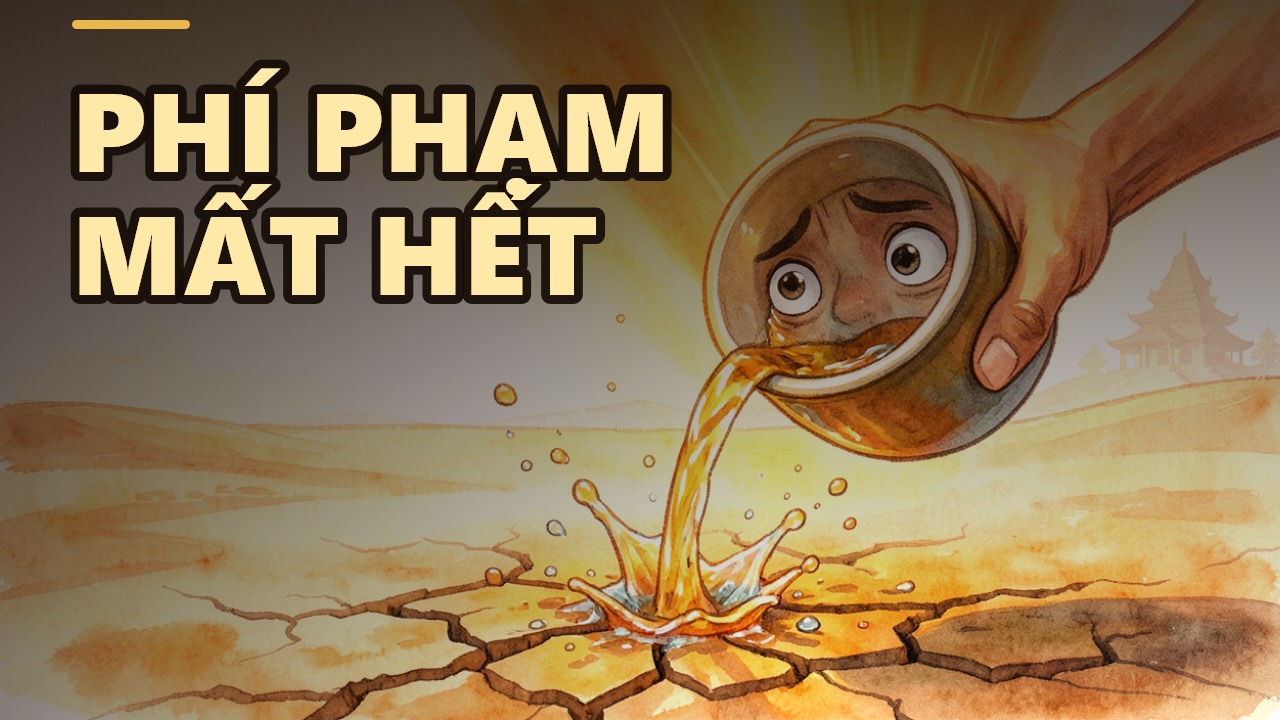
Venerable Thich Chan Quang offers a profound perspective in this teaching. He reveals that everything we possess is actually blessings from merit accumulated in past lives. When we use these gifts correctly, our blessings expand and flourish. However, when we waste them, we lose everything. Have you ever wondered why some people become increasingly prosperous as they live, while others see their resources slowly dry up? Is it merely bad luck, or are they unknowingly wasting what they have?
In the dharma talk titled "Waste," Venerable Thich Chan Quang explains that all our possessions stem from previous karma. He states clearly, "What we have is the blessing from a past life. Once we possess it, we have the right to use it. But if we use it incorrectly, we lose that blessing." This simple truth holds immense power over our present and future experiences.
There are two specific types of waste that cause us to lose our blessings. The first is refusing to use what we have—hoarding, being stingy, or excessively frugal. The second is using things lavishly and without reason. Both extremes lead to the dissipation of blessings from merit. As the teacher explains, if we have something but refuse to use it, it will still be lost. This is a fundamental principle of nature. Similarly, if we use resources wastefully and unreasonably, those blessings also vanish.
Consider small examples like leaving half a glass of water or discarding leftover rice. These actions may seem insignificant, but according to the law of cause and effect (karmic law), they carry weight. A person who wastes water may be reborn in a desert environment. One who wastes food may experience hunger and scarcity. Furthermore, giving money to someone only for them to buy cosmetics or drugs is also a form of waste. Hosting an extravagant party solely to show off luxury damages one’s own karma.
When we use things correctly, our blessings grow even larger. Venerable Thich Chan Quang shares an example from Phat Quang Pagoda, which owns many vehicles. He never uses these cars for personal leisure. Instead, he uses them strictly for Buddhist activities, charity work, and teaching the Dharma. Whenever the pagoda lacked vehicles, he would simply generate a sincere intention. Soon after, new vehicles would appear. This demonstrates how the law of cause and effect operates. If we avoid waste and use resources properly, our blessings continue to expand day by day.
The same principle applies to a home. If we enjoy a house solely for our own comfort, we may eventually be forced to sell it. However, if we open our doors to welcome members of the Sangha, allow relatives to stay temporarily, or use the yard to store relief supplies, that home will "expand" into a second dwelling. By sharing our space with compassion, we multiply its value rather than depleting it.
We must also be careful not to waste the affection of others. The love and goodwill people hold for us are invisible assets. Often, when we know someone cares for us, we constantly ask them for favors until their patience and affection run dry. The teacher advises that to honor this gift, we should use their kindness to guide them toward spiritual truths or help them assist those in need. When we do this, the bond becomes stronger, and people care for us even more deeply.
Conversely, if we ask a friend for help to support a poor family, even if they do not know the recipients personally, their love for us motivates them to give generously. Asking for assistance in this way deepens friendship rather than eroding it. It transforms a request into an act of shared compassion.
Intelligence and time are also precious resources that can be wasted. If we use our wit to deceive others, play pranks, or invent meaningless games, our wisdom will deteriorate. There is a story of a boy who used clever tricks to lure people into picking up a fake wallet so he could snatch it away. Although he was smart, his misuse of intelligence meant he would gradually become duller. True wisdom develops when we use our minds to help others, study the Buddha's teachings (Dharma), examine our own faults, and guide our fellow practitioners.
Time follows the same rule. Spending hours playing chess, cards, or video games to kill time leads to a shorter life and diminished intellect. As the teacher warns, "If we waste time, we no longer need to live long. If we waste our mental capacity, we no longer need a sharp mind." We must treat every moment as an opportunity for growth.
One’s family background requires respectful use as well. Having a prestigious lineage is an advantage. If we use this status to act arrogantly or look down on others, our family’s blessings will collapse. However, if we leverage our position to perform good deeds, encourage community support, build bridges, or organize charitable efforts, our family’s reputation and blessings will flourish. Descendants can inadvertently destroy their ancestors’ merit if they live wastefully and without virtue.
Blessings from merit are not fixed quantities. They resemble a seedling. If we water it correctly, it grows tall and strong. If we neglect it or water it improperly, it withers and dies. We must learn to use what we have with sufficiency, correctness, and deep compassion. Do not waste your life. Today, reflect on your car, your home, your friendships, your intellect, and your time. How are you using them? Begin with the smallest action: do not leave a glass of water unfinished, and do not discard a single grain of rice. From these humble steps, everything will bloom.
AI-assisted translation from the Vietnamese original.
Read in Vietnamese →