
Living Fast or Living Slow? What Is True Happiness?
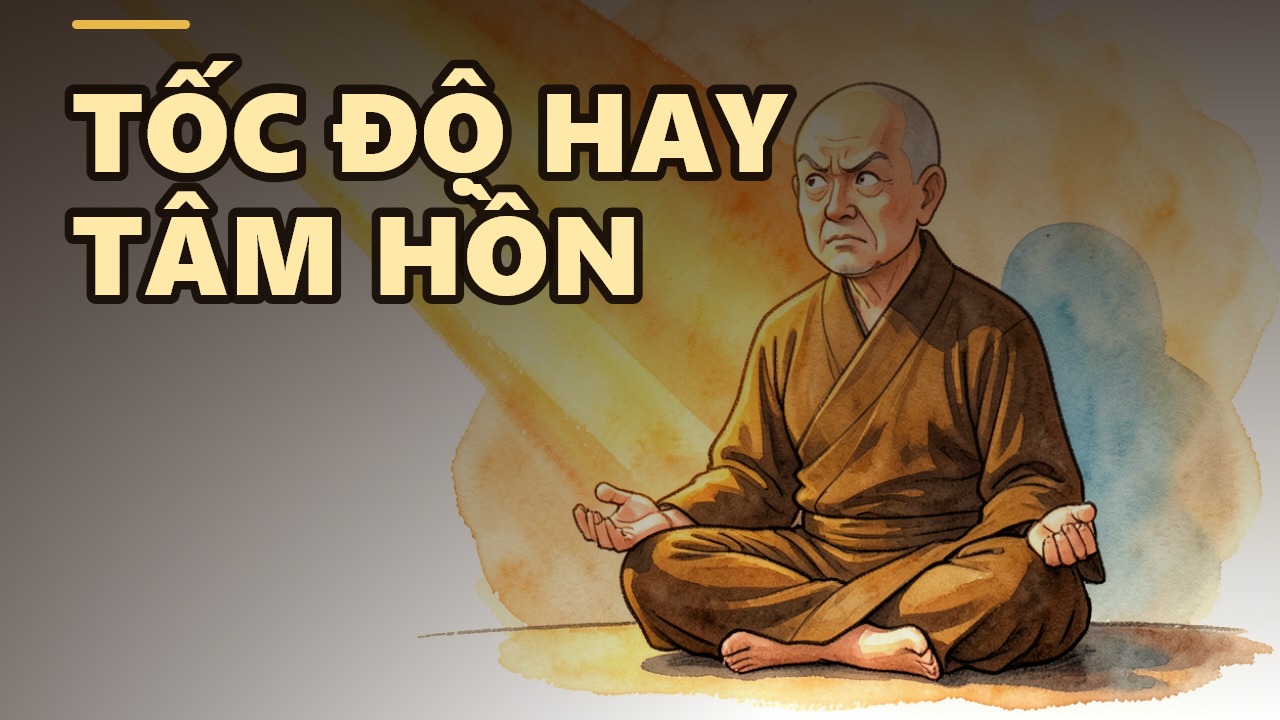
Have you ever wondered why some people accomplish so much in a single morning, while you remain stuck with just a few trivial tasks? Today, Venerable Thich Chan Quang invites us to reflect on ourselves through a simple story about living fast and living slow. This teaching offers a fresh perspective on the pace of life: we live fast to dedicate ourselves to service, and we live slow for meditative concentration and nurturing the soul.
## What Does It Mean to Live Fast or Live Slow?
Venerable Chan Quang defines these concepts with great clarity. To live fast means accomplishing many tasks within a specific unit of time. To live slow means completing only a few. For instance, in one hour, one person might write four pages, while another writes only three. Someone who exercises, eats breakfast, and arrives at work promptly is living fast. Conversely, someone who lounges around reading the newspaper all morning is living slow. So, which approach is more beneficial?
## Why Do Some People Achieve More in the Same Amount of Time?
The teacher points out that most ethnicities possess equal intelligence, yet their achievements differ significantly. Vietnamese people are no less capable than others, but our labor productivity often lags behind neighboring countries. Why is this? Because we tend to work without urgency or efficiency. While the world has reached Mars, we still gaze at the moon and stars to compose poetry. He quotes:
"We still work like farmers. We wait slowly for the rice to ripen, for the cassava, for the potatoes. During this waiting period, if we catch a fish, we do; if we find a snail, we take it, feeling no pressure. Thus, we live very peacefully and happily. But what do we do with our free time? We write poetry."
This leisurely pace has caused us to fall behind in the race for development. However, when placed in foreign work environments, we quickly learn to adopt a tense, urgent spirit and become highly competent. This reveals that our latent potential is awakened only when we face challenges.
## Is Working Slowly Unethical?
Venerable Chan Quang frankly acknowledges that working slowly often leads to feelings of laziness, irresponsibility, and even guilt. In contrast, working swiftly and productively brings a sense of completeness and moral integrity. He shares:
"When we work slowly, we realize that we are lazy, irresponsible, and lacking in ethics. But when we work quickly, we clearly see ourselves as responsible and ethical people."
This does not mean we must be frantic or rushed. Rather, it is about respecting time, respecting our work, and respecting those around us. When we work quickly yet carefully, we contribute more and accumulate blessings from merit for ourselves.
## How Can We Cultivate a Fast Pace of Life?
The teacher suggests simple methods. Even carrying supplies for the temple or arranging vegetables becomes an opportunity to practice urgency, speed, and neatness. He recalls his childhood, when he had to till the soil rapidly so his younger siblings could plant seeds in time. From then on, agility became second nature.
"Whenever there is an opportunity to do something, try to do it quickly to train this habit."
He emphasizes practicing this way for at least three years until swiftness becomes ingrained in your character. Then, whatever job you enter, you will perform with high efficiency and a strong sense of responsibility.
## Living Slow: The Human Right to Exist
If living fast helps us serve, living slow nourishes the mind/heart. The teacher explains that after fulfilling our duties, humans have the right to slow down, to engage in meditative concentration, and to find peace. Meditation is the slowest way of living, yet within that slowness lies the gateway to happiness and wisdom.
"Meditation is the slowest form of living. But within that deepest slowness, we open a door to step into another level, another world—the world of happiness and wisdom."
Therefore, those who demand the right to enjoy life and live slowly without fulfilling their obligations will see their blessings from merit diminish. Conversely, those who strive to live fast and dedicate themselves to the world will find stability and profound wisdom when they slow down for spiritual practice.
## Conclusion
Whether life moves fast or slow depends on each person’s duties and needs. Let us live fast in our work and responsibilities toward the community, and live slow in meditation, listening, and understanding ourselves. This is the path to becoming useful individuals, living ethically, and finding true happiness.
Let each of us begin today with a small action: work faster, more carefully, and with greater mindfulness in every moment. With just a little accumulation each day, over months and years, we will become exemplary people who bring benefit to the world.
AI-assisted translation from the Vietnamese original.
Read in Vietnamese →