
Living Is to Practice, Practice Is to Live: Why Were We Born Into This World?
This New Year dharma talk by Thầy Thích Chân Quang opens a profound insight: We do not live to eat, to play, or to love, but to practice – practicing in order to live beautifully, with love, kindness, and sharing.
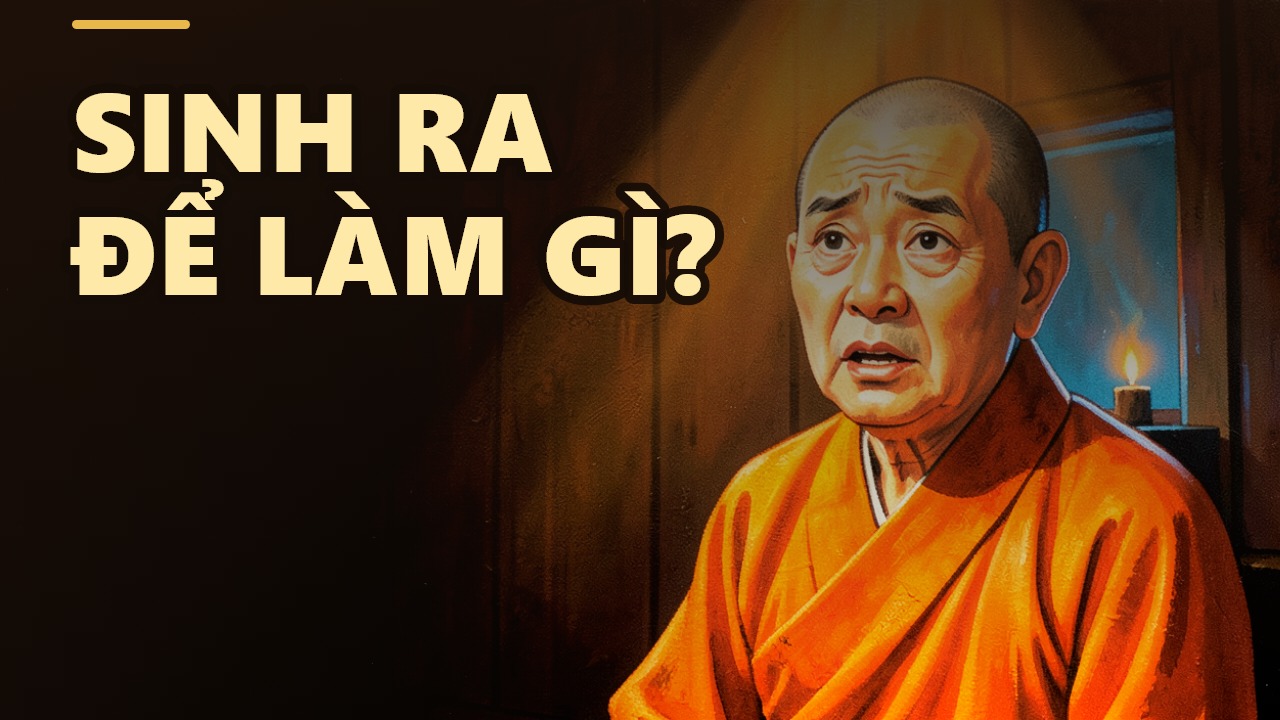
Have you ever suddenly found yourself wondering: "Why am I here in this world? What was I born for?" That is the question Thầy Thích Chân Quang raises in his New Year dharma talk titled Living Is to Practice, Practice Is to Live. The answer may well change how many of us see the meaning of life.
Two parts within us: the animal nature and the noble nature
Thầy begins with a surprising observation: a human being is not purely "human," but a mixture of two parts – the animal nature and the noble nature. The animal nature is the instinctive part, selfish and prone to anger. The noble nature is the part that loves, yields, and forgives.
"Within each of us, two parts are mixed together. One part we often call the animal nature... and one part is the noble nature... Whenever we are selfish, narrow-minded, or cruel, which part is that? The animal nature. And when we love, when we yield, when we forgive, which part is that? The noble nature."
The animal nature is already within us as instinct; it needs no teaching. The noble nature, however, must be learned and cultivated. This is one of the inherent disadvantages of being human.
"The animal nature comes to us naturally – we call it instinct... But the noble nature must be learned, must be taught, must be trained."
Do not let anyone call us a "beast"
When the animal nature prevails, a person becomes like a wild animal. Conversely, when the noble nature rises above, we can become a saint. Thầy reminds us that the curses or praises of others are also a sign of the path we are walking.
"If the animal nature grows too strong, people will curse you, calling you a demon, calling you a beast... But if you live in such a way that people say, 'There goes a saint,' then truly you will attain sainthood."
So what is the goal of our life? Not to eat, to play, or to love like the animals, but to eliminate the animal nature and to grow the noble nature.
Living to eat, to play, to love? – That is not yet living
Thầy points to the common purposes people give for living: to eat, to play, to love. But all of these reduce a human being to the level of an animal. It sounds satirical, yet it is the truth.
"Living to eat sounds too much like a pig... Living to play and have fun sounds too much like a monkey... Living to love sounds too much like a goat."
Thầy then suggests: live to serve. But whom should we serve? If we serve people who are themselves only living to eat, play, and love, our service is meaningless. Only when we serve those who are practicing and growing in the noble nature does our service truly have meaning.
"But if we live to serve, and the people we serve are practicing to grow their noble nature, then that service of ours is deeply meaningful, precious, and worthy."
Practice is for living: love, kindness, sharing
So why do we practice? We practice in order to live. To live beautifully, to live meaningfully. Thầy summarizes it in three things: love, kindness, and sharing.
"Living beautifully consists of three things. One is love, two is kindness, three is sharing."
Love is the root within the mind/heart. Kindness is the concrete action of helping. Sharing is passing on the teachings – but only when we have already lived with love and kindness do our words of sharing carry weight.
"People will only listen to our beautiful words of truth when they can see that our own life is beautiful."
Begin with a bud of compassion at the temple gate
Love is not easy. Thầy shows us how to practice it: stand among a crowd, look at the people around you, and give rise to the aspiration to love.
"May my heart love all people. May my heart love all people. Repeating this again and again, saying it over and over within ourselves, is a way of self-suggestion, of giving a command to ourselves, of compelling ourselves to be able to love all people."
Keep practicing like this, and one day the feeling of love will blossom naturally in the mind/heart. That is the first bud of compassion, the beginning of the journey to sanctify ourselves.
"Suddenly, on some beautiful day... we look at people and feel love welling up within us. At that moment, the first bud of compassion has just blossomed from within."
Conclusion: Begin today
Living is to practice, and practice is to live. Practice is not about escaping the world, but about returning to live in the world beautifully and kindly. Each of us can begin today – with a smile, a gentle word, a small act of help. That is the path leading us to true joy, not only in these first days of the new year but for countless lifetimes. Let us walk together on the path of practice, together eliminating the animal nature and nurturing the noble nature, so that every day we live is a day truly worth living.
AI-assisted translation from the Vietnamese original.
Read in Vietnamese →