
Living Is Caring for One Another: The Secret Lies in This Simple Truth
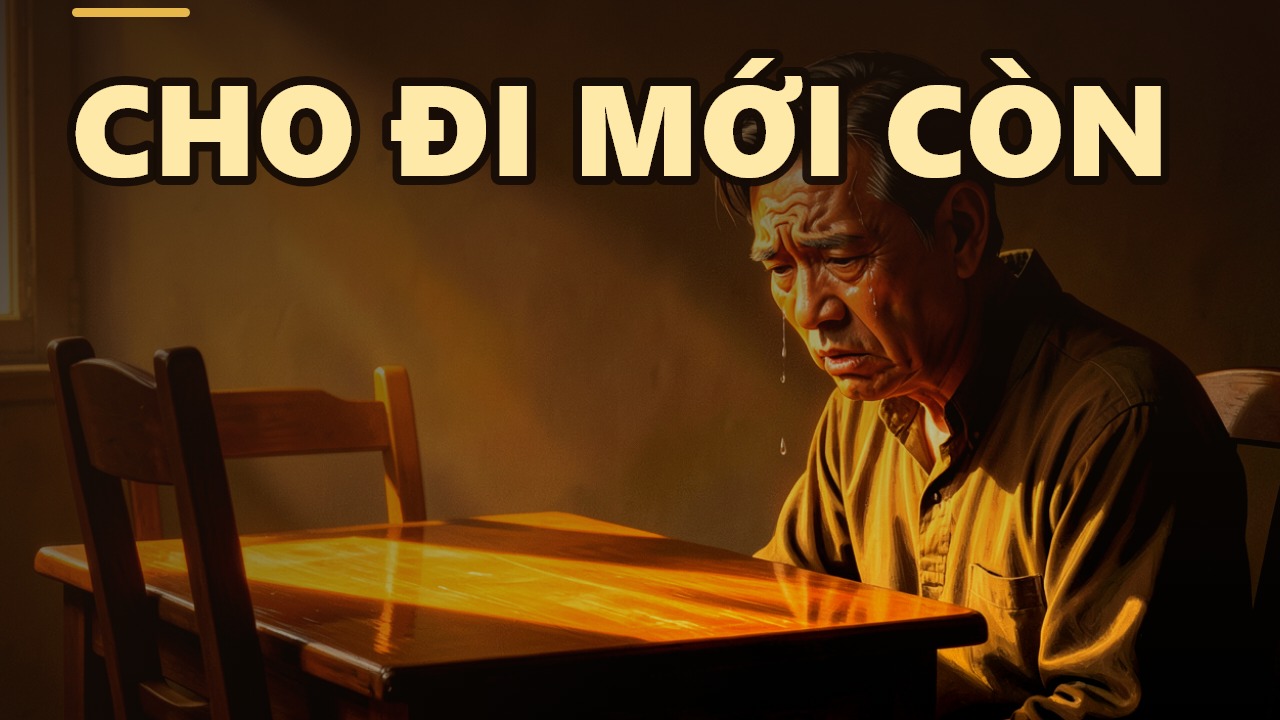
We are born to care for one another. Those who know how to give will receive happiness and blessings in return. Conversely, those who only wait for others to take care of them will eventually be cast aside by life.
Consider a young couple who loved each other deeply. The wife was diligent, caring for her husband in every detail. The husband took this for granted, simply enjoying the comfort. Yet, five years later, they divorced. Why? The wife said, “I do not understand the reason; I just feel bored and no longer wish to see him.” This is not an isolated incident but the result of a profound law of cause and effect (karmic law), as explained by Venerable Thich Chan Quang in his dharma talk titled “Living Is Caring for One Another.”
### We Are Born to Care for Each Other
For many years, we believed that life was about making money, being loved, or having others serve us. But at the age of fifty-six, Venerable Chan Quang suddenly realized a simple yet profound truth. He said, “It turns out that we were born into this world to care for one another. It turns out that we live to care for one another.”
When we are children, our parents care for us. As we grow up, we care for our parents, siblings, colleagues, subordinates, and even the wider community. This is the natural flow of life. Those who understand this possess merit and happiness. Those who only accept care without giving anything back will gradually be rejected by society.
### When You Only Want to Be Cared For
The story of that couple serves as a lesson. The husband enjoyed his wife’s love and care as if it were inevitable. He did not realize that every day he spent receiving was a day he depleted his blessings from merit. When the merit runs out and the conditions (dependent origination) cease, the care stops as well. Venerable Chan Quang explains, “If we live in this world waiting for others to care for us as a matter of course, we will slowly be driven out of life and pushed away from the social community.”
People who end their lives alone, with no close relationships, are often those who became accustomed to taking rather than giving. Life is like a river, flowing through cycles of giving and receiving. If you stand still on one bank, the current will sweep you away.
### To Care for Others, First Understand Them
Caring is not a simple task. To care well, we must understand the person we are caring for. Venerable Chan Quang emphasizes, “To care for others well, we must first understand them.”
When meeting someone new, try to quickly assess them within the first fifteen minutes. Four important aspects to observe are gender, age, health, and education level. Venerable Chan Quang shares an example: if a guest has to stoop slightly when entering a room, you know they have back pain. Therefore, when inviting them to sit, choose a chair with a backrest so their spine is supported. This small detail makes the recipient feel incredibly warm and cared for.
Understanding people also means knowing their schedules, habits, work, relationships, and family situations. However, please do not ask directly like a detective. Observe silently and subtly instead. Venerable Chan Quang advises, “Do not ask directly. Use your subtle and discreet observation to understand the person, rather than conducting a direct interview.”
### Caring Is Merit and Duty
If we care for others because we clearly understand the value of giving, we naturally accumulate merit. Venerable Chan Quang teaches that when we are young, the more we dedicate ourselves to service without calculation, the more we will be cared for and attended to in old age. This is the law of cause and effect (karmic law). But caring extends beyond the home and society. In the workplace, leaders must also care for their employees.
Venerable Chan Quang states, “A good leader is one who knows how to care for their staff, not just one who gives orders, demands reports, and directs. Such a life is cruel. Life must have affection and meaning.”
Caring does not mean doing everything for others. Depending on the person, we may provide comprehensive care, partial support, or subtle assistance. Parents care comprehensively for their children. A prime minister cares for the entire nation. With a stranger, offering a glass of water or giving directions is also an act of caring.
### Do Not Live Without Caring for Anyone
Life is meant for giving. When we open our hearts to care, we not only bring warmth to others but also find peace and happiness in our own minds. Let us practice caring for others starting with the smallest acts: pour a glass of water for your tired mother, adjust a chair for your teacher if it is crooked, or simply check if your colleague is having a difficult day. Do not wait for others to care for you. Be proactive in giving. True happiness arrives only when we learn to live for the sake of others.
AI-assisted translation from the Vietnamese original.
Read in Vietnamese →