
What Is the Purpose of Life? The Secret of a Successful Leader
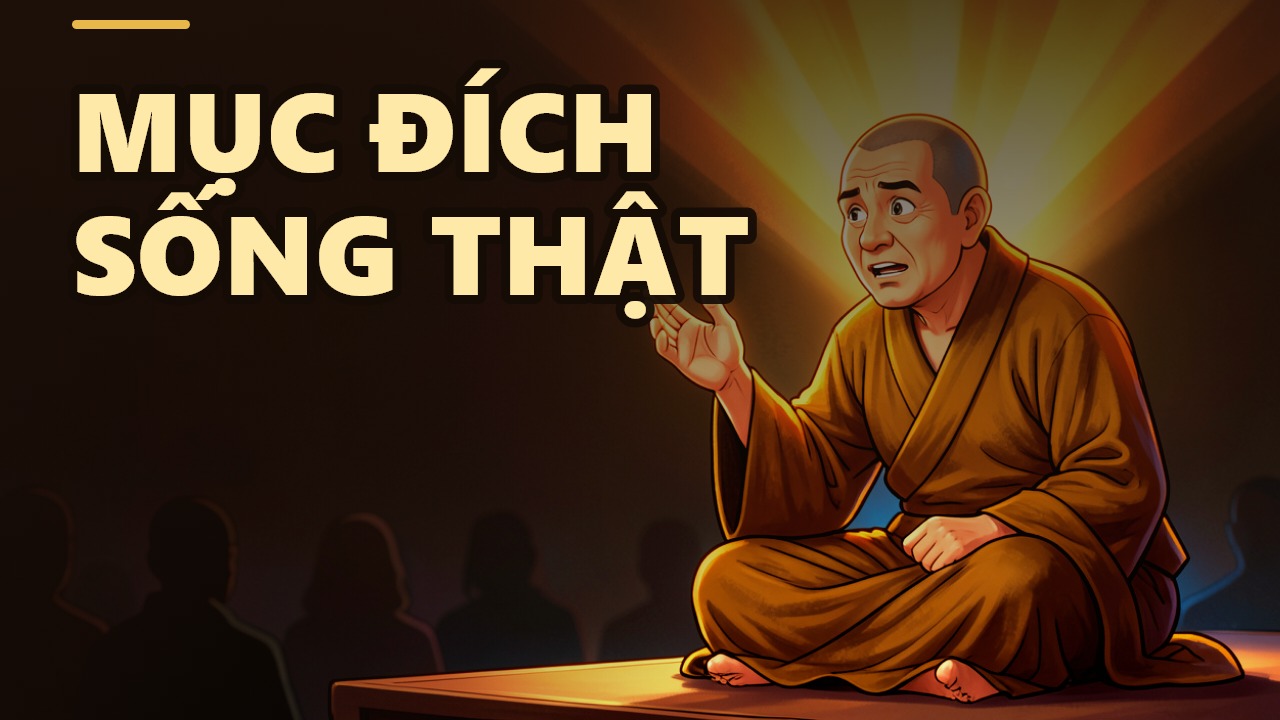
This dharma talk by Venerable Thich Chan Quang helps us recognize that the true purpose of living and working is to serve the happiness of all beings. From this understanding, we can build the ethics necessary for true leadership.
There is a question that everyone must ask themselves at least once in life: "What am I living for?" This inquiry may seem overwhelming due to its vastness, yet it is surprisingly simple. In a sharing session with management staff at Samsung Corporation, Venerable Thich Chan Quang opened a profound perspective on the purpose of life, which determines every direction taken by individuals and businesses alike.
### Right Motivation: The Beginning of All Success
We often believe that the motivation behind our work is simply to earn money to support ourselves and our families. However, the Venerable reminds us that if the initial motivation is wrong, everything that follows will go astray. He stated, "If from the very beginning our motivation is incorrect, then later on, everything becomes lost. Speaking in terms of cause and effect (karmic law) according to Buddhist teachings, if we have set a wrong goal or held a wrong motive, the result will inevitably be failure."
So, what constitutes the right motivation? It arises when the purpose of our work aligns seamlessly with the purpose of our existence.
### Two Choices: Happiness for Oneself or for Everyone?
The Venerable presents two choices for each of us: to live seeking happiness for oneself, or to live seeking happiness for all people. While many might boldly choose the latter in front of a crowd, when lying alone in silence, one’s conscience provides the honest answer. The choice we make shapes not only our personal lives but also our professional endeavors.
He explained, "If we seek happiness solely for our individual selves, we plant a seed in this world that grows into a tree bearing flowers and fruits that are poisonous to anyone who consumes them. Conversely, if we choose the second option and seek happiness for everyone else, we plant a beneficial seed. Later, it blossoms and bears fruit. Whoever partakes of it finds health and peace of mind."
### The Cause and Effect of Selfless Giving
When we live for the sake of others, our business activities naturally embody a spirit of service. The Venerable cited Google as an example: they provided search tools and Gmail services for free. As a result, the entire world became indebted to them, voluntarily offering their loyalty and engagement in return. This illustrates the law of cause and effect (karmic law): by sacrificing, serving, and giving freely first, benefits arrive naturally and sustainably afterward.
He emphasized, "We should continue to sacrifice, serve, give without expectation, and offer things freely. Therefore, if anyone in this life holds a correct purpose for living, they will naturally establish a correct objective for their business."
### The Ideal Commander: Gentle Yet Wise
A leader possessing both vision and moral integrity guides their team in the right direction. The Venerable categorized people into four types: wise but cruel, wise but gentle, gentle but foolish, and gentle yet wise. Among these, the person who is gentle yet wise represents the ideal model. Their gentleness earns trust, while their wisdom ensures competence. They do not need to be solitary heroes; instead, they create sustainable enterprises.
As he noted, "Being very gentle yet very wise—that is the definition of a successful person. That is the kind of leader whom everyone trusts."
### Nurturing the Tree of Ideals
Ideals are seeds planted in childhood. If left untended, they are eroded by the pests of greed, hatred and delusion, jealousy, and anger. Alternatively, they may be cut down by persuasive voices claiming that being gentle means being foolish, and that one must be harsh to survive. Thus, we must nurture our ideals through learning, associating with good people, reading inspiring books, and constantly battling our own minds to choose a life lived for others.
He advised, "From the initial ideal, we must continue to reflect upon it throughout our lives. Do not forget it. Do not let it be eaten by pests or destroyed by external forces."
True happiness does not lie in calculation, competition, or scheming. When we choose to live for the happiness of all beings, we sow wholesome seeds. Consequently, our lives and careers bloom, bringing more peace and prosperity to the world.
AI-assisted translation from the Vietnamese original.
Read in Vietnamese →