
What Are We Living For? The Light of Spreading the Dharma in Everyday Life
A dharma talk by Master Thích Chân Quang opens a profound perspective on the meaning of life: we do not live merely to eat, to enjoy, or to love, but also to practice and to help others become saints. Each of us can spread the Dharma by living beautifully and skillfully bringing the teachings into people's hearts.
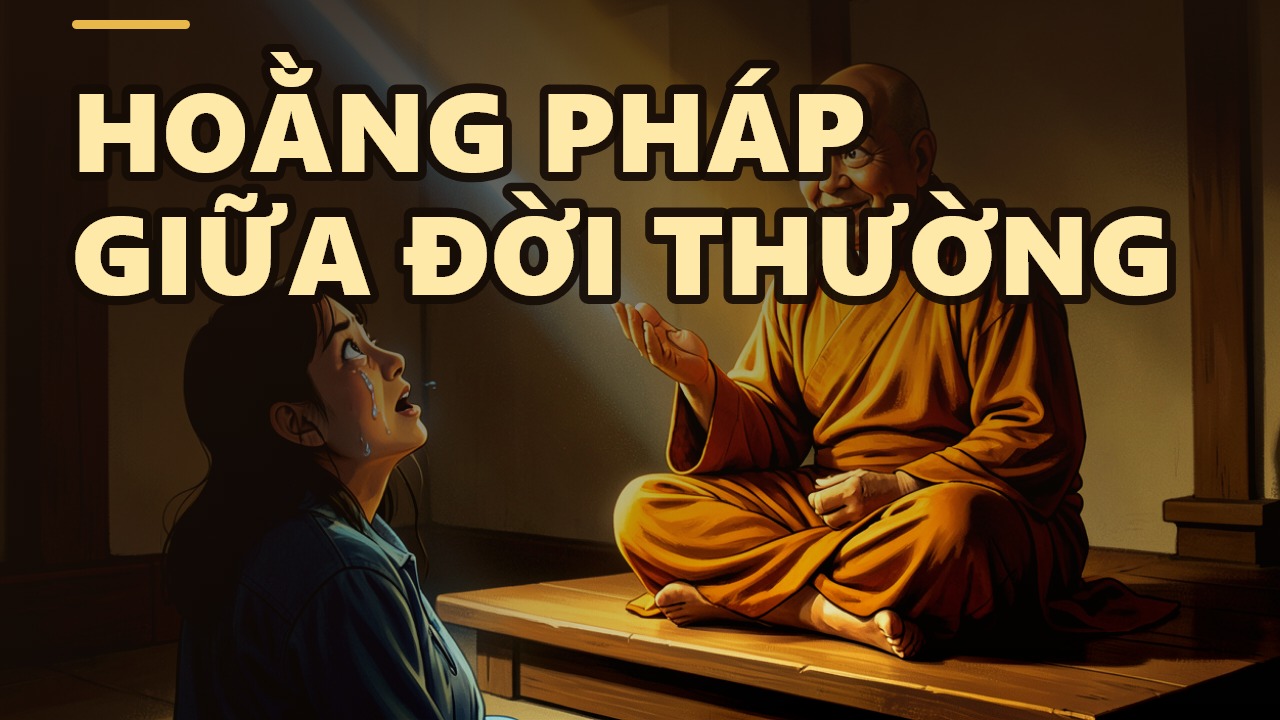
Have you ever wondered: what was I born into this world to do? To eat, to play, to love? Or is there something greater? On the first day of the Lunar New Year, a Buddhist layperson hurriedly asked the Master for permission to leave because he had an appointment. The Master said: "Set aside all worldly matters, set aside that appointment, sit and listen to the teachings." This small story makes us suddenly realize: sometimes the countless busy affairs of the world are obscuring a nobler goal — the goal of practice and enlightenment.
Whose Responsibility Is It to Spread the Dharma?
In his talk on the meaning of spreading the Dharma, Master Thích Chân Quang defined it very clearly:
"Spreading the Dharma means this: when we bring the teachings to everyone, that is called spreading the Dharma. And who is the one who must spread the Dharma? It is not only the venerable teachers standing on the podium. Everyone has the duty to bring the teachings to life, to the people around them — not just the venerable teachers."
So the work of spreading the Dharma is not reserved for monastics on the podium. Each of us, in one way or another, can become a person who spreads the Dharma. The only question is whether we recognize that responsibility.
What Are We Living For?
Master Chân Quang once asked his listeners: "What do we live for in this world?" If you answer that we live to eat, that is very much like a pig; to live for amusement is like a monkey; to live for love is like a goat. These sincere yet humorous examples make us laugh, but they then lead to an answer that is both simple and profound:
"What do we live for in this world? To practice. That is all. It is utterly simple: we live to practice, and we practice in order to live. We practice to live rightly, and we live rightly in order to practice."
Living to practice does not mean rejecting the world, but living with a heart and mind oriented toward the path. We may eat, we may enjoy, we may love, but all of it is to serve and to help people attain peace and liberation.
True Service: Helping Others Practice to Become Saints
Speaking of service, Master Chân Quang offered a very interesting line of reasoning:
"We love and we serve people, not letting them eat, play, and love carelessly until they become goats, monkeys, or pigs. We serve people so that they become saints. That is true service."
So service is not doing everything others want, but guiding them toward the path of practice so that they may become saints. When we help someone eat rightly, enjoy rightly, and love rightly, we are helping them nurture body and mind toward the path.
Many Ways to Spread the Dharma in Everyday Life
Not everyone has the opportunity to stand on a podium and teach the Dharma. But Master Chân Quang pointed out that there are many ways to bring the teachings into people's hearts:
Invite others to listen to reputable teachers — being a "scout," so to speak, meaning knowing where a good talk is happening and introducing it to others.
Give books and recorded talks as gifts, or send dharma talks online to friends and family.
Watch for the right opportunity to speak the teachings directly to someone — for example, when we see someone feeling down, we can skillfully explain cause and effect (karmic law) and the spirit of selflessness.
What is essential is that the way we spread the Dharma must be gentle and graceful. The Master taught:
"Spreading the Dharma must be gentle and graceful, never forceful. For the teachings are something peaceful, something beautiful — they carry no color of violence."
Instead of saying, "If you don't go listen to the Dharma today, you are a fool," say, "If you go to the temple to listen to the Dharma today, you are a person of great wisdom." Both sentences mean the same thing, but one wounds pride while the other awakens confidence. Skillfulness and love are the art of one who spreads the Dharma.
Character Is the Foundation of One Who Spreads the Dharma
To speak the teachings to others, we must first live in accordance with what we say. Master Chân Quang emphasized:
"When we speak about the teachings, about morality, we are bound to live very beautifully, very well. What we say and what we do must be the same. Live as if practicing, practice as if living."
No one trusts the advice of someone who lies or breaks their promises. Therefore, to bring the teachings into people's hearts, we must be a model of character and virtue. That is the price one who spreads the Dharma must pay.
What Awaits One Who Spreads the Dharma?
Master Chân Quang affirmed: a person who lives exemplarily and spends a lifetime sharing the teachings will be reborn in one of two good destinations: a royal palace or a heavenly realm. But those places are still bound within samsara (cycle of rebirth). Many who heard this made the aspiration: "I only wish to go forth and practice. For all the pleasures of this worldly life, when examined, are temporary, fleeting, and fragile." That is the highest ideal: not stopping at limited blessings from merit, but advancing in practice to attain complete liberation.
At the start of the new year, if each of us sets for ourselves a goal — "I and all people must become saints" — then life will change. Let us begin with the smallest things: a kind word, a helping action, an opportunity to remind someone of cause and effect (karmic law). Each of these acts is a light of spreading the Dharma, shining into a world still full of darkness. And when we do so, we ourselves are stepping onto the path of evolution from human being to saint.
AI-assisted translation from the Vietnamese original.
Read in Vietnamese →