
Living with Gratitude: Rising Above the Innate Ingratitude of All Beings
On the Vu Lan festival, Venerable Thích Chân Quang invites us to look back at gratitude — a quality that rises above our innate ingratitude. Through a smile, our clothing, and our words, we can offer goodness to others and gradually walk the path of the saints.
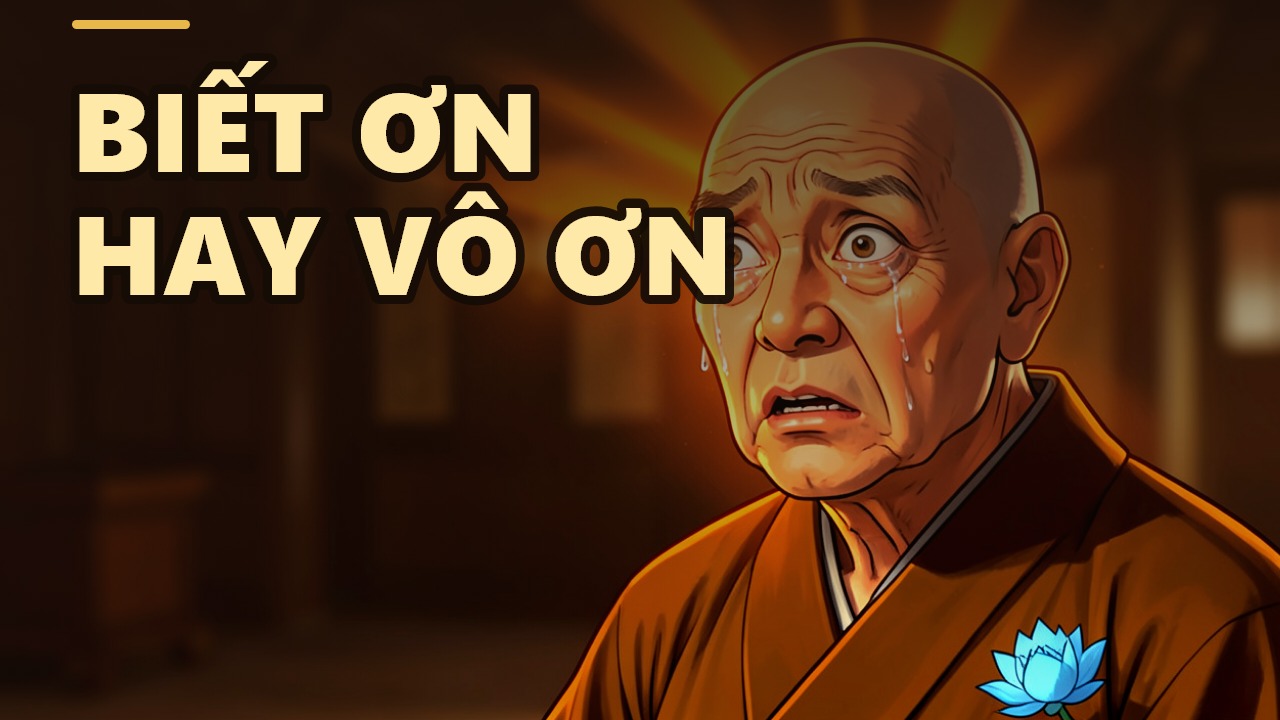
Have you ever given someone a gift and remembered it forever, while the recipient quickly forgot? In his dharma talk on Vu Lan, Venerable Thích Chân Quang spoke directly:
Human beings are naturally ungrateful. No one needs to remind us or tell us otherwise. All of us are, by nature, ungrateful people.
Yet Vu Lan is precisely the occasion for us to resist that instinct and cultivate the practice of gratitude — a practice that goes against the natural law of all living beings.
The Instinct of Ingratitude and Self-Cultivation
We in the North have a saying: "When drinking water, remember its source." In reality, however, people forget kindness very easily. Thầy Chân Quang pointed out that when we give someone a million, we remember it forever. But the person who receives a million and spends it on a meal of rice will very easily forget. Our parents raised us through hardship, yet we often remember only our spouse and children — those to whom we have present responsibilities. As for the kindness of our parents, we forget it very quickly.
This is instinct, and no one can be blamed for it. But human beings have wisdom, morality, and conscience, and so we must know how to resist that instinct. He said:
We must constantly resist our own instincts. All the saints and sages, from ancient times until today and into the future, who taught moral principles to sentient beings, were only helping beings to have enough moral and intellectual clarity to resist their own instincts.
Gratitude Means Rising Above Instinct
He also offered an interesting example: love within the family is a natural instinct — we love our parents, spouse, and children without anyone teaching us. But love of country is morality. He said:
Loving one's family is instinct; loving one's country is morality. That is simply how nature works. So whenever a nation has citizens who know how to love their country, we should understand that it is an intelligent, moral people with the potential to develop.
Vu Lan is a day of repaying kindness. It is also an act of resisting our own instinct toward ingratitude. We may not remember who helped us through difficult times, but if we have wisdom and morality, we will never forget those kindnesses. Such kindness is not limited to our parents alone — it extends to our teachers, our ancestral masters, our leaders, the Three Jewels, and all sentient beings. Everyone who exists in this world is worthy of love and preciousness.
Three Beautiful Gifts to Give
When we love and respect one another, we offer each other beautiful things. Thầy Chân Quang suggested three of the easiest gifts: a smile, our clothing, and our words.
The first gift is a smile and friendly eyes. He told a real-life story:
When we enter a temple, if the guard glares at us, we feel uneasy. But if, the moment we step through the temple gate, we meet a young person dressed nicely who smiles at us with friendly eyes, we feel at ease at once. Just with a smile and friendly eyes alone, we have already begun offering each other beautiful things.
The second gift is our clothing. Dressing beautifully not only makes us look good but also expresses respect for others. He reminded us:
Dressing beautifully has two meanings. It makes us look good, and truly, it also expresses our respect for everyone. So a person whose clothing is lacking in fabric is also lacking in respect for others.
The third gift is our words. Kind, skillful, and courteous speech is an expression of civilization and wisdom. We in the North have a tradition of speaking warmly and thoughtfully — that is a cultural treasure of our people.
Show the Good, Cover the Bad
However, outward appearance does not necessarily reflect the inner heart. He said:
Between our outer appearance and our inner self, there is truly a distance. Some things appear one way on the outside but are not that way within.
People naturally tend to show off what is good and hide what is bad. This may sound dishonest, but he explained:
The bad must be covered, and the good must be shown. This is a requirement of life itself, not dishonesty. We do not have the right to expose our badness for all to see.
Just as in the military, loving one's country is a discipline, and violating it brings punishment. In daily life, hiding our faults is a way of cultivating and transforming ourselves, not of deceiving others. When someone brings out their badness in a way that harms the community, that person has violated the discipline of life.
From Outer Form to Inner Heart: The Path to Sainthood
Ordinary people try to present what is good in order to live with others, while still carrying what is bad within. The saints, however, are beautiful both outside and inside. He suggested that we narrow that distance:
When we shorten the distance between our inner self and our outer self, we are walking the path of the saints.
He told of flight attendants: the young ones speak in perfect scripted phrases but their inner hearts are dry; the older ones are genuinely warm, because they transformed long ago. When we always love with sincerity, we will receive warm acceptance from everyone in this life.
Each day, before the Buddha's altar, we still carry faults within our mind/heart. But if we know to conceal what is not yet good in order to transform ourselves, and always wear a smile, speak kind words, and dress beautifully and respectfully, then this life still holds much hope. Vu Lan is not only a day of gratitude to our parents — it is also an invitation to walk the path of becoming a saint with every breath we take.
AI-assisted translation from the Vietnamese original.
Read in Vietnamese →