
Fearing Debt Is Also Virtue
Every encounter, every love or resentment is a debt of cause and effect (karmic law). Understanding the law of borrowing and repaying, we live more kindly and find the true path to liberation.
Imagine you are walking along a long, dusty road under the sun, exhausted, with not a single coin left in your pocket and your stomach growling with hunger. You stop at a house by the roadside and ask for a meal. The owner not only feeds you until you are full and gives you plenty to drink, but also slips some money into your pocket so you can continue your journey. At that moment, do you realize you have just incurred a debt? The debt is not only the bowl of rice, the glass of water, or a few coins, but also that person's whole heart, their kindness. And according to the teachings of Master Thích Chân Quang, all sentient beings in this world borrow from and repay one another in this way.
Borrowing and Repaying: The Law of Life
Master Thích Chân Quang opens his dharma talk with an observation that gives us pause: "All sentient beings living in this world owe one another, borrow from and repay one another. Parents and children, husband and wife, brothers and sisters, even teachers and students, then friends and colleagues — all of it is mutual borrowing and repaying."
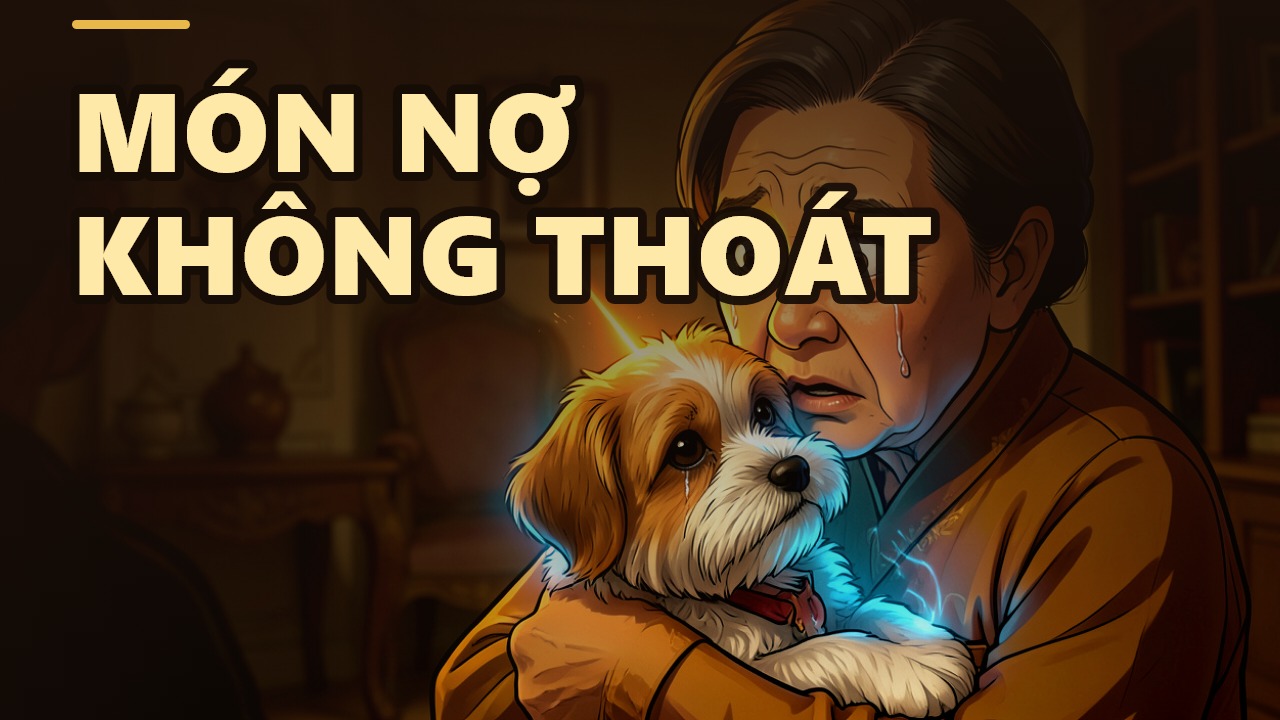
We often call this "karmic affinity" — sometimes a wholesome bond, sometimes a grievance. But in essence, these are all debts carried over from past lives. The Master also tells the story of a wealthy old woman who left twelve million dollars to her dog. It sounds absurd, but it turns out that in a previous life, the dog was a person who had helped her wholeheartedly. Due to wrongdoing, they fell into rebirth as a dog, yet their affection for the woman remained. That is a debt of gratitude.
Loving and Hating Are Also Borrowing and Repaying
What is fascinating is that feelings of love or hatred are also debts. The Master points out clearly: "A feeling that is so heavy is because the debt from a past life was heavy. So whenever you love someone, remember that it is a debt."
Who among us has never met a stranger and immediately felt love or dislike? That is an echo of the past. If we meet and love each other deeply, it is a heavy debt from some past life. If we meet and instantly feel hatred, it is a lingering resentment. Even husbands and wives, parents and children, are simply people who have come to repay debts.
There Are Two Kinds of Debt: Material and Emotional
The root of all entanglements is material debt and emotional debt. When you ask for a bowl of rice, you incur a material debt, but along with it comes an emotional debt when the giver treats you with kindness. The Master emphasizes: "The greatest debt in a person's life is emotional. Every debt in this world is like that. It is not dry and mechanical like a banker counting money — every material debt carries with it a heart, the feelings of love and hate."
It is precisely these feelings of love and anger that push us into samsara (cycle of rebirth). Only those who can master them, who finish repaying without becoming entangled, can begin to find liberation.
How Do We Repay Our Debts?
Many people think that becoming a monastic is a way to escape debt, but that is not so. The Master affirms: "Do not think that entering a temple means your debts are gone. There is no such thing. You enter the temple so that I can show you a way to repay your debts to the world many times faster."
Why? Because a genuine practitioner, through precepts, meditative concentration and wisdom, can dedicate merit to many beings. A debt of a few coins might need to be repaid many times over in a future life, but if we offer the priceless treasure of the Dharma to liberate our benefactor, that debt can be cleared within a single lifetime. A practitioner not only repays all debts but also causes others to incur new debts, because that treasure of Dharma is supremely precious.
The Debts That Are Hard to Repay
Some debts are very difficult to repay. The Master tells of someone who saves you from drowning, but dies in your place. You owe them an entire life. How can you repay it? The Master teaches: "You must live the rest of your life with utmost virtue, utmost service, utmost sacrifice, dedicating all those blessings from merit to your benefactor. Consider that you no longer live for yourself, but live for the one who has died."
Or consider the debt to someone who once helped you but has since become a wicked person. You cannot obey them and do dishonest things to repay the debt. The Master advises: "Pray for the Buddha's protection so that your heart remains unmoved and you do not obey the wicked. Pray for the Buddha's protection so that you can use the Buddha's teachings (Dharma) to liberate your benefactor."
This is a way of repaying debt that preserves virtue while also helping the lender turn back toward goodness, and your own merit grows as well.
Living Kindly Is Repaying Our Debt to Heaven and Earth
Truly, understanding the law of cause and effect (karmic law) of borrowing and repaying helps us blame less. Those who love us are creditors, and we must repay them. Those who make us suffer are also creditors, and all the more must we transform that with a heart of compassion. So do not fear incurring debt. Fear only that you do not know how to repay it. One who fears debt is a person of virtue, who lives kindly, with gratitude and responsibility. May each of us bring the strength of our daily practice to repay our debt of gratitude to family, teachers, the Buddhas, and all sentient beings. That is truly repaying our debt to life, the path that leads to liberation.
AI-assisted translation from the Vietnamese original.
Read in Vietnamese →