
Where Do We Go After Death? Plant Seeds for the Enduring Dharma
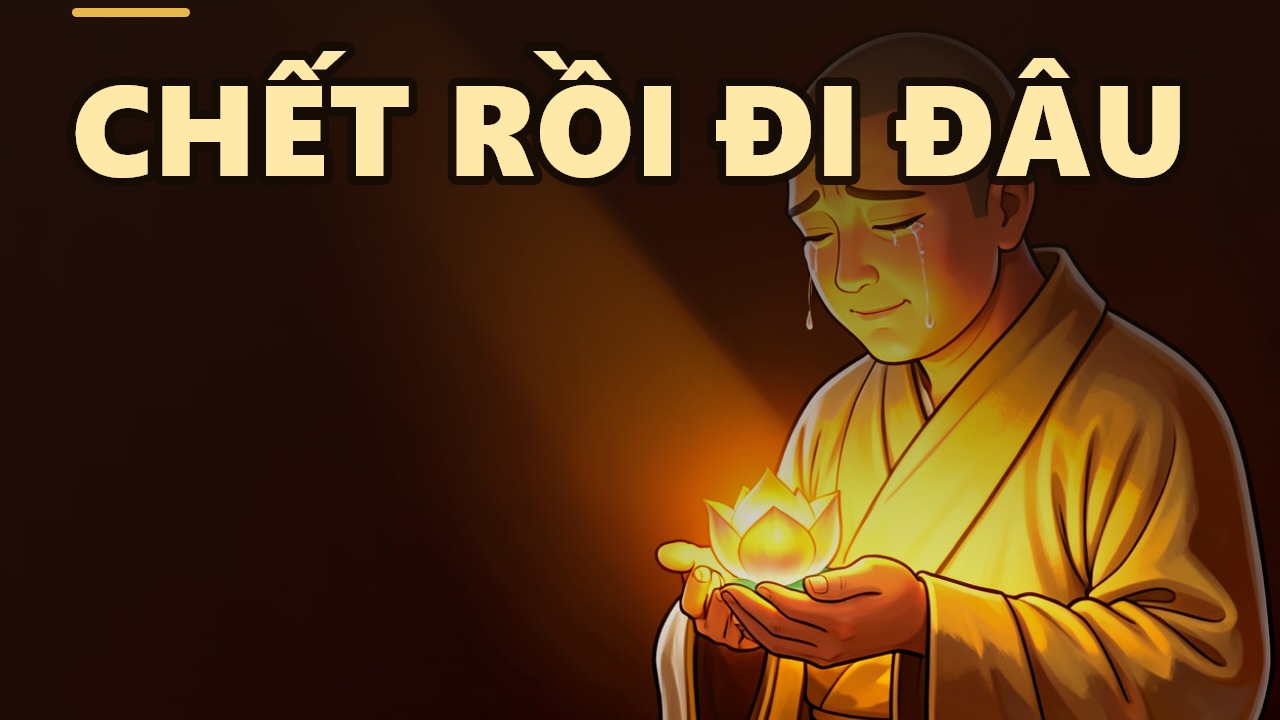
How to ensure the Buddha's teachings (Dharma) endure is not merely a duty. It is the bodhisattva mind planting seeds so that you may encounter true teachers and the right path in your next life. When death arrives, we follow our karma.
Have you ever asked yourself where you will go after closing your eyes for the last time? Venerable Thich Chan Quang begins with a gentle reminder. Many people do not think about death because they feel young, but life passes quickly. Thirty or forty years later, fifty or sixty years later, it arrives in the blink of an eye. Then comes the great question: where do we go when we die?
The answer in the scriptures is precise. After passing away, beings follow their karma. In other words, we travel according to our actions. Everything else is left behind. People usually regret three things most: money, loved ones, and power. However, those who practice the path regret something different. They regret that their spiritual cultivation has not yet reached completion.
Those who know the path regret differently than those who do not. The latter mourn wealth, worldly affection, and authority. So what are we truly mourning? If every day is spent chasing money and fame, we will be shocked at departure, unable to take anything with us. But if we cultivate, we will only regret not having practiced deeply enough.
Two True Aspirations of a Buddhist Practitioner
Venerable Thich Chan Quang shares that if one dies before completing their practice, a Buddhist holds two dreams. The first dream is to arrive at a place of practice guided by masters, bodhisattvas, and saints. The second dream is to be reborn early into a family with the Buddha's teachings (Dharma), supported by parents, and to meet true teachers and the right path again soon.
He also reminds us not to have overly lofty fantasies. The merit required for rebirth in pure lands or heavenly realms is immense. Many mistakenly believe a few good deeds suffice, but such blessings are often enjoyed immediately in this very life. Therefore, the realistic hope is to be reborn as a human, to encounter the Dharma sooner, and to continue practicing.
The Magnetic Pull of True Teachers and the Right Path
Scriptures speak of being swept away like water in a torrent. This describes the powerful attraction of an enlightened master. When meeting a true teacher, the mind is captivated without hesitation, offering one’s entire life to the path. He tells the story of King Kappina. Upon hearing of the Buddha from a golden plate sent by King Bimbisara, he immediately handed over his kingdom and rode out to find the Buddha. Crossing the river, he met the Buddha and attained enlightenment instantly, becoming a great Arhat.
The pull of a saintly master is profound. Once we meet them, our whole heart and life follow without a shred of doubt. Even in this era without the physical presence of the Buddha, if we meet a genuine teacher and possess wholesome roots, we too will be strongly drawn. This leads us firmly onto the path of cultivation.
Planting Seeds Now to Meet True Teachers and the Right Path
But where will true teachers and the right path come from to await our rebirth? The teacher teaches that results arise only from causes. Without planting seeds, there is no harvest. If we do nothing in this life to support the endurance of the Buddha's teachings (Dharma), we will surely wander in the next life, never finding true teachers or the right path. Conversely, when we feel deep concern and act to preserve the right path, this is the bodhisattva mind. This mind guides us toward wholesome fruits in the future.
The yearning in the heart to see the right path endure, followed by action, is called the bodhisattva mind. Each of us should start with small acts: chanting sutras, reciting the Buddha’s name, meditative concentration, helping sentient beings, and sharing the Buddha's teachings (Dharma). All these are seeds planted for the enduring right path.
Why Does the Right Path Decline While False Paths Persist?
Some wonder why the right path is subject to impermanence (anicca) and weakness, while false paths seem eternal. The teacher explains that false paths stem from the nature of sentient beings: greed, hatred and delusion. These exist naturally without needing instruction. The right path, however, requires cultivation and nurturing. Thus, if we give up, false paths prevail. For example, if you find a large sum of money, two impulses arise: keeping it because "finders keepers," or returning it out of compassion. Without practice, selfish instinct wins. Only through cultivation and the right path within can we do what is right.
If we do nothing, false paths naturally persist in this world. Humans tend toward negativity by default. The right path exists only when true teachers appear, the right path emerges, and beings strive hard in practice.
The Endurance of the Dharma Lies Within Each Heart
Finally, the teacher emphasizes that the Buddha's teachings (Dharma) are not just external forms or temples. They are the true teachers, the cultivated mind seeking enlightenment, and the orientation toward non-self (anatta) in all beings. As long as our hearts love and respect the Buddha, believe in cause and effect (karmic law), aim for non-self (anatta), and strive to love one another, the Dharma exists.
Therefore, our responsibility is to live so that the right path spreads. Keep your mind pure and continue planting good seeds. The greatest aspiration is this: May the right path endure forever on this planet. As long as humans and life exist, the Buddha's teachings (Dharma) must remain.
Today, you can begin with the smallest step: hold a wholesome thought, open your heart to sentient beings, and bring the Buddha's teachings (Dharma) to others. This is not only how the Dharma endures, but how you ensure that wherever you are born, you will meet true teachers and the path of practice again. Do not wait. Plant the seeds now.
AI-assisted translation from the Vietnamese original.
Read in Vietnamese →