
The Vast Practice of Making Offerings: The Bodhisattva Gives Away Everything—What Do They Receive in Return?
Discover the third practice of Samantabhadra Bodhisattva: making offerings carries three profound meanings, how Bodhisattvas give away all their possessions thanks to their merit, and why we need to make offerings with a heart of absolute reverence.
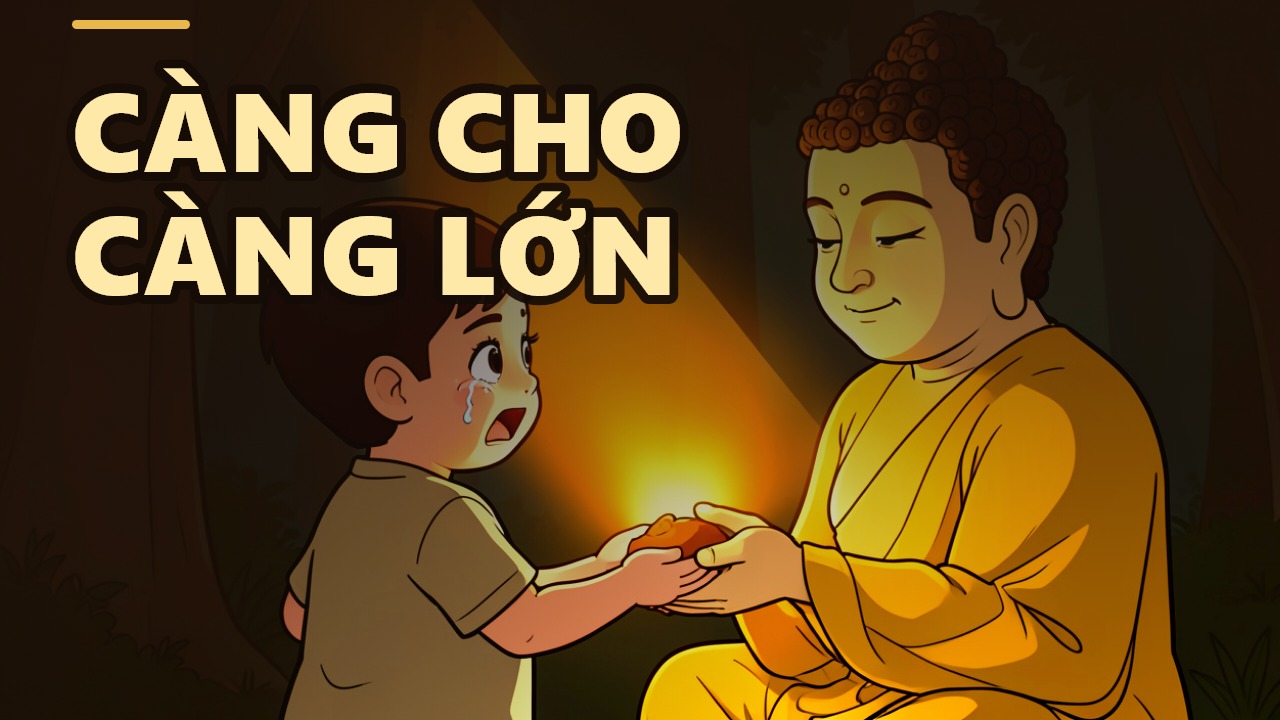
Have you ever wondered why Bodhisattvas, who have already attained such lofty realization, never cease making offerings throughout the ten directions? Whom do they offer to, and what enables them to do so? The third of the ten great vows of Samantabhadra Bodhisattva—the Vast Practice of Making Offerings—reveals to us a very different view of giving: a giving that never diminishes, but on the contrary, grows greater the more one gives.
Making Offerings Is Not Just Presenting Material Things—It Carries Three Sacred Meanings
Many people think making offerings simply means presenting flowers, fruit, incense, and lamps. But in the chapter on the Great Vows, Samantabhadra Bodhisattva makes clear the three purposes of making offerings. Thầy Thích Chân Quang emphasizes:
"Making offerings to the Buddha has three purposes: first, for the Buddha to receive and use; second, to adorn the Buddha-land; and third, to create the means for the Buddha to teach and transform sentient beings."
These three meanings, though three, are in truth only one. For when the Buddha receives and uses the offerings, it is to teach and transform sentient beings; when the Buddha-land is adorned, it is likewise to teach and transform sentient beings. Therefore, any offering, however small, carries within it the seed of enlightenment, if we do it with a pure mind.
The Bodhisattva's Wealth: Hidden in Merit and Spiritual Powers
A Bodhisattva can use spiritual powers to fly throughout the dharma realm, reaching countless Buddha-lands to make offerings. But how do they have enough wealth? Thầy explains:
"The wealth of a Bodhisattva is hidden within their spiritual powers."
He tells the story of the novice Tisa, who, though still young, had realized the state of an Arhat. When the Buddha led the assembly of monks to visit, this novice used his spiritual powers to manifest a magnificent, resplendent palace to welcome the Buddha. After the Buddha departed, the palace vanished, leaving only the forest. Such spiritual powers are not something everyone possesses, for they depend on merit. We may not be able to do what a Bodhisattva does, but we can understand this: merit is the most precious wealth we can offer.
Making Offerings with a Heart of Absolute Reverence
An offering without a reverent heart is merely a formality. Bodhisattvas make offerings with a soul overflowing with veneration. Thầy Chân Quang affirms:
"Whoever has attained absolute reverence for the Buddha will certainly attain realization."
Why? Because when the heart holds absolute reverence, a natural momentum arises that drives us to practice diligently, life after life, never stopping. The story of the little child who offered the Buddha a handful of clay rice is the same. The Buddha accepted it, handed it to his attendant to smear on the wall, and said that two hundred years later, the child would become King Ashoka, spreading the Buddha's teachings (Dharma) far and wide. The child's sincere heart created boundless merit. An offering like this, even made only of clay rice, far surpasses an offering of gold and silver made without a reverent heart.
Giving Away Everything—But Not Recklessly!
One characteristic of Bodhisattvas is that when they stand before a Buddha, they offer away everything they have, not keeping back even a speck of dust. Then, in another Buddha-land, their spiritual powers manifest anew, and they have fresh offerings to present. That is the Bodhisattva's heart. And what about us? Thầy teaches:
"Without stinginess, without greed, without grasping—but one must use things rightly."
It is not the case that pouring out all one's wealth and abandoning one's spouse and children to go make offerings is the Bodhisattva's practice. That is recklessness and a misunderstanding of the Buddha's teachings (Dharma). A wise Buddhist will keep balance, caring for family and work, while still being ready to make offerings whenever conditions (dependent origination) arise. Some people are capable of offering an entire Buddha statue, yet prefer to let many people join in so that everyone may share in the merit. That is precisely wisdom—the vast and complete practice of making offerings.
Making Offerings as a Momentum Toward Enlightenment
Finally, making offerings is not merely an act of giving; it is also a path leading us to enlightenment. When we make offerings with a heart of absolute reverence, we are cultivating a natural momentum within the mind. Each time we encounter a holy being, our heart rises with the wish to offer everything, even our very life. However, we only hold that aspiration in our heart, while our actions must remain clear-sighted. For a person of virtue and wisdom always looks ahead and behind, living not only for themselves, but for all.
The vast practice of making offerings is an invitation: learn to give with a wide-open heart, a soul full of reverence. You need not be wealthy, nor powerful; a smile, a word of encouragement, a small act of kindness for another—all of these can be offerings. Let us begin today, with the simplest things in life, so that each of our actions becomes a seed of merit spreading outward, carrying us step by step along the path to enlightenment.
AI-assisted translation from the Vietnamese original.
Read in Vietnamese →