
The Nikaya: The Buddha's True Words – Why You Should Know Them Before You Study and Practice
Discover the Nikaya Suttas – the original canonical treasure passed down orally and preserved intact. Understand their origins, their value, and how they are classified, so you can study and practice the true Dharma.
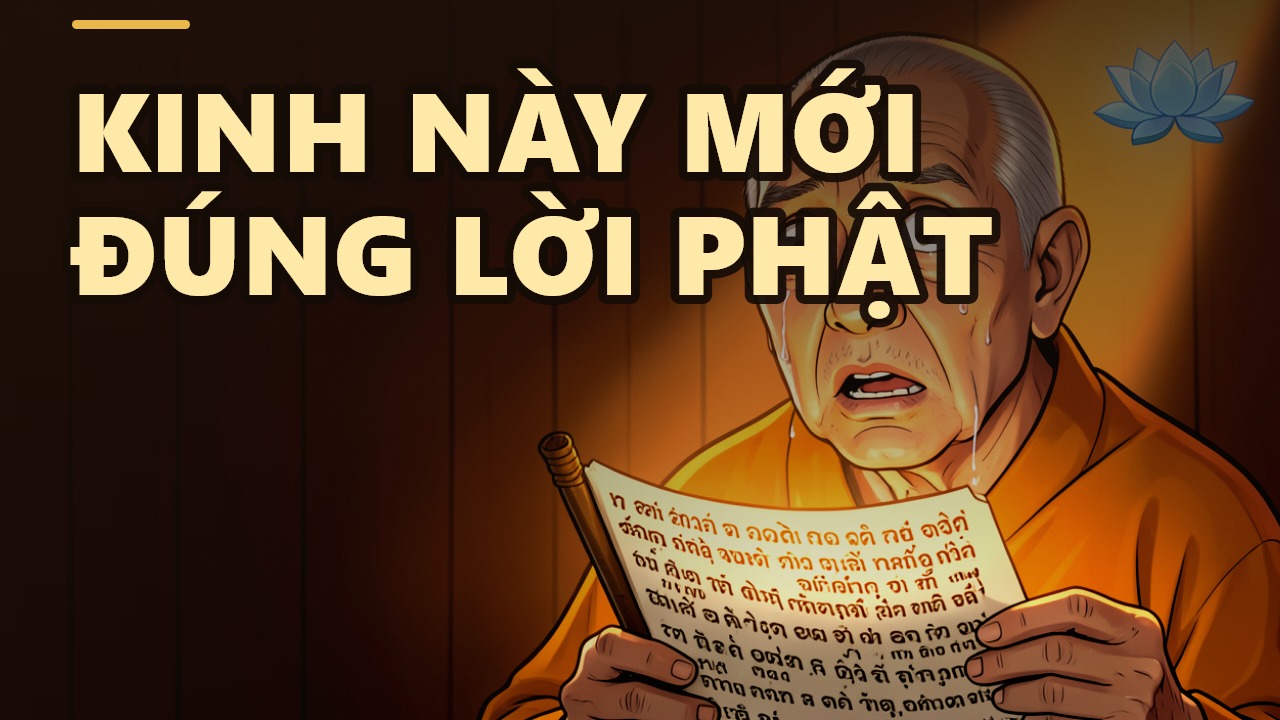
Among thousands of Buddhist scriptures, has anyone ever asked: which of these are truly the words of the Buddha? Today, let us step into the world of the Nikaya – the treasury of scriptures regarded as the most original – and explore why it matters so much.
The Nikaya: The Original Scriptures of Buddhism
What is the Nikaya (Pali)? It is a collection of five great bodies of scripture containing the direct teachings of the Buddha, preserved in the Theravada tradition. According to Thay Thich Chan Quang, the Nikaya scriptures were written in the Pali language, originating from Sri Lanka, and are regarded as the original scriptures of Buddhism. Historians around the world have confirmed that these are indeed the teachings of the Buddha.
These suttas were truly spoken by the Buddha. Of this there is no doubt.
However, not every scripture circulating today is original. Thay also says that many suttas appeared later, not spoken by the Buddha, yet written in a style that resembles his words. So how can we tell them apart? The answer lies in the history of oral transmission.
From Oral Transmission to the Written Word
In the Buddha's time, writing was not yet widespread, and the scriptures were transmitted by word of mouth. The disciples recited them day and night to memorize and safeguard the precious Dharma. Oral transmission across generations may have introduced some small errors, but thanks to the great councils – especially the Third Council held under King Ashoka – the scriptures were finally written down in Pali.
Thus, the Nikaya scriptures were only memorized and passed down orally, never written, during the first several hundred years.
King Ashoka was a great protector of the Dharma. He not only convened the council to compile the scriptures but also sent missionaries far and wide. One of the most important of these emissaries was Prince Mahinda, who brought the Nikaya to Sri Lanka.
Prince Mahinda and Two Great Merits
Mahinda ordained as a monk, and his father the king entrusted him with the mission of spreading the teaching to Sri Lanka. The people there received him with deep respect, the royal court adopted Buddhism as the state religion, and the entire canon was carried to the island. Thanks to this, the Nikaya was preserved intact. Thay recounts that this event brought two great benefits: first, it distinguished these scriptures from the later Mahayana texts; second, it saved the canon from destruction during the Islamic invasions of India.
When Prince Mahinda ordained and carried the entire Nikaya across to spread the teaching, this event brought two great merits to Buddhism, two great benefits.
The story of King Maha Kappina, a king who, upon meeting the Buddha, spurred his horses across a river with fervent faith, is an example of spiritual capacity and heartfelt aspiration. He himself ordained and attained the state of an Arahant just eight days later. This shows the power of genuine faith.
Theravada and Mahayana: Distinguishing in Order to Understand Correctly
The Nikaya suttas belong to the Theravada tradition. Some Mahayana sutras, such as the Vimalakirti Sutra, have been confirmed by historians to have appeared as many as seven or eight hundred years after the Buddha. Thay says: "Buddhism is the path of things as they truly are, of seeing and knowing things as they truly are." Therefore, a student of the Buddha needs to distinguish what are the Buddha's own words and what are later developments. This does not diminish the value of practice, but helps us understand the foundation correctly.
Buddhism is the path of things as they truly are, of seeing and knowing things as they truly are. Whatever is true must be acknowledged.
The Five Collections of the Nikaya: An Overview
The Nikaya consists of five collections, each a treasure in its own right:
The Long Collection – thirty-four long suttas.
The Middle Collection – one hundred and fifty-two suttas of medium length.
The Connected Collection – suttas grouped by theme.
The Numerical Collection – suttas organized by numbered teachings, from one to ten.
The Minor Collection – many poems and verses, such as the Dhammapada and the Jataka birth stories.
Each collection is a key that opens the door to wisdom, but if you are just beginning, you can start with the Minor Collection and short verses like the Dhammapada.
To live with the Nikaya is to live with the true Dharma. In an age when scriptures are widely printed, the merit of preserving the Dharma no longer lies in memorizing and reciting, but in understanding and practicing. Set aside time each day to read a sutta, reflect upon it, and apply it to your life. Let the Nikaya bring you back to the source, where the light of truth shines.
AI-assisted translation from the Vietnamese original.
Read in Vietnamese →