
People of Depth – Living with the Future in Mind is True Good Fortune
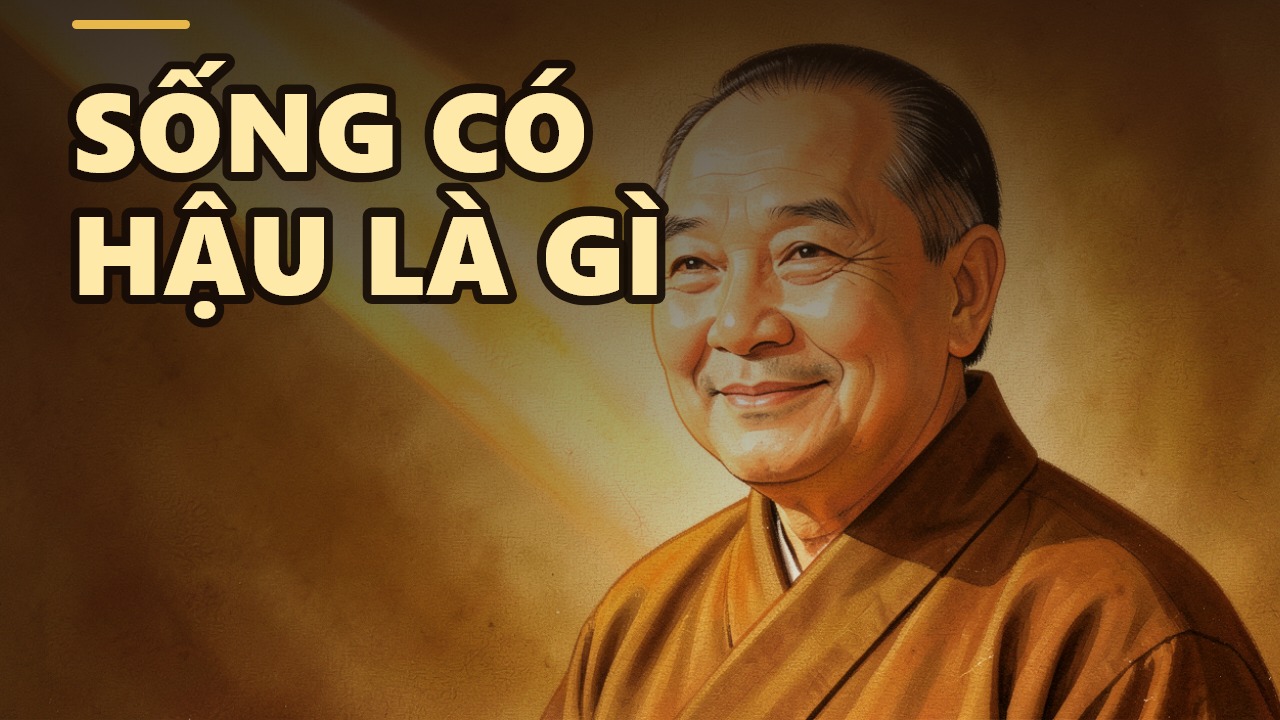
**Summary:** The dharma talk by Master Thích Chân Quang reveals the profound meaning of being a "person of depth" – someone who lives thinking of the future, practices patience, and creates merit for times to come. This is not only morality but also the wisdom of a bodhisattva.
Have you ever wondered why some people spend their entire lives focused only on immediate benefits, living superficially and earning dislike? And why others are always serene, constantly thinking ahead, and beloved by all? The answer may lie in the concept of "having depth" that our ancestors often mentioned.
A person of depth is someone who lives with the future in mind.
During a Vesak talk at Kim Son Pagoda, Master Thích Chân Quang explained that "depth" (hậu) means not only profound and thick, but also what lies behind, what comes later. A person of depth is someone who, in their living, conduct, and work, always thinks of the years ahead. The Master said:
"Therefore, whoever, when living, conducting themselves, or working, often thinks of the future is a person of depth. We call this a person who lives with depth, one who always thinks of what is to come."
In contrast, a person who only solves immediate problems and lives in haste often easily causes conflict and disputes. Because of this, between two people, the one who thinks far ahead may have to accept current disadvantages and hardship, but they secure a peaceful future.
Restraining anger to preserve neighborhood harmony.
We have all encountered situations where a neighbor's chicken scratches up our vegetable garden, or someone says hurtful words. The natural reaction is to scold or argue. But a person of depth will think: We are neighbors for a lifetime; will we not need each other during thefts, accidents, or celebrations? Master Chân Quang advises:
"So a person who thinks of the future considers that a chicken scratching up a few clumps of vegetables is hardly something the owner instigated... In times of trouble, the bond of village fellowship is more important than a moment of anger, of losing something due to hatred and delusion."
Restraining anger is not weakness; it is a battle with oneself to live better for the future. This is the morality and wisdom of a person of depth.
A person of depth also knows how to use karmic results for the benefit of all beings.
There was a scrap collector in Saigon who found five million Japanese yen inside a speaker. She turned it in to the authorities. When she received the equivalent of about one billion dong in return, the first thing she thought of was sharing it with her struggling fellow scrap collectors. Master Chân Quang commented:
"This person had a kind heart, and so now received this grace from heaven. When she had a lot of money, the Master thought of her friends who were also in hardship, in the same situation, also trading scrap metal – a very difficult life."
But the Master also cautioned about an easy mistake: when doing good deeds, one should not cling to karmic rewards for oneself. For example, when adorning a Buddha statue, some think of becoming beautiful in a future life. That is a greedy mind. To avoid losing our virtue, we should think further: if we gain wealth or beauty, we will use it to help others, to continue creating merit. A person of depth is one who knows how to connect the wholesome intention from one karmic result to another good deed.
The difference between ordinary beings and a bodhisattva is only a thin line.
Master Chân Quang offers a very relatable definition: "I often ask you: 'When does practice make one a bodhisattva?'" His answer:
"When you can think of good things for the future, for yourself, for how many people, for life. At that moment, you begin to be a bodhisattva."
If we do good deeds thinking only of the reward for ourselves, we remain ordinary beings. But when we know how to use that reward to guide others, to continue creating merit, then we are walking the bodhisattva path. Ordinary beings are prone to greed, anger, and dispute; bodhisattvas practice patience, restraint, and think of the distant future.
A story about a temple abbot's patience.
The Master told a very practical story: Two monastic brothers in a temple. When their teacher passed away, the younger brother wanted to seize the position of abbot, so he spoke ill of his elder brother to devotees, local authorities, and the Buddhist community. The elder brother was in pain but chose silence. Why? Because he thought: if I also argue back, people will say there are no true cultivators in the Dharma; Buddhism will lose its trust. So he endured quietly, always praising his younger brother, earning everyone's admiration. The Master concluded:
"The difference between an ordinary being and a bodhisattva is right here – thinking of the larger, more distant picture. And that is a bodhisattva, that is a person of depth."
Thanks to that patience, the community's faith in the Buddha's teachings was preserved, and the elder brother became a respected, true cultivator.
Practicing living with depth every day.
This talk invites each person to reflect on their own heart. Let's start with the very small things: before saying harsh words, before getting angry, before thinking of personal benefit, ask yourself: "If I consider the future, what would I do?" The Master advises:
"Just keep practicing like that. Then, after this life ends, certainly in the next life we will step into a much more noble existence."
A person of depth is one who lives not only for themselves today, but for all generations to come. Sow seeds of wholesome conditions, practice patience and selflessness, and become a bodhisattva – the person of greatest depth – beginning with the very smallest actions.
AI-assisted translation from the Vietnamese original.
Read in Vietnamese →