
The Paradox of Our Age: Richer in Wealth, Poorer in Human Warmth
The paradox of our age leaves us wealthier yet less connected in human warmth, skilled at making a living but not yet living meaningfully. This article helps us recognize this and find the path back to true spiritual values.
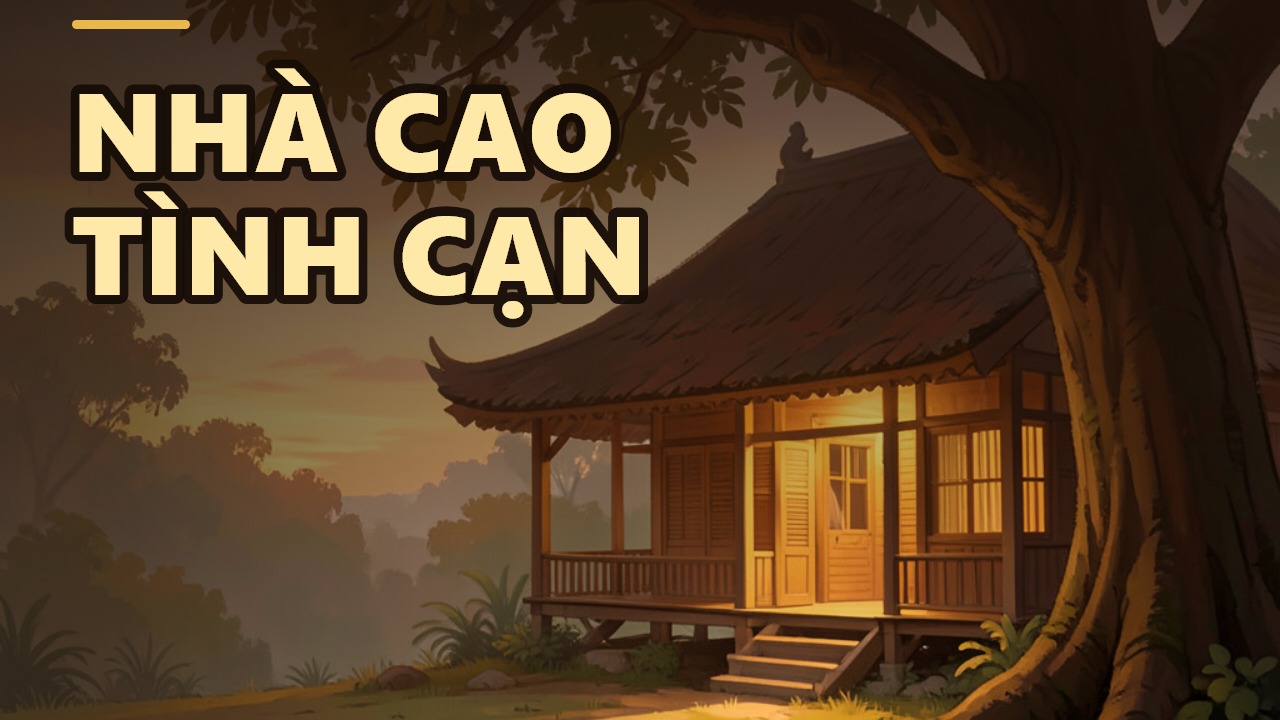
Have you ever paused in the middle of a five-story house, with its closed-off rooms, and suddenly remembered the humble thatched cottage of years past where ten family members lived together in joy? In this age, we have more than ever, yet we are losing what is most precious. In the dharma talk "The Paradox of Our Age," Thầy Thích Chân Quang opens our eyes to the hidden corners within ourselves.
Paradoxes We All Recognize
Thầy Chân Quang begins with a passage from the Tuổi Trẻ Chủ nhật newspaper, listing a series of paradoxes: our streets are wider, yet our views have grown narrower; our houses are taller, yet our families are smaller; our income has doubled, yet separations have multiplied. These things give us much to reflect upon.
We have more massive buildings, yet our families have grown smaller.
In the past, a single-story house sheltered ten people, with relatives living close by. Now, even a five-story house seems to have no room for family. In other words, as we grow richer, human warmth grows colder. Thầy points out that when we are poor, we have nothing to guard against one another, but when we have money, we become anxious, wary, and suspicious. That is why the smaller family also comes with thinner family bonds.
Knowing How to Make a Living, But Not How to Build a Life
We are skilled at earning money, but life is more than earning money. Thầy Chân Quang reminds us: "We know how to make a living, but we do not know how to build a life." That sentence startles us awake. A meaningful life lies in love, in filial devotion, in enjoying music, in watching the sunset, in bowing before the Buddha.
We know how to make a living, but we do not know how to build a life.
Thầy tells stories of setting aside some business work to care for one's parents, or raising children with care and rigor. These are ways of building a life. Those who only know how to make a living simply throw themselves into work, while those who know how to build a life are willing to trade a little profit for time to care for loved ones, so that the heart may be nourished. They know how to enjoy a symphony, to watch the sunset, to bow before the Buddha with full reverence. That is what a true life is.
Practicing Wrongly Strengthens the Ego
Many people misunderstand, believing that happiness lies only within the mind, that we should simply dwell within ourselves. Thầy warns that this is wrong. Practice is for dissolving the ego, for loving all sentient beings more deeply—not for becoming a saint.
If we say we practice non-self (anatta) in order to become a Buddha, we have gone astray. Because in that way, we are being selfish once again.
One who practices non-self (anatta) does not do so to seek personal happiness, but to dissolve every mental fabrication and open the heart in love for all sentient beings. Taming the mind is for letting go of greed, hatred and delusion, for dissolving the ego—not for reinforcing it. Right view means living in good relationship with everyone, not confining oneself within one's own walls.
The Fifth Precept: The Great Karma of Today's Buddhists
In a time when drugs are spreading everywhere, the fifth precept is no longer merely about not drinking alcohol. Thầy teaches:
Hold firm to the fifth precept: do not use drugs yourself; when you see someone using them, gently advise and help them stop; when you see someone selling them, report it to the authorities.
This is living responsibly, not passively. A Buddhist cannot turn a blind eye to the suffering (dukkha) of others. If kindness is passive, it is not kindness but weakness. In the face of society's afflictions, we must act with strength, helping people escape their addictions and stopping evil in its tracks.
Gentle Yet Strong
Finally, Thầy emphasizes: a Buddhist must be gentle but not weak. Right view means living gently yet with great energy.
We Buddhists must live lives that are very strong, very energetic, and at the same time very gentle.
That is what it means to build a meaningful life. We care for our daily bread and clothing while never forgetting to cultivate our spiritual life. Each day, a single sutra recitation, a stick of incense, a word of guidance for someone gone astray, an embrace of care for our parents—all of these make life more meaningful.
Do not let life slip by in its hurried rhythm. Take a moment to reflect on yourself, to look back at the spiritual values being left behind. Each day, one bow before the Buddha, one word of advice to someone struggling with addiction, one verse from the Dhammapada, one embrace of our parents—all of these can transform a life. This is how we both "make a living" and "build a life," growing rich in both material wealth and in spirit, advancing along the path of the world while standing firm on the path of the Dharma.
AI-assisted translation from the Vietnamese original.
Read in Vietnamese →