
If the entire city were empty, could you survive?
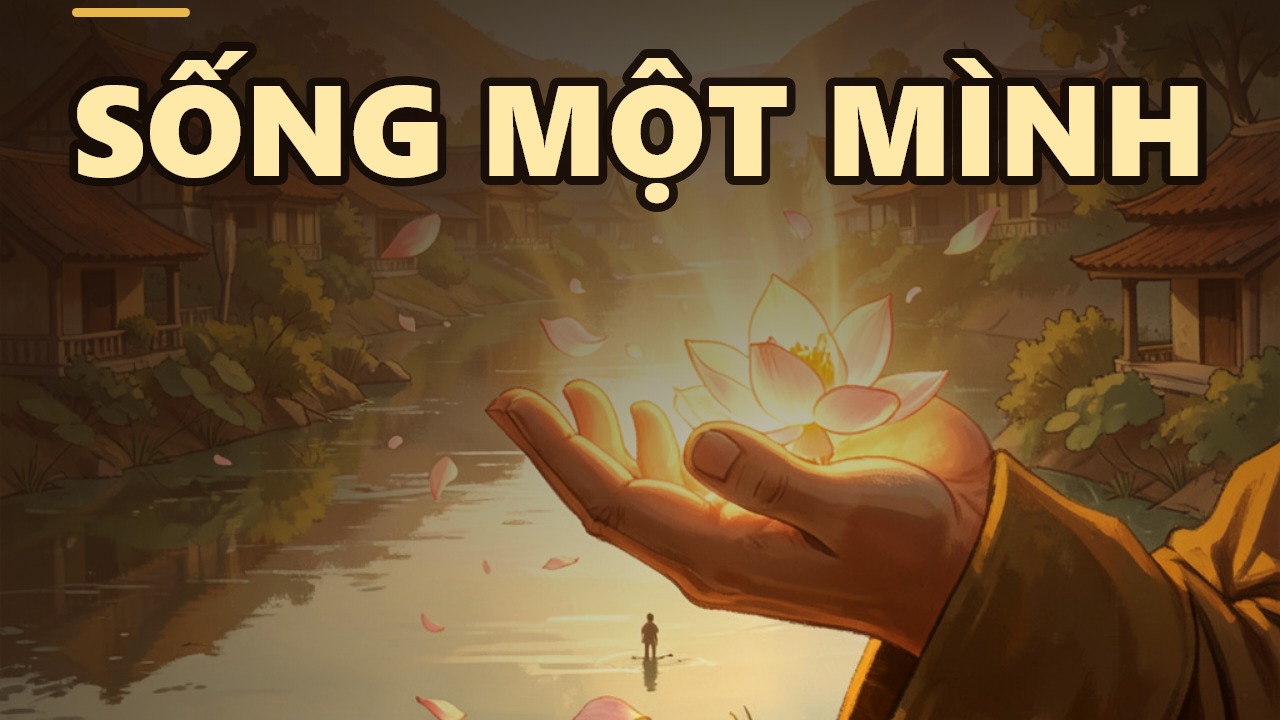
Harmony is not merely a moral ideal; it is a genuine human need. Venerable Thich Chan Quang helps us recognize the value of brotherhood, the Six Harmonies, and the art of living with love in this world.
Imagine standing in a desolate city, doors wide open, houses crumbling, with not a single soul in sight. You walk in and out, living there alone. What would happen? You would not be able to endure it. Crisis and tension would surround you. Why? Because the connection between people is a real and essential need.
No one exists independently. In this universe, no individual exists in isolation. A yellow leaf falling outside, an ant crawling on the ground—these may seem unrelated to us. Yet, they still interact with their environment. According to the Avatamsaka Sutra, a single speck of dust contains all ten directions of Buddha lands. Despite this truth, we often feel like isolated islands in life.
"No one exists independently. There must always be a connection. There must always be a connection."
Even those in solitary retreat have a caretaker, and prisoners in isolation still relate to their guards. The connection may diminish, but it never completely disappears.
Living alone is a form of torture for humans. Robinson Crusoe was shipwrecked on a deserted island and had to invent ways to survive. But eventually, the author introduced Friday as his companion. Why? Because living alone is too boring. It is not just boredom; it leads to sadness and even madness.
"Living alone constantly becomes tedious... It is deadly sad. I am not exaggerating. One goes mad."
The saint Milarepa also meditated in solitude for eleven years on snowy mountains, but that was an extremely rare case where his mind possessed unwavering meditative concentration. For most of us, connection with others is indispensable.
The Buddha taught eight sufferings, including the suffering of meeting what one hates. If you dislike someone but are forced to share a room, seeing them every day, it is truly painful. Conversely, if you love someone and meet them, it brings happiness. Therefore, to find happiness, we must build positive connections.
"As disciples of the Buddha, we must strive to build good relationships with our community. We must live in a way that allows us to love everyone and be loved by them."
We may lack money or status to give to others, but we can offer love and kind behavior. This is a precious gift indeed.
In the Sangha, the Buddha taught six principles of harmony. The first is physical harmony: living together, relying on, trusting, and helping one another. Each person comes from different backgrounds, yet we must overcome differences to coexist. This begins with senior teachers, abbots, and supervisors. When leaders possess an impartial mind without discrimination, the community follows suit in harmony.
The second is verbal harmony without conflict: avoiding arguments through speech. Words are the primary line establishing connection. Since we speak more than we act daily, harsh or impolite words easily offend others. Simply saying "Move your laundry elsewhere" instead of "Brother, please move your laundry later as there will be work here," can cause irritation.
Venerable Thich Chan Quang shared a seemingly idealistic notion: treat each other like flesh and blood. But he spoke very seriously.
"The morality we use to treat one another brings more happiness than anything else. The bond of Dharma is more sacred than the bond of blood."
We cannot choose our family members, but among strangers, if we cultivate morality and compassion, we can love each other more deeply than biological siblings. This does not come instantly; it requires persistent effort. Start with small acts: ask after a sick brother, prepare bath water, wash clothes, or bring a bowl of porridge. These small actions make the bond of Dharma sacred.
Currently, we strive to live harmoniously with those around us. However, the heart of a Buddhist disciple must extend to all sentient beings. This is an ideal that, though difficult, we must never abandon. Every word, action, and thought contributes to building a harmonious world.
Today, in this life, what can you give to others? Give a smile, a comforting word, or a helping hand. This is happiness that cannot be traded away. Eventually, you will realize that harmony is not a destination, but the path we walk together.
AI-assisted translation from the Vietnamese original.
Read in Vietnamese →