
Cooking Meditation Rice: From Ordinary Person to Saint
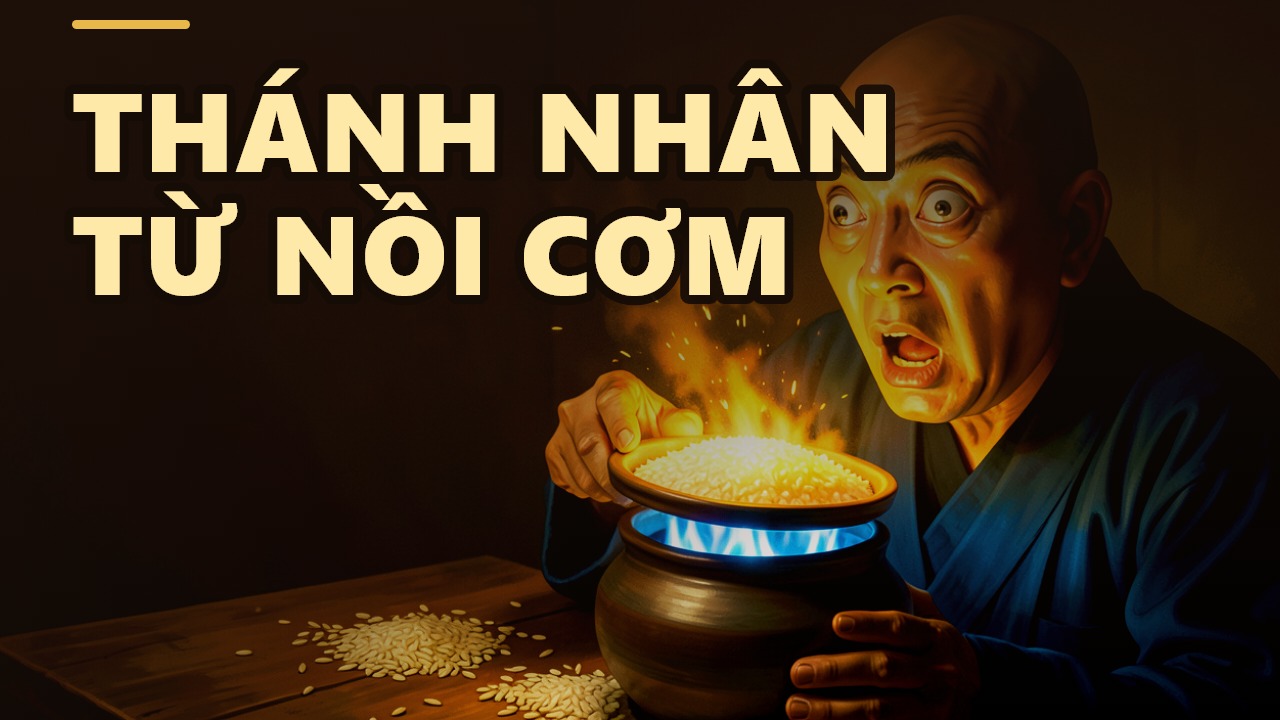
**SUMMARY:** Sitting in meditation is like cooking rice: it requires sufficient rice, fire, water, a pot, and skill. Avoiding four types of 'ruined rice'—burnt, undercooked, dry, or soggy—allows one to become a true saint.
Have you ever cooked rice only to have it turn out burnt, hard, dry, or mushy? Cooking rice seems simple, yet achieving a perfect pot requires many factors. Venerable Thich Chan Quang skillfully compared sitting in meditation to cooking rice. It may sound strange, but through the dharma talk "Cooking Meditation Rice" during the Vu Lan season, we will come to realize that spiritual practice is an art needing both the right "ingredients" and "effort."
**Repaying Kindness Is Not a Transaction**
The Venerable began the teaching with a thoughtful story about how we often repay kindness. Many believe that if their parents raised them, they simply need to raise their parents in return. He taught that such a "give and take" method of repaying kindness is merely transactional—it lacks depth and sacredness. What the Buddha asks of disciples is to repay kindness in a "one-way direction": use the life and body given by parents to serve the world, bring righteous principles to society, so that blessings flow back to parents a thousandfold.
"When repaying kindness and filial piety correctly, it doesn't mean pouring your entire life just into raising your parents after they raised you. That's only a small part. A large part is taking the life your parents gave you and using it to serve the world, build society, and bring love and righteous principles to life."
Therefore, the greatest way to repay kindness is to live this entire life in service, to become a good person, a saint. When we elevate ourselves to sainthood, then "nine generations ascend"—seven or nine generations of ancestors all receive immense blessings from merit.
**The Five Elements of Cooking Meditation Rice**
He taught that cooking rice requires five things: rice, water, fire, a pot, and skill. Meditation is the same; it also needs these five conditions.
*Rice – Merit:* Without merit, one cannot practice meditation. Merit is not something distant—it comes from performing wholesome deeds in each moment: helping others, bowing to the Buddha, contemplating compassion, and living righteously.
*Water – Calmness:* Though resolved to practice, one must not be anxious or impatient for quick attainments. Without water, rice only becomes toasted rice.
*Fire – Enthusiasm and Diligence:* The devoted enthusiasm for practice must never be allowed to go out.
*Pot – Favorable Conditions:* One must have a quiet place, a moderately sufficient livelihood, free from hunger and hardship. Do not sit in meditation when you do not know what you will eat for lunch!
*Skill – Method of Practice:* Sitting with correct posture, relaxing, being clearly aware of the breath, and relying on an experienced teacher.
The Venerable emphasized: "Meditation is the same. To practice meditation, first you must have rice. What is rice? It is merit. Without merit, meditation cannot be practiced."
**Four Types of Ruined Rice for Meditation Practitioners**
When cooking rice, we easily make four mistakes: burning, undercooking, drying out, or making it soggy. Practicing meditation is similar; without care, we fall into four erroneous states.
*Burnt Rice – Derangement:* Sitting incorrectly, tormenting the mind, and forcing it excessively leads to madness and illness.
*Undercooked Rice – Half-hearted and Adrift:* The mind is not yet settled but one imagines attainment, boasts, and then the path of practice becomes fragmented.
*Dry Rice – Indifference to Life:* Losing compassion, severing responsibility to others, becoming meaningless to the world.
*Soggy Rice – Weak and Wishy-washy:* Thinking one's mind is peaceful but having no more principles, agreeing with everyone, allowing wrong views to dominate.
The Venerable warned: "What does it mean to not be soggy? It means when meditating and the mind becomes calm, do not fall into a state of weakness, softness, and indecision—agreeing with whatever others say."
**Making Merit and Sitting in Meditation in Parallel**
Many think just sitting in meditation is enough, or that just doing good deeds suffices. He taught that if one only meditates without merit, it is like cooking without it ever becoming rice. Conversely, if one only makes merit without cultivating the mind, the merit becomes mundane merit, leading to a wealthy rebirth but also fostering unwholesome minds and potential downfall. Therefore, one must both plant the rice and cook it: accumulating merit while sitting in meditation to correct the mind.
"Therefore, from now on, you must begin meditating, but also from now on, you must begin making earnest efforts to create merit. Remember this. The two go hand in hand, side by side."
Each day, when you sit down, try to envision yourself cooking a pot of spiritual rice. Do not let the fire go out, do not be impatient, do not forget to make merit. And remember, the fundamental purpose of meditation is to become a saint, to repay the kindness of parents, teachers, the nation, and the Buddha's teachings (Dharma) in the most profound way. May you have a pot of fragrant rice and a serene mind.
AI-assisted translation from the Vietnamese original.
Read in Vietnamese →