
A World of Tolerance: Though We Are Different, We Refuse to Hate
This article opens with a story about the end of the world, and from there explores the instinct of hatred and the two things needed to build a tolerant world: removing the reasons we hate one another and extinguishing the mind of hatred. The teachings of Venerable Thích Chân Quang help us understand that even with our differences, we can still live in love.
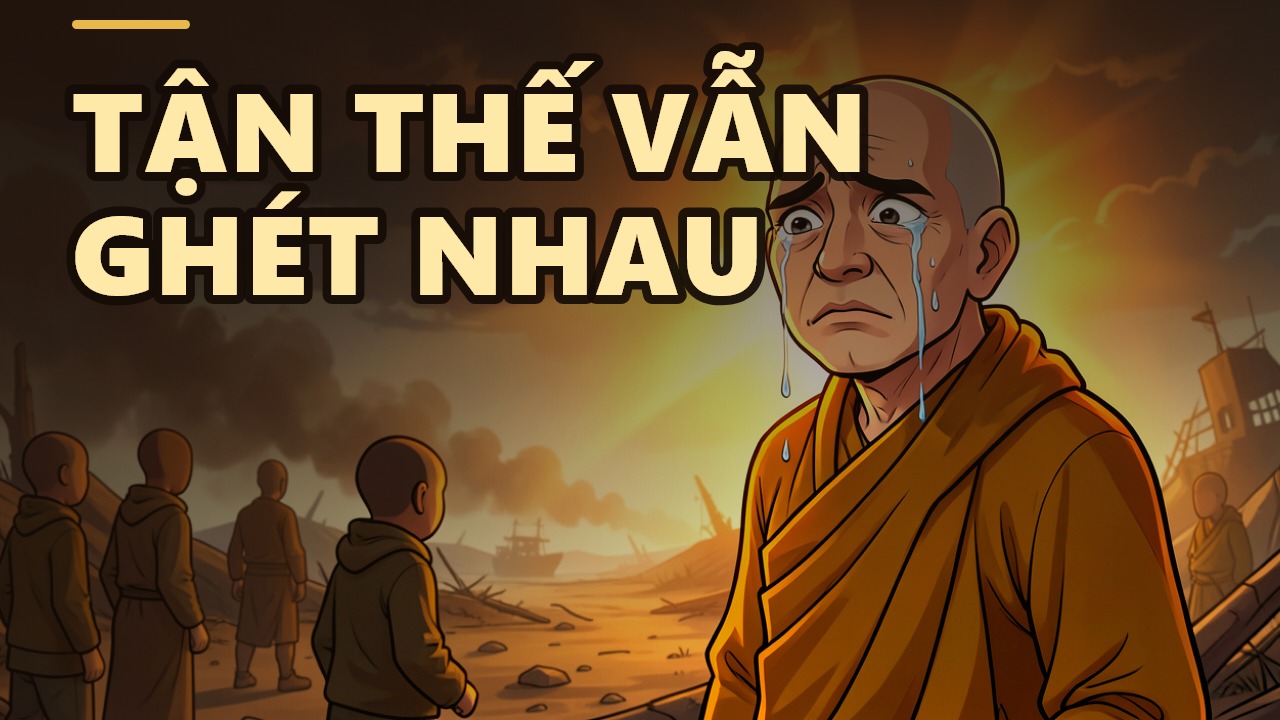
Have you ever wondered: if one day the world entered its final days, and only a few groups of people survived, what would they do? In one Hollywood film, when the apocalypse arrives, the survivors do not love or care for one another at all. They pick up guns, gather weapons, and the moment they encounter another group, they open fire. It is a deeply sorrowful scene, and it forces us to ask: why do human beings have such an instinct to hate and resent one another? Even when only a few people remain, they still cannot live in peace. In his New Year's dharma talk, Venerable Thích Chân Quang offered a profound message for facing this reality: a world of tolerance.
The New Year: Hope and Lessons from the Past
Looking back at the old year, the world went through many upheavals: wars, natural disasters, missing airplanes... Our country, though more fortunate, cannot afford to be indifferent. Venerable Thích Chân Quang recalled the story of a storm: after he gave a teaching on how to stop a storm, a superstorm suddenly turned ninety degrees and dissipated northward. He believed this was thanks to the spiritual practice and turn toward goodness of the people. He emphasized:
Let no one rely on their own cleverness and forget that to transform natural disasters and upheavals, people must practice more, must turn toward goodness, must be more humble.
As we step into the new year, we usually hope. But empty hope is not enough; we must be worthy of the good things we wish for. That is why we need to look back at ourselves.
The Instinct of Hatred: Why Do People Keep Hating One Another?
Venerable Thích Chân Quang told of a detail in that Hollywood film about the end of the world: even when only a few people remained, they were still on guard, still shooting at one another with guns. He felt sorrowful that humanity has no way out. Killing, hating, and resenting one another seems like a natural instinct. People find every possible reason to hate: different religions, the same religion but different sects, different temples—even within the same temple, whether the abbot loves one person more than another becomes a reason. He said:
It is true that people love to hate one another. But is there anyone here who hates anyone? Not yet. Because we are all sitting quietly. But if the abbess bought some chairs and only managed to buy one third, then the remaining two thirds would have to sit on backless benches. At that point, how could there not be a reason to hate one another...
At first hearing, this seems humorous, but it is a very real example of how easily people create pretexts for hatred. A small injustice, a slight difference in how people are treated, can give rise to jealousy and resentment.
Two Things Needed to Build a World of Tolerance
To make this world more tolerant, Venerable Thích Chân Quang pointed out two things we must do: first, remove all the reasons that cause people to hate one another; second, strike directly at the mind of hatred that lies deep in our instincts and subconscious. He offered the world a mantra:
Though we are different, we refuse to hate one another. This is the mantra for the year 2015, and we offer it to this world. We ask for a world that, though still full of differences, will please not hate one another.
This is the very foundation of a tolerant world. We cannot erase all differences, but we can change how we face them.
Difference Is Not a Reason to Hate: A Look at Gender and Race
Venerable Thích Chân Quang analyzed the differences that most often breed hatred: gender, race, and skin color. In a society that prizes physical strength, men easily look down on women; but when a society values wisdom, gender equality flourishes. As for race, history shows the pain caused by discrimination. He told the story of King Trần Nhân Tông: after defeating the Mongol army, instead of marching his troops south to punish Chế Mân, the king used virtue to transform him, and Chế Mân ceded land and gave his daughter in marriage. But afterward, because of racial differences and rumors, the people rose in revolt. Trương Hán Siêu did two things: he cut off the flow of intelligence, and he erased ethnic divisions, bringing peace. The lesson: the fewer the differences, the less the hatred. But as long as differences remain, we must hold firmly to our principle:
We try to gradually erase the boundaries, to gradually erase the differences. But on any day when differences still exist, our hearts must still hold this thought: Though we are different, we still refuse to hate one another.
Differences in Art and in Buddhism: Each Person at Their Own Level
Even in art, we prefer this music or that, and we can easily quarrel over tastes. Venerable Thích Chân Quang once disliked popular music, but later he understood:
The art that people enjoy depends on their karma, their level, their inner nature. It cannot be otherwise.
Similarly, in spiritual practice, some people prefer meditative concentration, others prefer reciting the Buddha's name. He once found it hard to understand why reciting the Buddha's name was so simple, but as he matured, he realized:
A person's way of practicing depends on their wisdom, on the level of their soul. It cannot be forced.
For this reason, he does not hate but rather loves even more: Respect them all. As long as they recite the Buddha's name, I rejoice, for they too are children of the Buddha.
Religion and Tolerance: Do Not Let Fanaticism Lead
Of all the differences, religion is what draws the deepest human emotions. When family love, friendship, and romantic love can all fade, religious devotion can endure. But without tolerance, religion becomes the source of the deepest hatred. Venerable Thích Chân Quang warned about extremist religions, saying: Precisely because religion draws all of human emotion, without tolerance it will cause terrible conflicts. To build a tolerant world, we must rise above all religious differences and move toward love and mutual understanding.
In this inspiring dharma talk, Venerable Thích Chân Quang conveyed a message: Though we are different, we refuse to hate one another. This is not just a saying, but a daily practice. When we face someone different from ourselves, let us remember that difference is natural, but love is a choice. Let us ask ourselves: today, can I remove one more reason to hate, and extinguish a few thoughts of resentment in my heart? If each of us makes the effort together, a tolerant world will become reality. We do not need to wait for the new year to change; right now, from this very breath, from this very thought, let us begin.
AI-assisted translation from the Vietnamese original.
Read in Vietnamese →