
How can we recognize a saint in everyday life? The core qualities, according to Thầy Thích Chân Quang
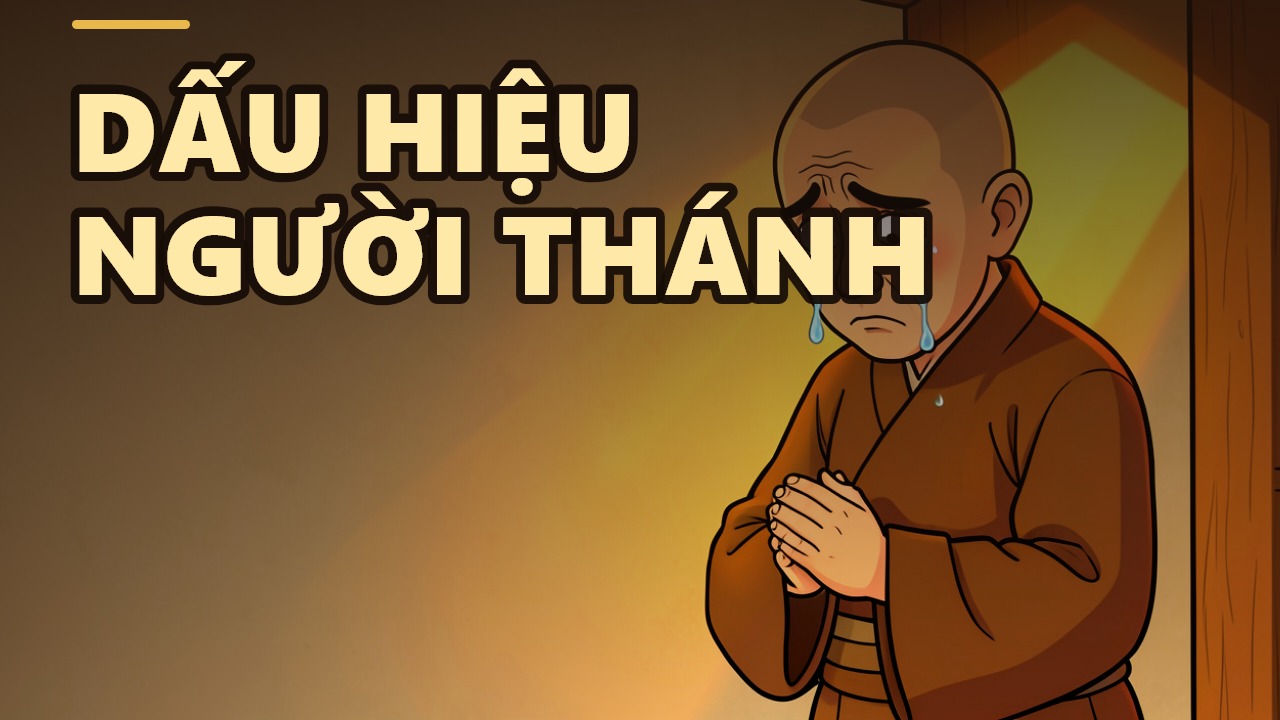
Thầy Thích Chân Quang shares how to recognize a true saint: living selflessly, seeing one's own faults, and remaining unattached to fame or supernatural powers. His guidance helps us orient our practice in the right direction.
Have you ever wondered: among countless people, who is truly a saint? Many mistakenly believe that being intelligent, famous, or possessing supernatural powers makes someone a saint. But according to Thầy Thích Chân Quang, the qualities of a saint lie in things that are very simple yet extremely difficult to practice. Let us listen together to the Thầy's sharing in a dharma talk at Liên Trì Pagoda, Phan Thiết.
One. What distinguishes a saint from an ordinary person?
Thầy Thích Chân Quang opens with a remarkably concise definition: ordinary people live selfishly, while saints live selflessly. When we do anything, if we think only of our own benefit, we are being ordinary. But if we always think of others, even with just a fleeting thought for those less fortunate, we have already begun to turn toward the virtue of a saint.
The Thầy gives an example: when you eat something delicious, do you think of whether those around you have eaten? When you are inside a warm house while it rains, do you suddenly remember those who live under bridges? That is the selfless heart.
A saint lives selflessly, while an ordinary person lives selfishly.
Selflessness is not about doing great deeds, but about nurturing a heart that thinks of others in every moment. When you have shifted from "me" to "we," you are walking the path of the saints.
Two. Admitting one's own faults — the key to practice
The most important thing for a practitioner is recognizing one's own mistakes. The Thầy emphasizes: "Admitting your own fault is harder than throwing charcoal up to the sky." Indeed, when we break a glass, our first reaction is to blame someone else. When two cars collide, each person assumes the other is at fault. A practitioner is different: they take the blame upon themselves.
A practitioner of saintly conduct who knocks over a glass upon entering a house will immediately say: "I'm sorry, that was my carelessness." When two cars scrape against each other, they step out and apologize right away, even before knowing who was right or wrong. That is the virtue of a saint — knowing how to admit fault, without blaming others.
The difficulty of practice is seeing one's own faults. A practitioner who sees more and more of their own mistakes is practicing correctly.
The Thầy also warns: if someone has gone to the temple for five years and answers "I have gained many blessings from merit," they are practicing wrongly. A true practitioner is one who, the more they practice, the more faults they see in themselves, and the more ashamed they feel. When we correct one fault, we feel happiness right in the present moment. That is the greatest reward for a practitioner.
Three. Intelligence, fame, and supernatural powers do not necessarily make a saint
Society often equates intelligence, power, and fame with virtue. But Thầy Thích Chân Quang is direct: being intelligent does not necessarily make one a saint, being famous does not necessarily make one a saint, and even having supernatural powers does not necessarily make one a saint. Devadatta, who possessed supernatural powers, ended up a traitor who fell into hell.
Being intelligent does not necessarily make a saint. Being famous does not necessarily make a saint. Having supernatural powers does not necessarily make a saint.
The Thầy tells the story of a Tibetan monk who sat motionless in a cave for a month and was greatly venerated, but later returned to lay life and married. Or another who was rumored to have sat in meditation for six days and six nights, and then simply disappeared. Supernatural abilities do not guarantee a saintly life. Only when a person is truly selfless, with no remaining self, are they a saint.
Sainthood does not belong to reputation, education, or position. For sainthood is a quality of the soul.
Four. The four stages of saints: Sotapanna, Sakadagami, Anagami, and Arahant
The Buddhist scriptures divide the saints into four stages, from lower to higher: Sotapanna, Sakadagami, Anagami, and Arahant. Those who first enter sainthood are the Sotapannas — they look exactly like ordinary people, with no special supernatural powers. But they live with loving kindness, hold firm ideals, and are determined to practice.
What is difficult about a Sotapanna is that they are hard to recognize, hard to identify. There is only one thing: their hearts are steadfast in their ideal of practicing the Buddha's teachings (Dharma).
Precisely because they are hard to recognize, we can easily look down upon or offend a Sotapanna in daily life without knowing it, and suffer the consequences. Be careful: do not rush to judge anyone, for they may be a saint in disguise.
Five. Practicing to transform the ordinary into the saintly
Becoming a saint does not happen overnight. The Thầy puts it this way: "Every single thought must be correct — every second, every minute, every smile, every word, every thought of yours must be absolutely precise. Keep that up for a few hundred lifetimes, and only then may you become a saint." This is a long path requiring great perseverance; there is no such thing as swift attainment.
Never listen to anyone who entices you by saying that practicing with them brings quick realization — that is all deception.
Begin today: live more selflessly, admit your own faults, and do not be deceived by what is outwardly proud and impressive. Each day one correction, each moment one examination — gradually we will become strangers to the ordinary and draw near to the saints. That is the greatest happiness a practitioner can find without seeking any other realm.
Let this be the guiding compass for your journey of practice. I believe that when you open your heart in selflessness and bravely see your own faults clearly, you will experience true peace right here in this very life.
AI-assisted translation from the Vietnamese original.
Read in Vietnamese →