
Inheritance and Renewal: Do Not Just Preserve, But Refresh Every Day
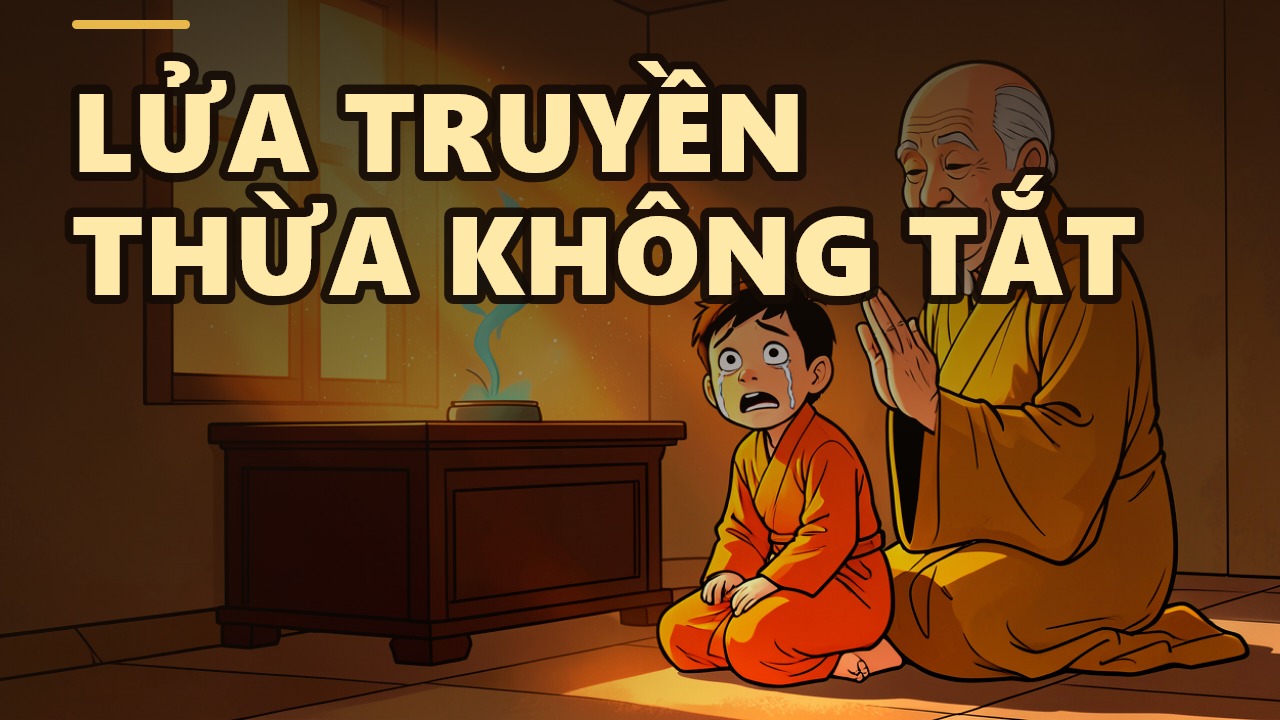
There is a story that I remember vividly. A great master, a person of high virtue and deep realization, once traveled alone to the mountains to visit someone who, by traditional etiquette, should have been the junior visiting the senior. The one being visited was Venerable Thich Chan Quang, who was astonished by this act. He saw a human being who had transcended rigid conventions, free from ego, with no distinction between big or small, only boundless compassion. From that moment, the visitor knelt down and asked to become a disciple. Today, on the occasion of the Great Memorial Service for that beloved teacher, we do not merely remember a great master; we also recall a sacred duty: inheritance and renewal.
Life is impermanence (anicca). One by one, we too return to dust. If we practice well, we return to the Buddha. Like that great master, he has returned to the Buddha, leaving behind a slight emptiness in this worldly realm. Yet, "once you have been a teacher and once you have been a student, the bond between teacher and disciple lasts forever." When the teacher passes away, their spiritual legacy is entrusted to the disciples. This is a vast treasure: the Buddha Jewel – the ancestral temple; the Dharma Jewel – the teacher’s words; and the Sangha Jewel – the community of students. If we fail to preserve this treasure, we lose our own good conditions (dukkha); if we preserve it without developing it, we commit an even greater fault.
### When the Teacher Passes, the Disciple’s Duty Becomes Doubly Heavy
In his dharma talk, Venerable Thich Chan Quang emphasized: "The teacher has passed into the distant realm, returning to the Buddha. The responsibility of the disciple who remains becomes many times heavier. While the teacher was present, they carried the burden of teaching and guiding. But when the teacher is gone, you must be the one who preserves their work."
Preservation does not mean clinging stubbornly to the past. Preservation means keeping the flame of transmission burning. If that flame is extinguished by the law of impermanence (anicca), the merit accumulated by the teacher over a lifetime will turn to ash. Therefore, the disciple is not allowed to stand still.
### Do Not Just Preserve; Develop So You Do Not Betray Your Teacher
Venerable Thich Chan Quang said: "However, if we preserve without developing, remember this: the law of impermanence will sweep everything away, destroying and causing decline. Thus, if we keep exactly what our teacher taught without change, we have already betrayed them halfway."
Only when we inherit and then renew each day, adding development, can we ensure that when the old forms are struck by impermanence, our new creations continue to uphold the teacher’s legacy. This is the true repayment of the teacher’s kindness.
For example, Thien Duc Temple was once just a small main hall. Thanks to the master inheriting the site and building it into a magnificent monastery, today there is a place for disciples from all over to come and practice. Keeping the land is not enough; one must build a grand and splendid temple – that is inheritance and development.
### Develop, But Do Not Fall Into Dead Ends
How should we develop? If we choose the wrong direction, we enter a dead end. Venerable Thich Chan Quang gave an example: If one thinks that because traditional opera was popular in the past, bringing it into the temple now constitutes "development," that is a mistake. Similarly, learning magic tricks to attract Buddhists is not the right path. The teacher warned: "Do not assume that because your teacher succeeded, doing exactly the same thing will guarantee success for you. It is not certain at all."
In history, many schools such as Yogacara and Huayan were brilliant for a time but eventually faded into obscurity. Development outside the right path is like a bubble – sparkling briefly before vanishing. We must remain mindful to discern what is timely yet enduring, and what is merely a temporary storm.
### Two Goals for Those Who Inherit the Ancestral Work
Venerable Thich Chan Quang clearly pointed out: "Inheriting and promoting the ancestral work is difficult. First, you must attract many people. Second, once people arrive, you must teach and educate them so they gradually advance in morality, wisdom, and spirituality, moving toward enlightenment and liberation."
The first goal is to attract large crowds to the temple. The second is that once they arrive, you must teach them, helping everyone progress step by step in ethics, wisdom, and spirit, aiming for enlightenment.
These two goals are like the two wings of a bird. If you only attract without teaching, Buddhists will come to the temple and then leave. If you teach without attracting, the light of the Dharma cannot illuminate many people. However, attraction must be done through planting seeds of connection, not through mere entertainment. The teacher advised: "Plant connections so that conditions ripen naturally. Visit every home, check on every person, explore every place. If one year does not move them, ten years will surely touch their hearts."
### How Can the Temple Remain Attractive in Changing Times?
Today, people have abundant entertainment: television, movies, games, nightclubs, and more. The temple must achieve what Venerable Thich Chan Quang set forth: "The temple must be more attractive than anything the world currently offers." But this is not achieved by adding more amusements; rather, it is achieved by offering a profound happiness and peace that the world cannot provide.
Let us recall the moment sitting beneath the portrait of the master, bathed in the solemn and sacred atmosphere. That moment is true attraction because it touches the deepest part of the soul, awakening goodness within each person. When we return to the dusty world, we carry the teacher’s grace in "a corner of our heart." Whenever we are tempted to do wrong, whenever we feel lazy, we remember this moment so we do not lose ourselves.
Inheritance and development are not just tasks for monks; they are lessons for each of us. We all have teachers and predecessors who planted connections for us today. Ask yourself: What am I preserving, and what have I renewed? Do not let that legacy sleep in oblivion. Practice daily, develop daily, to continue the flame passed down by the masters – for this is the most practical way to show respect, and it is also how we liberate ourselves.
AI-assisted translation from the Vietnamese original.
Read in Vietnamese →