
Indirect Control of the Mind: The Buddha’s Secret to Meditative Concentration
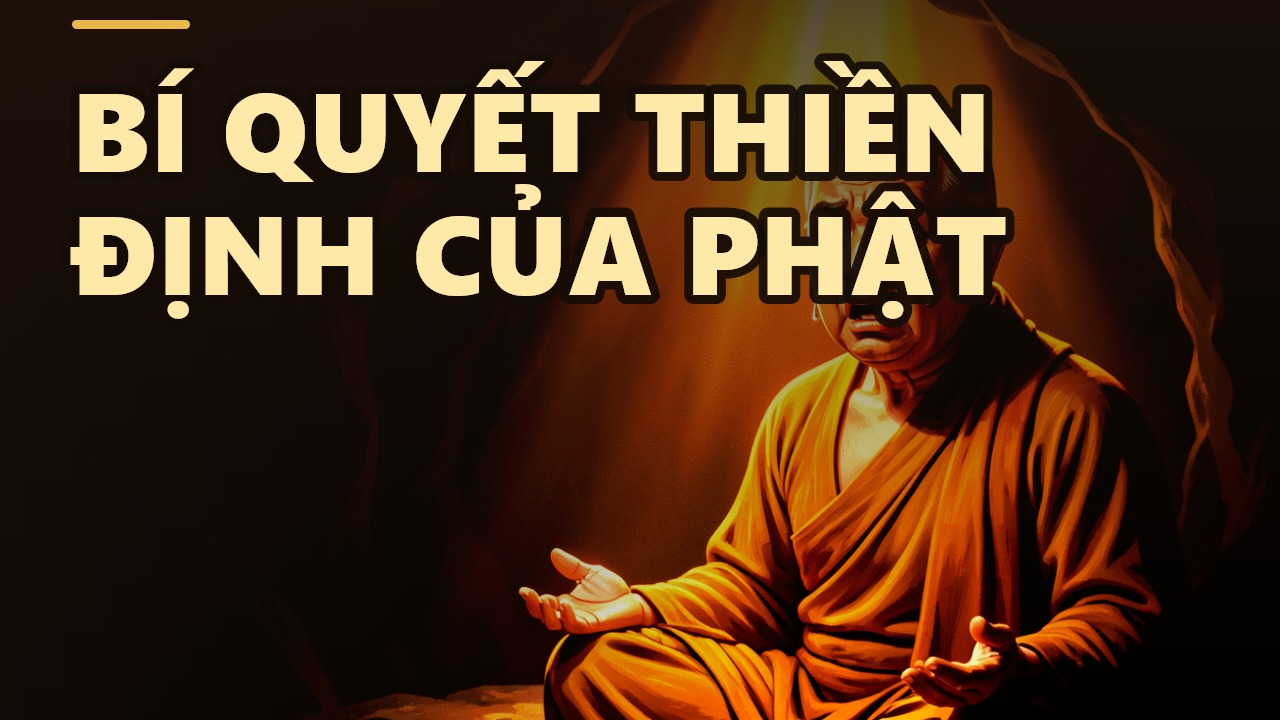
Have you ever sat in meditation and felt your mind running wild like an untamed horse? The more you try to restrain it, the more chaotic it becomes. Many people hear about practicing meditation and feel afraid, worrying that without a teacher’s guidance, they might make mistakes or even lose their sanity. But did you know that the Buddha taught an extremely scientific path of meditation? It does not require confronting delusions directly, but rather skillfully adjusting the mind indirectly.
### Why Are We Afraid to Practice Meditation?
In the time of the Buddha, many practitioners attained realization. However, as the distance from the Buddha’s era grows, true realizations have become rare. Today, when people hear about meditation, they hesitate. They fear making errors without a guide, worrying that wrong practice could lead to madness. Yet, if we do not practice meditation, we cannot restore the original Dharma of the Buddha. The Buddha’s teachings pass through three periods: the True Dharma, the Imitation Dharma, and the Declining Dharma. We live in the age of the Declining Dharma, where our practice often diverges from the Buddha’s words, yielding few results.
If we are children of the Buddha, yet lack loyalty to His teachings and fail to honor Him by following His instructions, what are we? We are ungrateful. In reality, many who visit temples rely only on ritual services, failing to find true peace. What path can modern souls rely upon for refuge?
### Will Science Leave the Temple Behind?
As science and technology advance rapidly, they pull human consciousness along with them. Meanwhile, temples remain static. While the world moves forward, the temple stands still, eventually being left behind. Temples fail to keep pace with life and society, causing people to drift away. You may notice fewer devotees visiting temples today. The reason is simple: the temple has not adapted to the changing times and has been abandoned by the world.
Prime Minister Nguyen Xuan Phuc once said, "Do not let anyone be left behind." Similarly, in spiritual matters, if the temple is not skillful, it risks being left behind. We must not sleep through the chanting of sutras while science advances like a storm. The modern world no longer understands ancient chants, and the younger generation especially struggles to connect with them. Only the True Dharma of the Buddha possesses the spiritual power to surpass the progress of science. Remember this truth.
### The Detour: Indirect Adjustment of the Mind
Everyone knows that meditation aims to calm the mind and reduce wandering thoughts. However, delusions are something we can never fully control or intervene in directly. Trying to force our thoughts into submission only leads to mental exhaustion. The Buddha taught a path of indirect adjustment. He never spoke of eliminating delusions directly. Instead, He taught practices that, while seemingly unrelated to thoughts, naturally cause delusions to settle. This is the Buddha’s detour.
### Principle One: Adjusting the Breath
When we are angry, our breathing becomes rapid; when the mind is agitated, the breath is disordered. This is the natural law. Now, consider the reverse principle: if the breath is smooth, the mind becomes calm. We adjust the breath to influence the mind indirectly. Inhale briefly, exhale slowly. A short inhale symbolizes reducing greed, while a long exhale represents letting go. The secret lies here.
When breathing in, know that you are breathing in. When breathing out, know that you are breathing out. Breathe gently, lightly, and naturally. Do not force or strain. Simply observe. This method says nothing about delusions, yet it calms them. Try sitting down now. Inhale softly, then exhale longer. You will see your mind gradually settling without effort. This is a universal scientific truth, known to the world, though sometimes overlooked within temple walls.
### Principle Two: Still Body, Still Mind
When anger arises, the body tenses, hands flail, and faces contort. An agitated mind causes an agitated body. Conversely, a still body leads to a still mind. Therefore, during meditation, one must keep the body immobile while relaxing all muscles. Yet, the posture must remain stable.
Why sit in the full lotus position? Because among intelligent beings, humans walk on two legs. The full lotus creates an ideal posture: both palms, both soles, and the lower abdomen converge at one point. This alignment stabilizes the brain and allows the mind to naturally rest. When the hands and feet draw close to the lower abdomen, the mind naturally settles there.
### Principle Three: Resting in the Whole Body
When you think of Mars, your mind travels to Mars. When you think of your neighbor, your mind runs to them. Our minds wander across the globe. Now, reverse this process. If the mind returns to rest within the body, ceasing its wandering, it becomes instantly quiet. Clearly perceive the whole body, feeling the sensation against your skin, preventing the mind from projecting outward.
These three principles absolutely avoid direct intervention in the mind. Directly forcing the mind leads to neurological disorder. The Buddha teaches us the path of indirect adjustment—touching not the mind itself, but calming it through other means.
### Begin Today
Meditation is not about forcing the mind into a mold, but skillfully adjusting what we already hold: the breath, the body, and sensations. Try dedicating ten minutes each morning to sit in the full lotus position. Inhale briefly, exhale slowly, relax the body, and rest awareness in the physical form. You will be surprised to find your mind cool, peaceful, and rejuvenated. This is the gift of peace the Buddha left for each of us.
AI-assisted translation from the Vietnamese original.
Read in Vietnamese →