
Do Not Self-Appoint Yourself as a Teacher: Three Kinds of Intimate Beings in Life
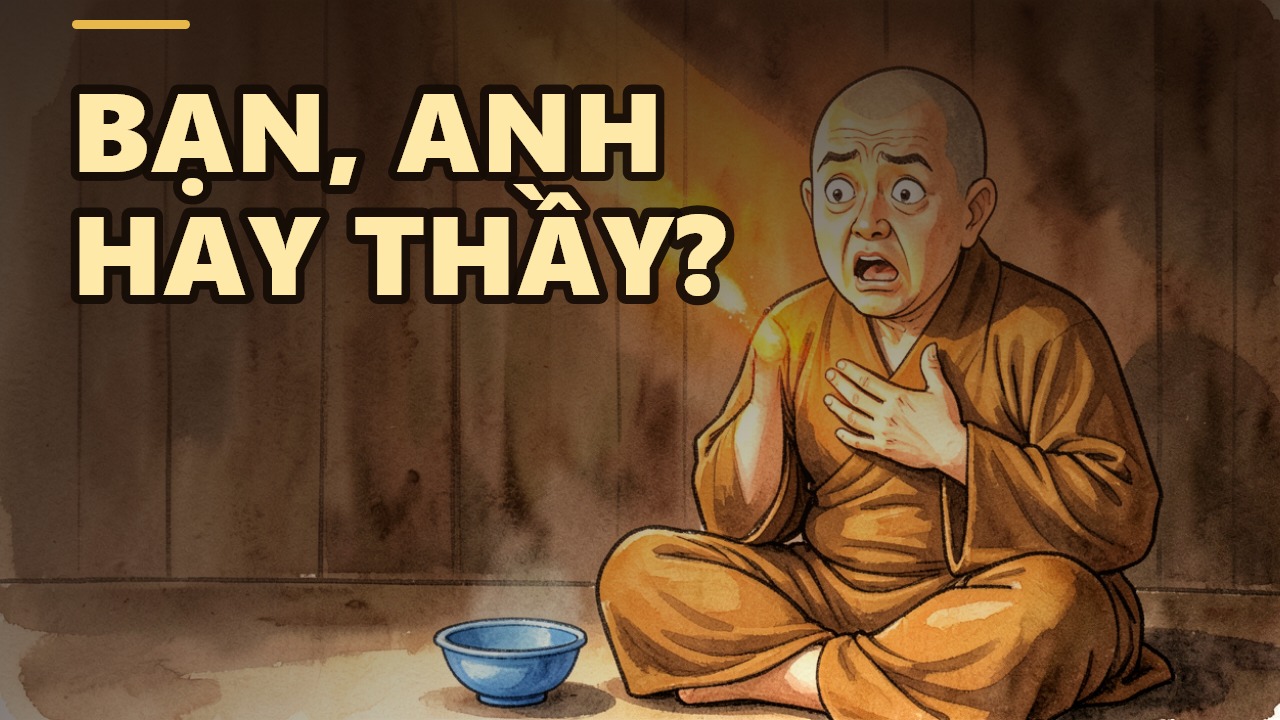
Have you ever wondered why some people are called friends, elders, or teachers? This dharma talk by Venerable Thích Chân Quang helps us reflect on our true position in the hearts of others, so that we may cultivate correctly and avoid depleting our merit.
When I was still a layperson, I often felt unsure when meeting venerable monks: should I address them as "Teacher" or as "Elder"? Later, when I went to the temple and heard people calling each other "Dharma Friend," I wondered for a long time why a venerable abbot of great virtue and high attainment would call a layperson a "friend." It was only last month that I understood the wonderful meaning hidden within these three words: friend, elder, and teacher.
**The Friend – When One's Speech is Skillful**
Friends are those with whom we feel a connection and joy in conversation. But have you noticed that what often makes a friendship is quite simple? It is because that person speaks to us, and speaks in a way that agrees with us. Sitting together drinking tea, discussing worldly affairs, we feel at ease. The Buddha called this the "karma of speech" – good words. In life, those who are eloquent, humorous, and pleasant to listen to are considered our friends. In the Dharma, if a venerable monk speaks the Dharma eloquently, chants the sutras beautifully, and converses with charm, they are still only a Dharma friend to the lay practitioners.
Our own eloquent speech only makes us a friend to others. Our dignified deportment, moral conduct, and proper behavior make us an elder. Only when we possess a truly saintly mind and heart do we become a teacher for all.
Thus, if a person only has the gift of speech, do not hastily demand deep reverence. Recognize that you are only a "friend" – a pleasant but shallow intimacy.
**The Elder – When Actions are Virtuous**
A higher level is that of an elder. When we face difficulties, the elder is ready to offer their help wholeheartedly: lending money, spending time to look after our affairs, treating everyone with fairness. Such a person is called an elder because they have good actions – the karma of body. In the temple, those monks and nuns who diligently work in service, devote themselves to the Buddha's teachings, and help sentient beings... they are not only good speakers but also good doers. Thanks to this, they are placed a level above us.
For example, if you see a teacher treating wealthy and poor lay practitioners equally, without favoritism, and humbly offering assistance, that is the quality of an elder, deserving of our respect.
**The Teacher – Only a Saintly Mind is a True Teacher**
But reaching the summit is the teacher. A true teacher not only speaks well and acts skillfully, but also possesses a saintly, pure mind and heart. The mind is difficult to perceive; only through extended contact and moments of trial can we sense it. When we meet such a teacher, we kneel with our whole heart, not because of the robes they wear or their title.
In society, many call each other "teacher," but they truly are not. It is the same for those who have left the home-life; sometimes, they are only a "friend" or an "elder" to sentient beings. Do not think you are already high because of an external title.
**Do Not Self-Appoint Yourself as a Teacher**
A dangerous thing is when we think we have "become a teacher for all." Whoever speaks the Dharma well, whoever has dignified deportment, whoever immediately imagines they are a teacher after receiving the precepts. But in reality, only when the mind is saintly is one truly a teacher. A mind of arrogance, even if hidden, will destroy all merit. Always remind yourself: I am only dust and dirt, worthless as grass. Only in this way can blessings remain stable and the path of cultivation grow.
The greatest fear is the thought that one is already high. This secret mind within our heads destroys all our wholesome merit. What do we think we are? Only dust and dirt. That phrase is a mantra to save our lives.
**Knowing One's Own Faults – The Path to Becoming a True Teacher**
To build a saintly mind, the first step is to know our own faults. In the beginning stages, everyone can see our faults. But the more we cultivate, the less others may see our faults, while we ourselves still recognize them. That is precisely when we are stepping onto the path to becoming a teacher.
From the moment we knew the Dharma, from the moment we began to leave the home-life, all the years of stumbling and suffering have been only for the sake of knowing our own faults.
Live truly with yourself; do not use beautiful words and ideas to cover up your mistakes. The path of cultivation is the path of recognizing our own faults and purifying our body and mind.
The three kinds of intimate beings—friend, elder, and teacher—are not ranks bestowed by anyone, but the result of our own body, speech, and mind. Reflect on where you stand, and from there, cultivate diligently, humbly, and with love. Only when the mind is pure do we truly deserve to become a real teacher. And perhaps, that is also the most precious gift we can offer to the world.
AI-assisted translation from the Vietnamese original.
Read in Vietnamese →