
The Good Spreads, The Good Endures
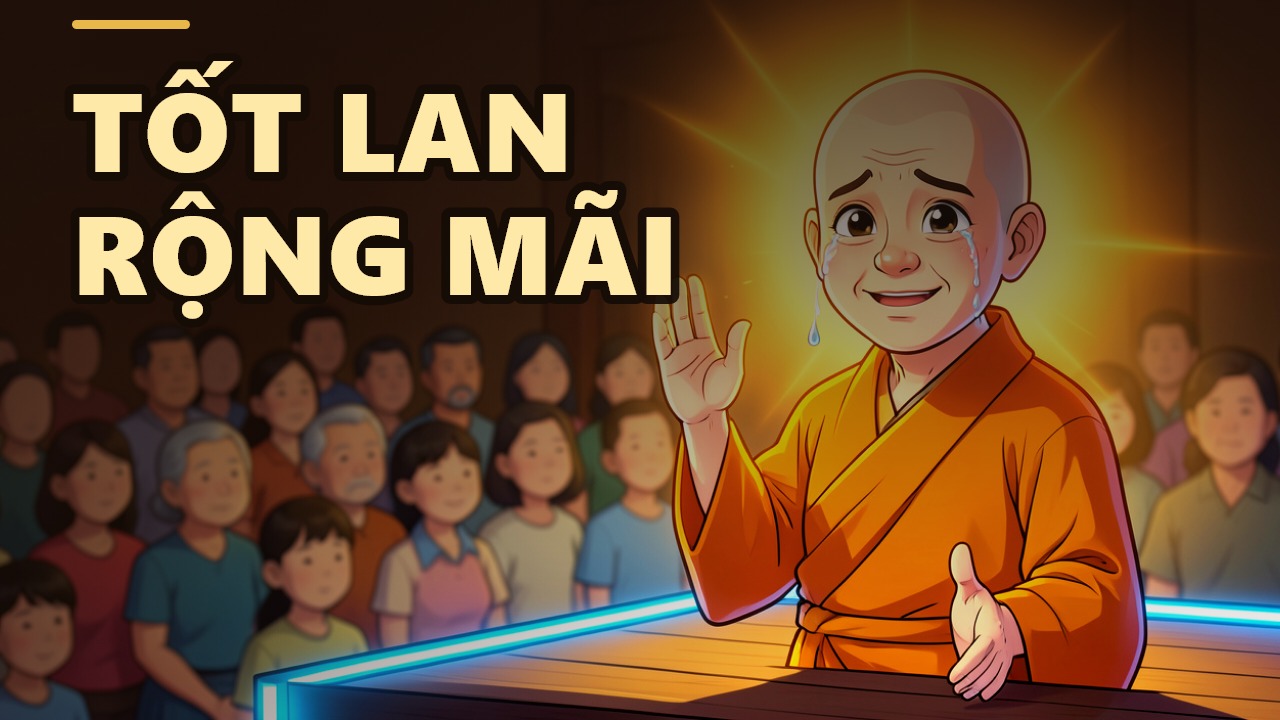
A father once confided in me, saying, “I am a lay practitioner with several daughters. When I look at them, my only wish is for them to become nuns. If they marry, who knows what kind of husband they will find? If they meet someone virtuous, it is a relief. But if they encounter someone unworthy, their suffering would be immense.”
Hearing this story, I recalled a profound principle: living among the virtuous brings happiness, while living among the unvirtuous brings pain. What truly determines our experience? Is it enough to have just a few good people around us, or do we desire an entire society that is wholesome and beautiful?
Venerable Thich Chan Quang teaches that when goodness spreads widely, it endures for a long time. This is a fundamental law. Goodness does not arise naturally nor sustain itself without effort. To make it last, we must help it expand. When many people practice kindness, it becomes culture, becoming a way of life passed down through generations. A lifestyle followed by only one hundred people cannot yet be called culture. It becomes true culture only when countless members of a community live kindly together across many ages.
In Hanoi, there is a folk verse: “Even if not fragrant like jasmine, one still carries the elegance of Trang An.” The people of Trang An are renowned for their grace and nobility because this place was once the capital, gathering intellectuals, scholars, and officials. They brought about a dignified, courteous way of life, which became the region’s cultural identity.
Yet, elegance does not appear out of thin air. It is the result of a long tradition nurtured by educated minds. To preserve this beauty, we must pass it on to future generations. If no one safeguards it, these virtues will fade away. Therefore, every citizen of the capital today bears the responsibility to continue this cultural heritage.
In the Buddha's teachings (Dharma), we believe that death is not the end. After passing away, rebirth often occurs near the place where one died. Consequently, the social environment into which we are born in the next life depends on what we build in this one. If we share goodness with few people, we may be reborn into a small, decent community, finding peace and joy. If we spread goodness to many, the merit can lead us to heavenly realms.
As Venerable Chan Quang says, “If we want goodness to last a very long time, we must make it spread widely. And to make it spread, we ourselves must be the ones to propagate it, rather than waiting for others to do so.”
One vital aspect of goodness that needs spreading is enlightenment regarding waste. Venerable Chan Quang points out strongly that only those lacking wisdom and morality view litter scattered on the road with contempt. In contrast, those possessing wisdom and virtue look at even a single piece of trash on the street with deep concern and reflection.
Waste is not merely something dirty; it is a product of consumption, a trace of human life. When we care for waste, we care for the environment, our country, and the people who will live after us. Our ancestors taught us that if a grain of rice falls, we should pick it up and eat it again. Even such a tiny grain contains the sweat and tears of many people, let alone an entire bag of trash or a plastic wrapper.
If everyone becomes conscious of waste, streets will remain clean without needing legal punishment. There is a humorous tale of a young woman who agreed to marry only if her suitor’s neighborhood was absolutely free of any litter. This represents a high level of awareness regarding waste. If we spread this spirit, society will become far more beautiful.
Let each of us begin with small actions: caring for waste, avoiding littering, practicing frugality, and sharing this positive mindset with others. When goodness spreads, it becomes enduring. We ourselves will reap happiness in this life and the next. Remember the teacher’s words: “When goodness spreads, goodness endures.”
AI-assisted translation from the Vietnamese original.
Read in Vietnamese →