
The Ultimate Goodness: Love Until It Overflows, Then Perceive Everything as Empty
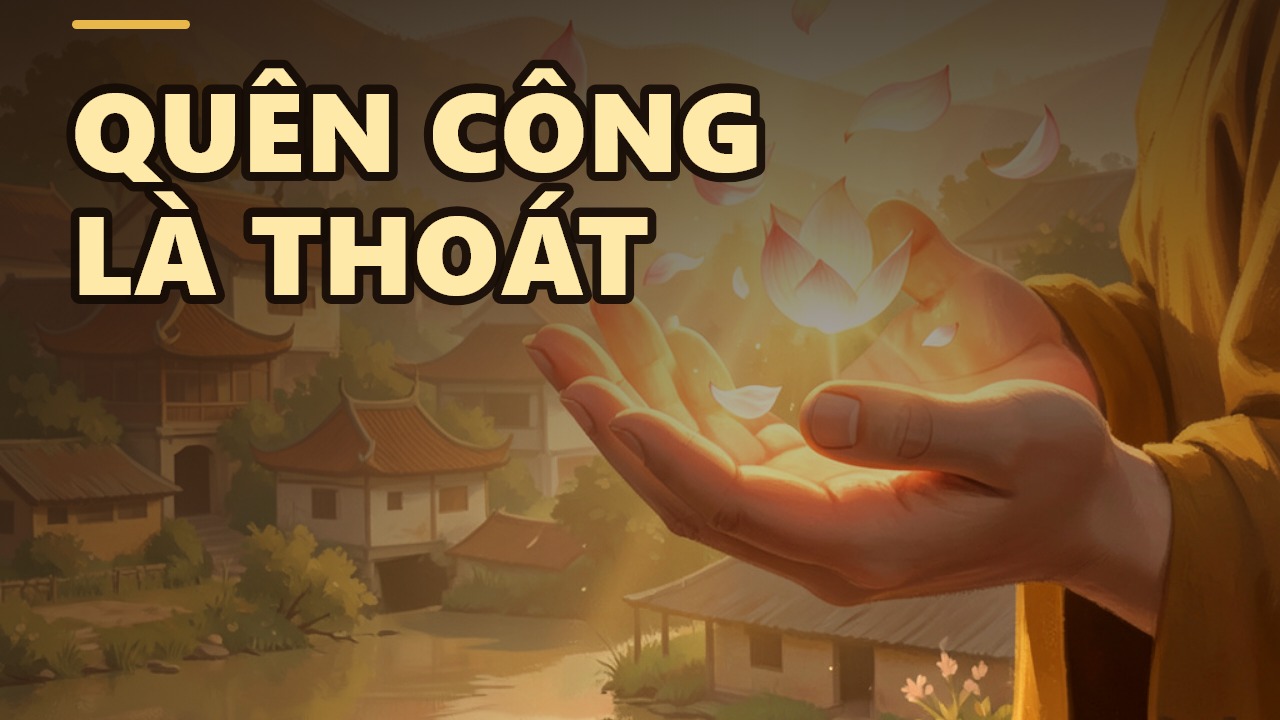
The Diamond Sutra teaches us to create much merit, yet forget our virtuous deeds. And do not hastily regard sentient beings as nonexistent—for the mind of compassion is the foundation of liberation.
Nearly everyone who encounters the Buddha’s teachings asks at some point: “What must I do to attain liberation?” Many answer: “Just let go. Do nothing; simply sit in meditation and that is enough.” Yet Venerable Thích Chân Quang affirms the opposite: liberation does not arise from laziness, but from conscious effort—effort to cultivate blessings, effort to forget our virtuous deeds, and above all, effort to ensure our compassionate heart never runs dry.
**The Greatest Misunderstanding of Practice**
Many enter the Buddhist path thinking, “I must stop creating karma. I will do nothing to escape this life.” This is a profound misunderstanding. Venerable Chân Quang clarifies:
“Over countless lifetimes, we have bound ourselves with karma… now we cannot simply remain idle and expect all those karmic ropes to snap on their own.”
We have tied ourselves with countless threads of past causes. To break free, we cannot passively wait for them to unravel; we must actively use merit as the blade to cut through.
**Effort Is Necessary to Break Free**
Merit is the means of liberation. A person without blessings may fall ill without money for medicine, hunger without food to eat, or need something yet lack the means to acquire it—such situations already feel heartbreaking. Thus, blessings free us from ordinary afflictions. When blessings are abundant, we attain honor, and ultimately, if directed correctly, they lead us to liberation. But to transform blessings into boundless blessings, the Diamond Sutra teaches us a secret: create merit yet forget your deeds.
“We must exert ourselves a thousandfold to shorten the journey… engage in actions that generate merit, help others, and guide them on the path of practice.”
Do not think spiritual practice is for comfort. On the contrary, practitioners must work even harder—for every action is an opportunity to free ourselves and help others. When we help countless people, we are like rowing a boat to ferry them across the river, and in doing so, our own hands grow strong.
**Forgetting Virtuous Deeds—The Key to Liberation**
After performing a great act of goodness, it is easy to feel proud and cling to one’s merit. Venerable Chân Quang shares: if we sell a car to build a bridge, worldly people may praise us, but one with wisdom simply says, “Let it go,” and remains unmoved. This is the foundation of the Mahayana. If we have not yet reached this point, we can use reasoning to let go of merit:
No merit is created alone. A Dharma talk requires a temple, an abbot, someone cooking meals, and the blessings of the Buddhas.
Half a house we offer is actually the effort of our parents, the labor of workers, and even those who helped us prosper.
When both those who lead and those who support all forget their merit, the Buddha’s teachings will flourish, and life will become infinitely beautiful.
When we understand that every achievement arises from countless conditions, we no longer cling to personal merit. This is liberation right within the mind.
**Do Not Hastily Regard Sentient Beings as Empty**
At the end of the Diamond Sutra, the Buddha says, “They are not sentient beings, nor are they not sentient beings.” This is a profound truth, but if spoken too early, it leads to great harm. Why? If we hastily regard sentient beings as empty, compassion vanishes. Venerable Chân Quang recalls an earlier mistake:
“When I first encountered the Dharma, I always saw life as a dream, as illusory. Seeing everyone as worthless grass, my mind was calm—but in truth, this was a great misunderstanding. I was losing my wholesome heart without realizing it.”
“Without the mind of compassion, we are not disciples of the Buddha. A path without compassion does not deserve to exist in this world.”
Thus, we must love until it overflows, create blessings until they saturate the world—and only when the world is filled with our kindness may we then perceive sentient beings as empty. If we attain empty success without sufficient compassion, the door to liberation closes forever.
**The Ultimate Goodness**
When a bodhisattva has accumulated vast merit and boundless loving-kindness, all attachments—even the notion of sentient beings—naturally fall away. Merit itself spreads endlessly through time, for it is no longer held back by pride. The way of a bodhisattva is: build what is good and lasting, without needing to be remembered, without needing to return to continue. This is the ultimate goodness that the Diamond Sutra reveals to us.
Begin with simple things: a smile, a word of encouragement, a helping hand to those near you. Do it with all your love, then let it go. This is the path to liberation—not by escaping, but by loving and giving until the very end.
AI-assisted translation from the Vietnamese original.
Read in Vietnamese →