
What Makes Young People Turn Away from Temples?
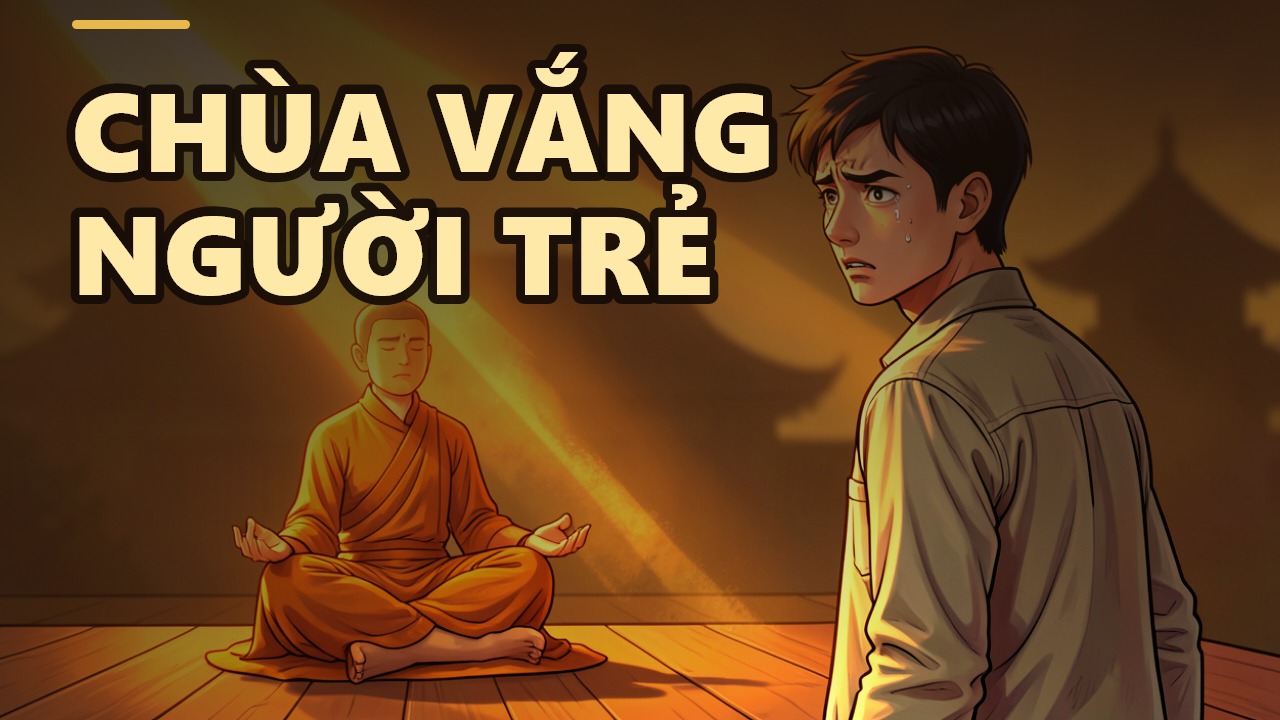
Thầy Chân Quang points out why temples are empty of young people and calls for reform: we need to return to meditative concentration so that the four assemblies can practice together, renewing the Buddha's teachings (Dharma).
One early morning, I walked past a church near the hotel where I was staying. Modern music was playing, and young people were streaming in eagerly. Not far away, an ancient temple stood silent with only a few elderly Buddhists inside. I suddenly wondered: Why do young people no longer come to temples?
In a recent dharma talk, Thầy Thích Chân Quang looked frankly at this reality. He believes that Buddhism stands at risk of decline if it does not know how to reform.
When Pure Land No Longer Appeals to the Young
Thầy Thích Chân Quang observes that over the past several hundred years, Buddhism has been shifted toward Pure Land practice. The rituals of chanting and reciting the Buddha's name seeking rebirth suit only the elderly and the less educated. Meanwhile, educated young people need a path of practice with depth, and meditative concentration is precisely that path.
"The younger generation is civilized and progressive, and naturally the Pure Land method no longer responds to the hearts of these educated young people."
Is Chanting Sutras Just Shouting Slogans?
Many people chant sutras to satisfy the feeling of having blessings from merit, without truly transforming their mind/heart. Thầy says bluntly:
"Those chanted sutras are just shouting slogans, shouting beautifully, chanting skillfully, and then doing nothing at all."
This makes practice merely like painting over a field full of weeds, hiding the faults within. The only way to plow the soul is meditative concentration.
The Plow of Wisdom and the Field of the Soul
Thầy tells the story of the Buddha going on alms rounds and meeting a landowner. The man mocked him, saying that the ascetic does not plow fields yet begs for food. The Buddha replied that the Tathagata also plows: the field is the soul, the plow is wisdom, the ox is diligent effort, and the whip is the moral precepts. The Tathagata plows up the weeds and insects in the mind to attain the deathless fruit.
Thầy explains:
"The plow of wisdom — only meditative concentration is the plow of wisdom."
Only when we sit in meditation can we clearly see the weeds and insects in our own mind/heart and plow them up. Otherwise, without meditation, we merely cover them over with painted pictures of concealment.
How Wonderful, the Four Assemblies Practicing Together
In Buddhism, the four assemblies are monks, nuns, laymen, and laywomen. The phrase "How wonderful, the four assemblies practicing together" means that everyone practices equally. But in reality, the venerable monks chant professionally while lay Buddhists simply stand with folded hands, understanding nothing. Thầy advises composing chants that everyone can recite together, as at Phật Quang temple, so that anyone can participate. This is precisely the reform of ritual.
"How wonderful, the four assemblies practicing together! When lay Buddhists can practice as the venerable monks do, and the venerable monks practice as lay Buddhists do, only then is it truly the four assemblies practicing together."
Reform So That the Buddha's Teachings (Dharma) May Flourish
Thầy emphasizes the need to care for Buddhists like a "net of Indra," supporting them in guiding their families back to the path. We should care for them from the time a child is still in the mother's womb, at birth, and as they grow up. Thầy tells of Phật Quang temple offering free summer classes for children. This is how to bring Buddhism into daily life.
Meditative Concentration: The Foundation of a New Buddhism
Meditative concentration is the main path of Buddhism, its spiritual strength. Methods such as Pure Land and esoteric Buddhism are means suited to individual capacities, but the foundation remains meditation. Thầy says:
"For Buddhism to flourish, there must first be a lofty spiritual practice as its foundation. And what method is that lofty spiritual practice which serves as the foundation? It must be meditative concentration — there is no other path."
Let us begin with one minute of sitting meditation each day, contemplating the breath, plowing the field of our own soul. That is how we truly practice and contribute to reforming Buddhism from its roots. How wonderful, the four assemblies practicing together!
AI-assisted translation from the Vietnamese original.
Read in Vietnamese →