
Going the Long Way Takes a Moment, Taking a Shortcut Takes a Day: A Truth Few Understand
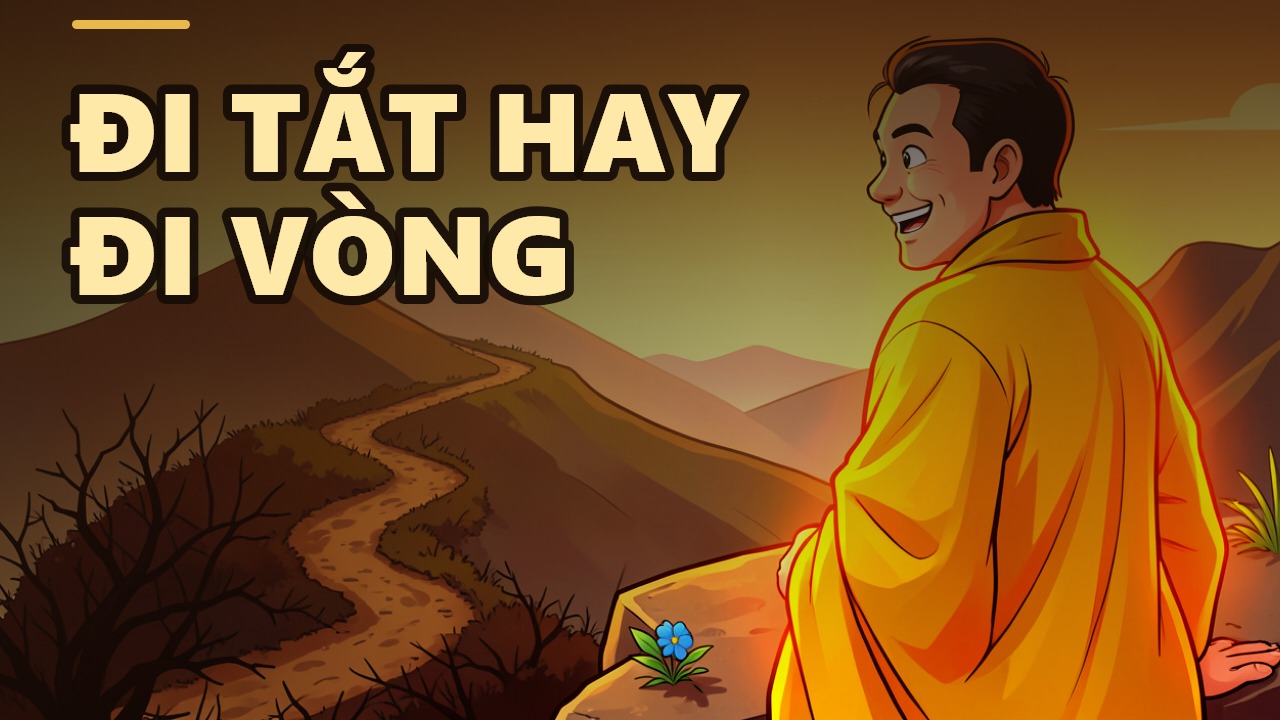
Why do wise people often choose the longer path? Discover the karmic law teachings of Venerable Thich Chan Quang: the more you rush, the more lost you become. True blessings from merit are the secret to success.
Have you ever been given directions but still ended up lost? Imagine someone wanting to reach Thanh Long Pagoda in Dong Xoai. They were told to head straight southwest. Instead of following the road, they cut through other people’s gardens, climbed fences, and squeezed through mango orchards. The result was that police detained them for a whole week. Meanwhile, another person followed the wide, winding road. It took only ten or fifteen minutes to arrive at the pagoda.
### Taking a Shortcut Is a Path That Never Arrives
This is the lesson Venerable Thich Chan Quang uses to begin his dharma talk, citing an old proverb from our ancestors: "Going the long way takes a moment, but taking a shortcut takes a day."
The long way may seem slower in terms of time, but it is safe and certain. The shortcut appears faster but leads to obstacles and trouble. In life, many people want immediate results. They are rushed and lack patience, yet the harder they try, the more they fail. Venerable Chan Quang skillfully transforms this everyday story into a profound principle of cause and effect (karmic law).
### Love Does Not Arise Naturally
When a husband and wife grow weary of each other, all relationship counseling methods prove ineffective. Why? The teacher explains: "In this world, there is no such thing as simply deciding to love or deciding to hate. Everything has causes in the previous cycle."
True love comes from gratitude and connections formed in past lives. If there are no conditions (dependent origination) linking two people, trying to force affection is useless. Similarly, some teachers have many disciples while others have few. This depends on good karma accumulated over many lifetimes. This teaches us to live kindly with everyone, creating good conditions for this life and the next.
### Building a Temple Is Less Important Than Sowing Connections
To make a temple thrive, some use tricks to please followers: hiring entertainment troupes, giving gifts, or flattering guests. But Venerable Chan Quang emphasizes: do not follow that shortcut. The correct method is to sow connections quietly. Build roads, share food, and teach ethics to children. Gradually, people will feel indebted to the temple and return. However, the most important factor is the virtue of the monastics themselves.
"When we connect with people and bring them to the temple, if our own moral conduct is not firm and solid, negative consequences will arise later," he warns.
A temple is a place housing the Three Jewels: Buddha, Dharma, and Sangha. When monks and nuns practice steadfastly, their spiritual presence attracts sentient beings far more powerfully than any worldly tactic.
### The Smaller the Ego, the Brighter the Virtue
Venerable Chan Quang’s principle for guiding beings is simple yet deep: "If you make yourself empty, everything that exists will naturally be drawn toward you. What does emptiness mean? It means being like a hollow or a deep pit; everything flows down into it."
Emptiness attracts existence. Lowliness draws highness. The more practitioners see themselves as small and practice letting go, the more attractive they become to others. Conversely, a large ego drives people away. Practice is not about accumulating things for oneself, but about eradicating the illusory "I."
### To Be Rich, Do Not Just Strive; Go the Long Way to Create Merit
Everyone wants wealth, yet many work hard in the fields and remain poor. The teacher clarifies: "Wealth is primarily due to luck, not just because of your effort."
Wise people do not pour all their energy into business alone. They divide their time to create merit. Accumulate blessings from merit quietly. Help others with what they need, whether it is a bicycle for a neighbor’s child or beneficial advice. This merit will bear fruit after five or ten years. Going the long way does not mean laziness. It means wisely choosing the path of cultivating virtue so that good conditions come naturally.
Live slowly. Do not burn through stages. Every act of compassion, every truthful word, and every instance of letting go of the ego is walking the long way home. It turns out that the detour is actually the shortest path to happiness.
AI-assisted translation from the Vietnamese original.
Read in Vietnamese →