
Swimming Against the Current: Why Is the Difficult Path the Path to Happiness?
A teaching by Venerable Thich Chan Quang points out that our instincts easily lead us into suffering, while reason and morality, though difficult, help us escape the cycle of rebirth and attain true happiness.
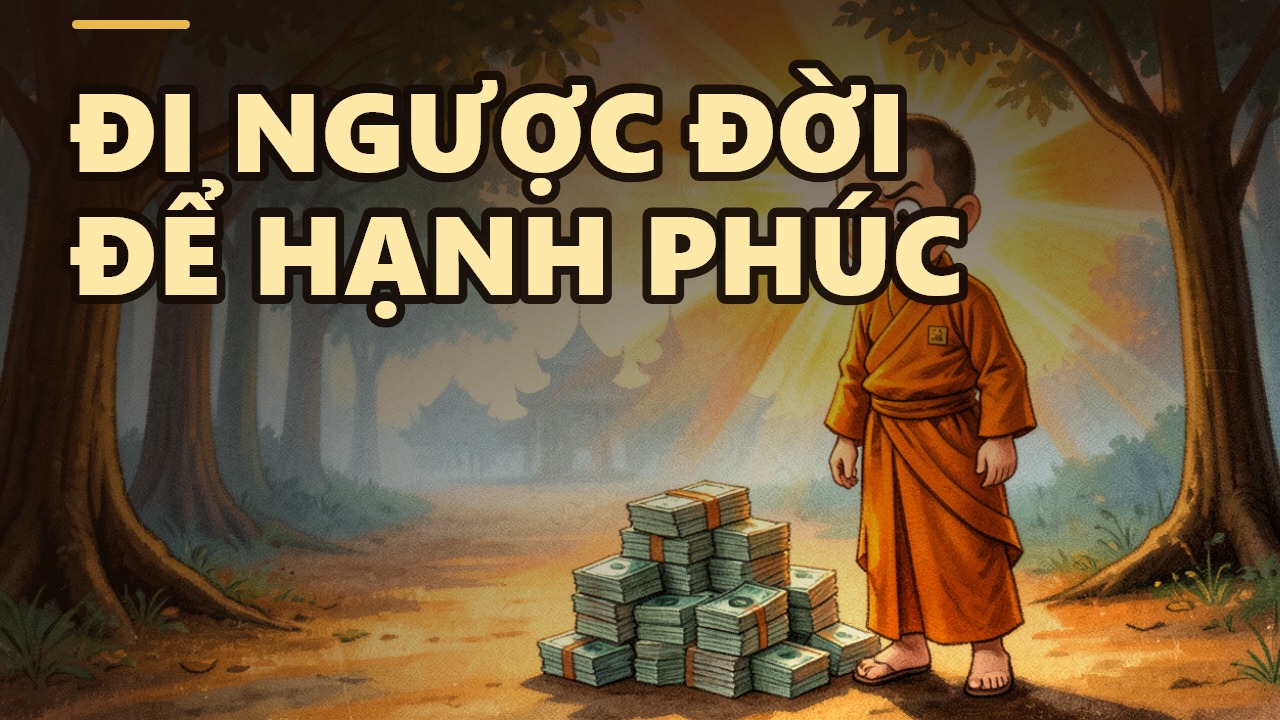
Imagine you are walking on a quiet early morning road and suddenly see a thick bundle of money before you. What is your first instinct? To look around, then quickly pocket it. That is the easy path. But there is a more difficult path: to stop, think of the person who lost it, and find a way to return it. Which path leads to happiness? Venerable Thich Chan Quang clarified this in the teaching 'The Issues of Instinct and Reason'.
Instinct and Reason: Two Paths
Instinct consists of natural reflexes, impulses that easily follow greed, hatred, and delusion. Reason is the ability to think and discern right from wrong, the foundation of morality and spiritual practice. The Venerable said, "Practice is swimming against the current of life." This current here is not swimming against others, but against the natural tendencies within our own mind and heart.
Where Does the Easy Path Lead?
The easy path is the path of instinct. When we see dropped money, we naturally pocket it. When we face difficulties, we only think of ourselves. These actions are easy, but the Venerable warns: "The easy leads us into darkness, suffering, and degradation, to be reborn as hungry ghosts. The difficult is what leads us back to glory, happiness, or even to the heavenly realms."
"Whatever is natural is easy, while what goes against it is difficult. The easy leads us into darkness, suffering, and degradation, to be reborn as hungry ghosts. The difficult is what leads us back to glory, happiness, or even to the heavenly realms."
Gratitude: The Difficult Forger of Dignity
Whoever helps us, we easily forget. This is the instinct of ingratitude. But remembering kindness and repaying debts is a very difficult morality. The Venerable advises: "Once indebted with kindness, carry gratitude for a lifetime. Even after we have fully repaid the obligation, the sense of moral debt never truly ends." Those who remember kindness are respected even by spirits and deities. Conversely, the ungrateful cause their own value to fade into nothingness.
Loving Children is Easy, Loving Parents is Difficult
Every mother loves her child; this is instinct. But children loving their parents deeply requires cultivation. The Venerable said, "Loving children is a very easy instinct. Loving parents is a very difficult morality." Look at a mother hen spreading her wings to shield her chicks from the cold rain. Even drenched herself, she protects them. But when the chicks grow up, do they return to their mother? They forget. Therefore, those who practice must remember their parents' kindness; this is the path that goes against instinct.
Living for Oneself or for Others?
Instinct drives us to live for ourselves. Desires and immediate pleasures are very appealing. But the Venerable teaches: "Precisely because life is so short, we should diligently conserve time and energy to live for others." Altruistic living is difficult, but it is the way to accumulate blessings. When we help others and bring the Buddha's teachings to them, we are creating merit for ourselves.
Diligence: The Gateway to Blessings
Laziness is the instinct to prefer idleness and enjoyment. To have blessings, one must be diligent. The Venerable encourages: "To create merit, one must be diligent and willing to endure hardship." Seek out small deeds to help those around you: go to the temple, do volunteer work, sweep the grounds, visit the sick, or guide those unfamiliar with the teachings towards the Buddha's Dharma. These difficult acts will nourish our mind-heart and our store of merit.
Conclusion
Life is a journey upstream. In every moment, we can choose the easy path to sink into instinct, or the difficult path to rise through reason and morality. Venerable Thich Chan Quang invites us to courageously choose the difficult path. Begin with one small thing: if you find what is lost, find a way to return it; remember those who have helped you; be diligent in doing good deeds. This is the first step on the path out of suffering, the path to true happiness and liberation.
AI-assisted translation from the Vietnamese original.
Read in Vietnamese →