
Is the Way of Husband and Wife a Debt or a Condition? Teachings from Venerable Thich Chan Quang
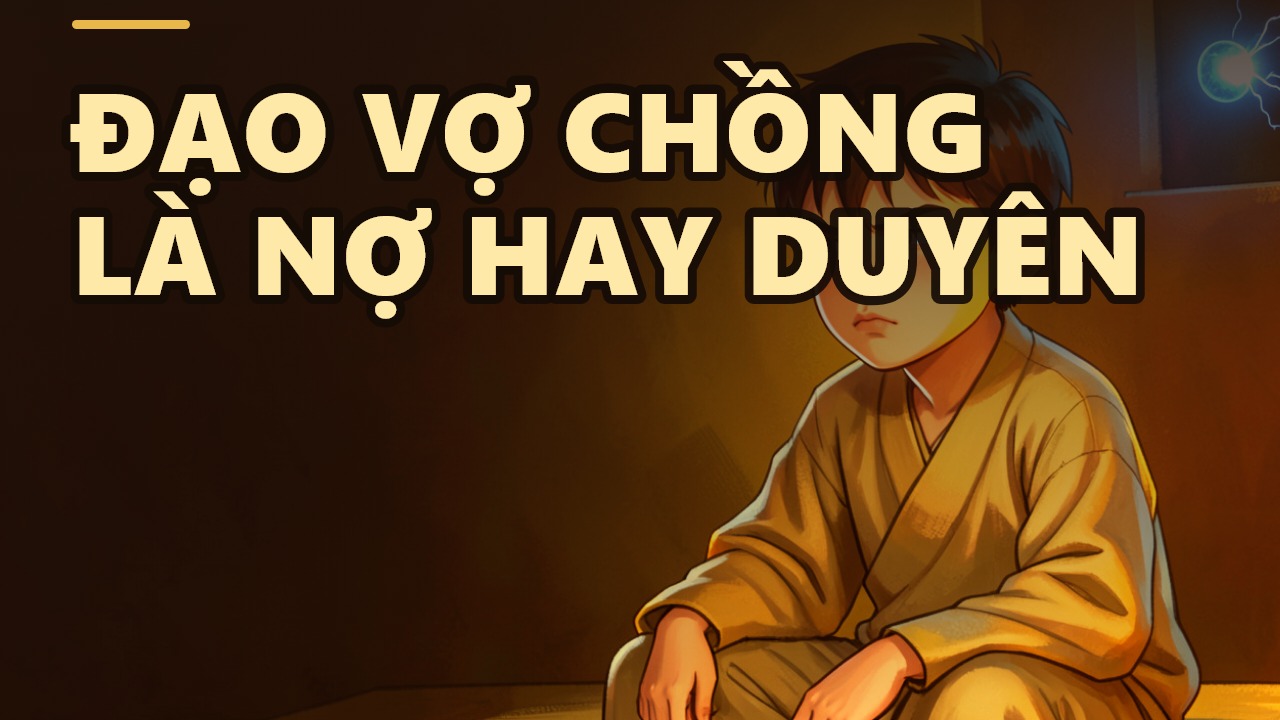
Venerable Thich Chan Quang’s teaching invites us to reflect on the way of husband and wife. It is not merely a duty, but an opportunity to practice liberation, to live well with our life partners, and to maintain a peaceful mind amidst daily life.
There was once a boy in his early teens, attending middle school, who sat quietly and said, “I am born, I grow up, I work, I marry, I grow old, and then I die. Life is so mundane!” Adults might find this amusing, but Venerable Thich Chan Quang was surprised. Why did a child have such a penetrating view of life all the way to death, just like the Buddha long ago? It was precisely from the question, “Why does life keep going in circles?” that the Buddha discovered the Dharma, giving us the path to liberation today. Dear Buddhists, if we ask this same question within our own marriages, we will see everything more clearly.
## The Way of Husband and Wife Must Walk Within the Path of Liberation
In Eastern culture, the relationship between husband and wife is not just a private matter. It is a “way” – a moral principle, a duty, and a way of living that stabilizes the family and society. However, if we stop there, Buddhist practitioners may still remain bound. Venerable Thich Chan Quang emphasizes:
As Buddhists, we must let the way of husband and wife walk within the path of liberation. This means we understand the cause and effect (karmic law) regarding our partner, so we live correctly and well. While fulfilling our duties, conditions (dependent origination), and affection toward our partner, we simultaneously sow seeds for future spiritual practice. We do not stop or rest complacently in marital life alone.
This implies that in every word and action, we fulfill our responsibilities while planting seeds of liberation for ourselves and our partners. Do not let marriage become a stagnant pond; instead, let it be a river flowing toward the great ocean.
## Is Marriage Just a Game? Do Not Let Yourself Be Bound
Venerable Thich Chan Quang teaches that when we clearly see the purpose of human life is liberation, we no longer feel pessimistic or arrogant about our marriages. Whether happy or broken, whether the connection is long or short, these are merely forms of the game. He says:
Much happiness or suffering, much length or brevity, is just a game. It is only a game.
Therefore, a Buddhist knows how to live within the family without being trapped by it. When things go wrong, we do not suffer excessively; when luck comes, we do not become proud. In all circumstances, we maintain a calm mind, looking toward the future – what the teacher calls each person’s “level of wisdom.”
## Living Well with Your Partner – The Secret to Transforming Stubborn Hearts
Many people misunderstand that practicing the Dharma means distancing oneself from family and living coldly with one’s spouse. Venerable Thich Chan Quang shares a very real story: a female Buddhist devotee was enthusiastic about visiting temples but neglected her husband, causing him to hate the religion and even dislike the teacher. The master concluded:
To understand the Dharma, you must live well with your partner. You must be willing to sacrifice first. People are moved by your sacrifices, which leads them to trust the path you follow. If you make them feel they lose benefits because of the religion, that is unacceptable.
To transform a life partner, do not rely on formalities or empty words. Use a beautiful life, kindness, and wisdom. Like Queen Mallika, who wished to save a condemned criminal, she drank wine with the King during his anger and gently persuaded him to cancel the execution. The Buddha did not consider this a sin, as it arose from compassion and wisdom.
Be willing to sacrifice and endure hardship; do not take your partner’s love for granted.
Do not force others to believe in the Dharma. Instead, live in a way that allows them to see the beauty of the Buddha's teachings (Dharma) through your own life.
Do not forget to treat your partner’s family well, as this reflects moral principles and gratitude.
## Maintaining Fidelity: Know How to Stay Away from Temptation
In today’s world, fidelity is difficult to maintain. Western culture permeates everywhere, and films glorifying extramarital affairs erode moral standards. Venerable Thich Chan Quang once told of a young foreign man who came to Vietnam seeking a faithful love because he believed it was right. The teacher reflected: Ultimately, what is right will prevail! Yet many Buddhists easily lose their hearts. He explains regarding instincts:
Women are conquered by emotion, while men are conquered by sexual desire.
Therefore, to maintain integrity, Buddhists must avoid temptation from the start. Do not give others opportunities to get close to you, and do not feel proud when pursued. The greatest merit is diligently bowing to the Buddha, which strengthens the mind and reduces attachment. Additionally, create a routine of practice within the family: bow to the Buddha together every evening, meditate, and recite the Buddha’s name. The teacher advises:
Every evening, you should have a session of bowing to the Buddha... keep it short rather than too long, because those who do not yet believe in the Buddha may become irritated.
Furthermore, encourage the family to visit the temple on Sundays, connect with nature, and learn the Dharma. This is a natural way to bring the Buddha's teachings into daily life.
## Midlife Crisis – Lessons on Cause and Effect and Arrogance
In life, everyone has heard of the “midlife crisis” – a time when people are prone to wandering emotions. Venerable Thich Chan Quang explains that this is not due to age, but due to arrogance. When we become conceited, we begin to criticize others, and at that moment, defilements enter.
When arrogance arises, defilements follow immediately. Whenever we hold a high opinion of ourselves, defilements step forward.
This is cause and effect (karmic law); no one is exempt. The teacher tells of an elderly man in his eighties, with many descendants, who still wanted to remarry. This was not about age, but psychology; it was the fault of arrogance that caused him to lose dignity. Therefore, pay attention to maintaining humility. Do not let the “self” rise up. Only when we know we are still weak and carry much karma will we not fall.
Buddhists live in families not to enjoy pleasures or endure suffering, but to learn the lesson of liberation. Start with yourself: live well with your partner, maintain fidelity, practice daily, and frequently remember that life is a game. But we must play skillfully to escape samsara (cycle of rebirth). This is the way of husband and wife within the path of liberation.
AI-assisted translation from the Vietnamese original.
Read in Vietnamese →