
The Appearance of the Buddha’s Teachings: For the Benefit of Sentient Beings or for the Sake of Buddhism Itself?
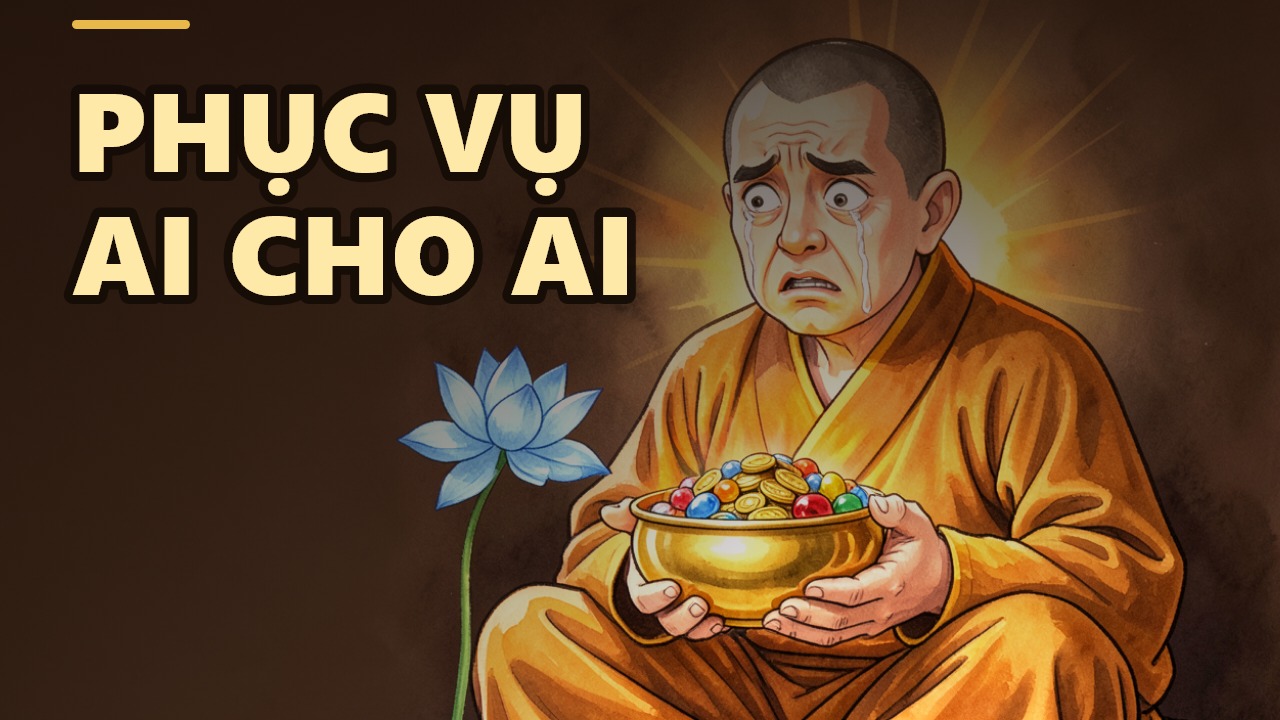
A question has always weighed heavily on my mind. What is the purpose of the Buddha’s teachings appearing in this world? Many people and large temples quote a saying from Venerable Narada, a great elder monk from Sri Lankan Buddhism. He said that the Buddha’s teachings appear to bring benefit to sentient beings, not so that sentient beings can bring benefits to Buddhism. Today, let us listen again to the dharma talk by Most Venerable Thich Chan Quang on the topic of the appearance of the Buddha’s teachings. We will explore this meaning deeply and avoid a very subtle trap in our spiritual practice.
Why Did the Buddha’s Teachings Appear?
According to Master Chan Quang, the most fundamental answer is that the Buddha’s teachings exist to help sentient beings escape suffering. This is the root meaning. From escaping suffering, the Buddha’s teachings spread to bring morality, to unite people, and to increase goodness. He stated that the Buddha’s teachings exist to help sentient beings escape suffering. This is the correct view based on right understanding, and it is never wrong.
Escaping suffering is central because the Four Noble Truths begin with suffering and end with the method to cease suffering. Morality is essential because a lack of ethics is the root of pain; therefore, having morality reduces suffering. Uniting people is vital because humans often kill, divide, and hate one another. The Buddha taught love and the removal of hatred. Increasing goodness encourages us to help each other in daily life.
To achieve this, the Buddha’s teachings must be profoundly sublime. Master Chan Quang emphasized that amidst human ignorance, dark minds, competition, sinking into selfishness, and endless jealousy, there stood a great figure. This figure had a compassionate face, beauty, wisdom, and spoke words like gold and jade that fell into the hearts of people. The Buddha brought the light of compassion and wisdom to awaken many souls. He did not use force or coercion. He used only penetrating words and virtuous conduct. Because of this, over thousands of years, countless people have attained enlightenment, become good individuals, and preserved the Buddha’s teachings.
Let us compare this to the Lunar New Year. Without the Buddha’s teachings, we might chase after trivial entertainments and return to an empty soul. But with the Buddha’s teachings, we visit temples, bow to the Buddha, listen to the dharma, and find our souls calm within high ideals. Whether one is a director or a street vendor, if the mind holds the ideal of enlightenment, everyone is equal and noble.
The Trap of Reverence
This section is crucial. Master Chan Quang warned about a vicious cycle. Initially, the Buddha’s teachings appeared for self-sacrifice, forgetting oneself to care for sentient beings. Gradually, reasoning twists this idea. People start believing that whatever Buddhism does is sacred and lofty, so sentient beings must come to offer support, serve, and provide benefits to Buddhism. We begin with the notion that the Buddha’s teachings benefit sentient beings. We infer that Buddhism is sublime. We infer that Buddhism is worthy of reverence. We conclude that we must serve Buddhism. However, this reverses the original goal. If we are not vigilant, monks and nuns may stay in temples thinking laypeople must make offerings. Laypeople may focus only on pouring money into temples instead of helping sentient beings. That is a mistake.
Monks and Nuns Must Be Awake
Master Chan Quang delivered this teaching primarily for those who have left home to practice. He said that the truth is that monastics must be the first to sacrifice. Then, lay Buddhists continue as those who sacrifice later. Since we know the path, we must care for those who do not yet know it. It is appropriate for monks and nuns to receive making offerings, but they should not greedily accept too much. If they are greedy, they fall into the state where Buddhism exists for sentient beings to worship. Instead, when practitioners receive material support from laypeople, they must provide spiritual value. They must teach, guide, and live a genuine monastic life. Only through genuine practice will their words be heard.
Laypeople Are the Bridge
For lay Buddhists, the Master taught that you remember you are the bridge between monastics and those who do not yet know the path. Being a bridge means helping monks and nuns have the conditions to practice while sharing the teachings you have learned with others. This requires time, effort, and resources. Therefore, laypeople should assess their capacity to balance making offerings with spreading the dharma. Do not constantly rush to bring money to temples. Young people and intellectuals easily see this as awkward, which diminishes the value of the Buddha’s teachings.
Listening to this dharma talk, I realized something profound. The Buddha’s teachings are not a religion for worship and begging. The Buddha’s teachings are a path for each person to become better and help others more. The saying of Venerable Narada is a deep reminder for all of us. Let the presence of the Buddha’s teachings in your life become a source of benefit for sentient beings, whoever they are and wherever they are. That is the path the Buddha wishes us to walk.
AI-assisted translation from the Vietnamese original.
Read in Vietnamese →