
Sincere Offering: When Helping Others Is Not Enough, Remember to Benefit Yourself
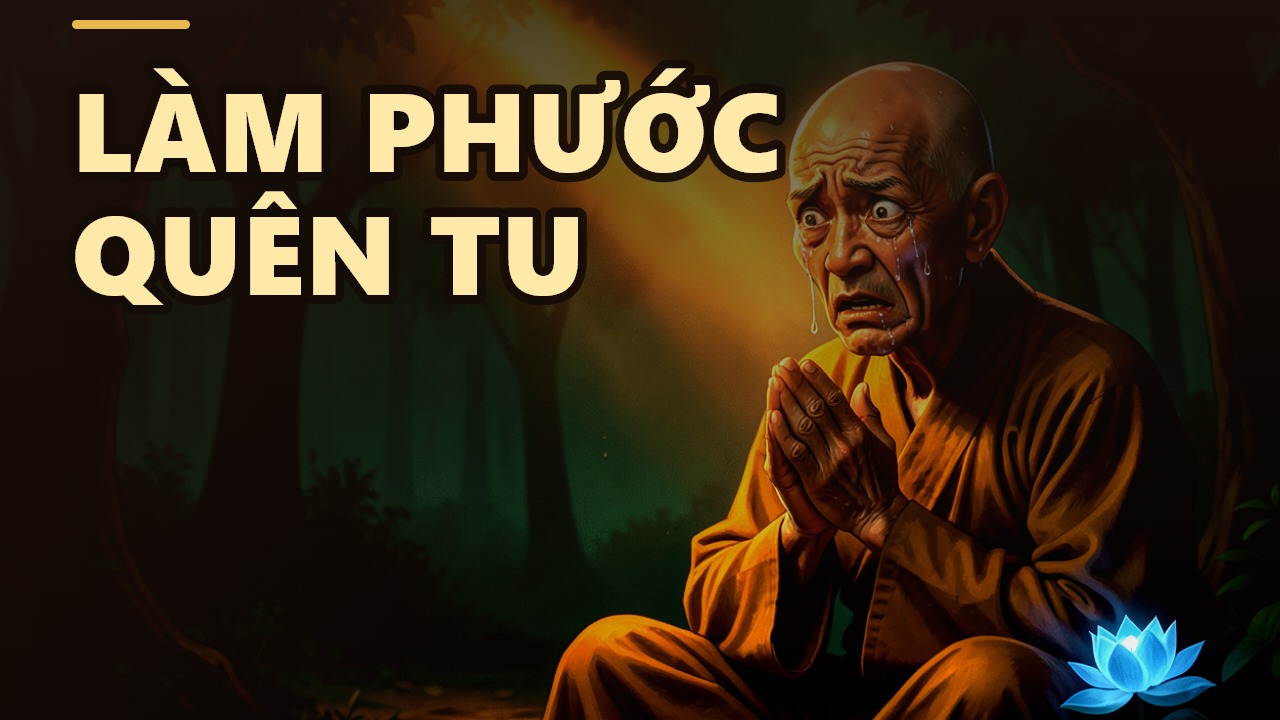
**Summary:** A dharma talk by Thầy Thích Chân Quang on the meaning of sincere offering: it is not only about helping the world but also about attending to one's practice, conquering one's own faults to attain untainted wisdom.
There was an elder during the Buddha's time. Upon hearing the news that the Buddha was about to enter nirvana, he did not feel sad like the others but instead felt anxious: "I have not yet realized the path, so is there still time for me to practice?" He then withdrew from everyone and devoted himself wholeheartedly to practice. The Buddha praised him, saying that this person was the one who truly venerated the Buddha the most. As we hear this story today, do we ever ask ourselves: Is my offering sincere?
**What is Sincere Offering?**
In the Dhammapada, the Buddha teaches: "Though one should conquer a million men in battle, yet he, indeed, is the noblest victor who conquers himself." This means that no matter how much we help the world and help others, we must not forget our duty to cultivate ourselves. Only when we benefit others and benefit ourselves fully can we attain supreme wisdom.
Thầy Thích Chân Quang recounts the context of this verse: an elder monk, upon hearing the Buddha was about to enter nirvana, grew worried seeing he had not yet realized the path and thus avoided conditions to practice wholeheartedly. When the monks reported this to the Buddha, He praised that elder as the one who truly venerated Him. Thầy explains:
"When the benefit to others and the benefit to oneself are both complete, then supreme wisdom is achieved. For those who keep busy with work for others, but whose self-benefit is insufficient, they cannot attain the fruits of the path."
**Do Not Forget Self-Benefit Amidst Benefiting Others**
There are people who are very diligent in charitable work, helping the world, yet they avoid the matter of personal practice. Why? Because living altruistically, though harder than being selfish, is still easier than conquering one's own faults. Thầy Thích Chân Quang shares:
"There are people who love doing charitable work, they love it dearly, but when asked to practice, they refuse and run away. That is when I deeply understood the Buddha's teaching: Living altruistically and doing charity is easy, but conquering one's own faults is very difficult."
If we only focus on creating external blessings (phước báu) without caring to correct our inner mind, those blessings become "tainted blessings," easily swept away by the currents of life into mere comforts and fame. To attain "untainted blessings," we must devote time to sitting in meditation and turn back to our own mind. That is true, sincere offering.
**The Hidden Danger of Relying on the Buddha's Majesty**
During the Buddha's time, thanks to His majesty and virtue, many people easily attained realization. But some developed a mindset of reliance, thinking that as long as they took refuge in the Buddha's power, they would enjoy blessings. Like a child growing up in the loving arms of wealthy parents, it is often hard for them to become capable because of this reliance. When the Buddha announced He was about to enter nirvana, some lost their support, and others panicked because they had not yet realized the path. Such worry has a good side—as the Buddha Himself praised the elder monk. But those who relied on Him were admonished.
"Whatever good deed I accomplish, I must understand that the Buddha blesses it, and I am merely His instrument, just a grain of sand under His feet. If I know this, the Buddha will continue to bestow upon me many wonderful surprises. But if I become arrogant, the Buddha will take everything back, and I will have nothing left."
**Maintaining a Humble Mind: We Are But a Grain of Sand**
Thầy Thích Chân Quang repeatedly emphasizes the lesson on humility. Whatever good we do, we must not let our ego inflate. Many people, after practicing for only a few days or giving a few talks, already feel superior to others. Thầy advises:
"Take that mantra and chant it daily to remind yourself: 'I am but dust and sand, worthless grass.' Because as in the Diamond Sutra or the Perfection of Wisdom Sutras, the Buddha teaches: even if one accomplishes any good deed, one should always see it as nothing."
Only when we remain humble and sincere in our hearts do we receive the Buddha's blessings. A single thought of "I am capable" arises, and the Buddha immediately lets go.
**Offering Through One's Own Life of Practice**
True veneration of the Buddha is not merely ritual, praise, learning the Buddha's teachings, practicing, and propagating them, but also protecting the Dharma. Sometimes firmness is required, as the patriarchs left us the image of the Dharma Protector holding a mirror. But above all, each person must attend to their own practice. Do not let yourself sink into work for others while forgetting that you need to conquer your own faults, to let go of greed, hatred, and delusion (tham sân si).
Benefiting others and benefiting oneself are not contradictory but complementary. Dive in to help the world, but do not forget to sit in meditation. Create blessings, but do not let those blessings become obstacles.
Finally, let us borrow Thầy's words to close:
"I am merely a grain of sand under His feet. If I know this, the Buddha will continue to bestow upon me many wonderful surprises."
May each of us always maintain a humble mind, practice diligently, and thus make a sincere offering to the Buddha and to all beings.
AI-assisted translation from the Vietnamese original.
Read in Vietnamese →